
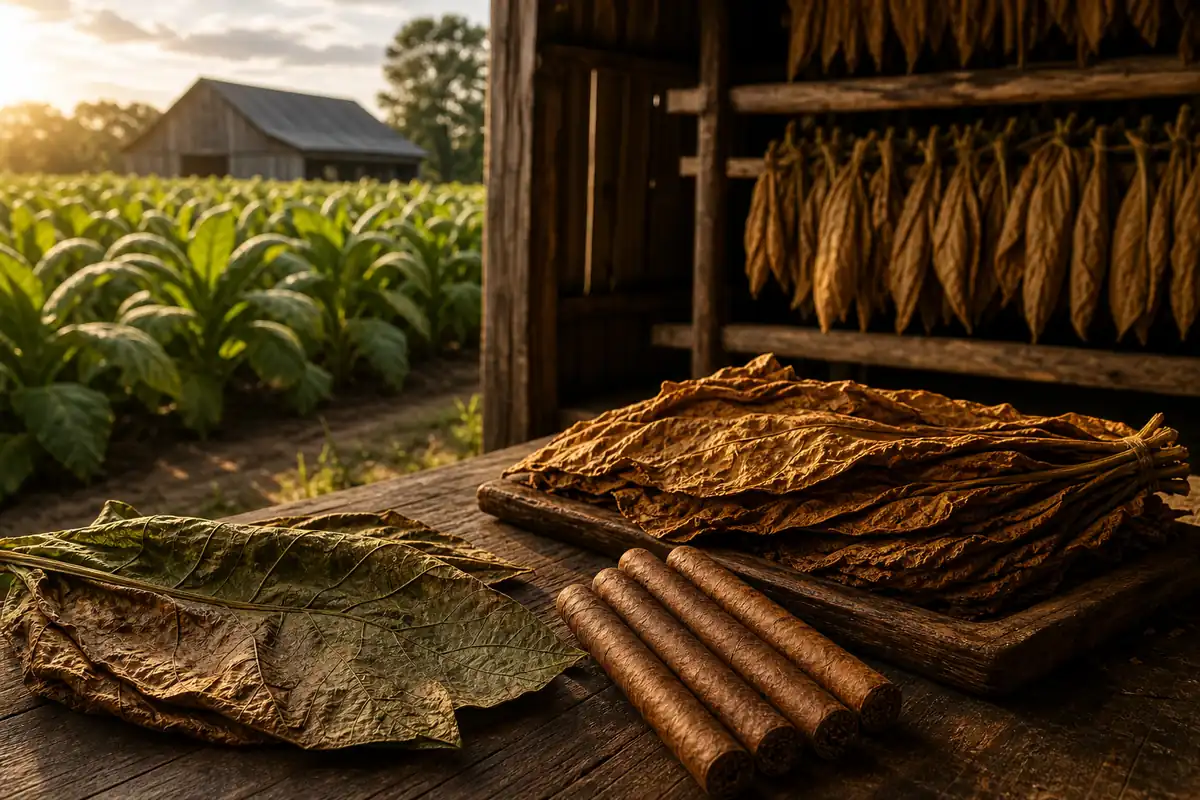
How Tobacco Is Grown and Harvested for Cigars
From seed to smokeable cigar takes 3-5 years — and most of that time is spent after harvesting. Growing and picking takes 4-5 months. Curing takes 6-8 weeks. Fermentation and aging takes 1-4 years. The cigar you light today started as a seedling 3-5 years ago in a nursery in Nicaragua, the Dominican Republic, or Honduras. Understanding this timeline explains why premium cigars cost what they do — you're paying for years of patient craftsmanship.
Growing (4-5 Months)
Seed and Nursery
Tobacco seeds are microscopic — 10,000 fit in a thimble. They're germinated in nursery beds for 6-8 weeks before transplanting to fields. Each farm cultivates specific tobacco varietals selected for their region: Criollo, Corojo, Habano, Connecticut Shade, Olor, Piloto Cubano. Different varietals produce different flavor profiles, just as grape varietals produce different wines.
Field Cultivation
After transplanting, plants grow for 3-4 months. The farmer's main concerns during this period:
- Sun vs shade: Wrapper tobacco is often grown under muslin cloth tents ("tapado") that filter 70% of sunlight — producing thinner, more elastic leaves with fewer veins. Filler tobacco grows in full sun ("sun-grown") for thicker, more flavorful leaves.
- Topping: The flower bud is cut off to redirect energy from seed production to leaf growth. Topped plants produce larger, oilier leaves.
- Pest control: Tobacco's natural pest resistance (nicotine is itself an insecticide) is supplemented by manual inspection. Many premium farms avoid harsh pesticides that could affect leaf flavor.
Priming (Harvesting)
Tobacco isn't harvested all at once. Leaves are picked ("primed") from bottom to top, 2-4 leaves at a time, over 4-6 weeks as they ripen. Bottom leaves (Volado) are picked first, top leaves (Ligero) last. This staggered harvest ensures each leaf is picked at peak maturity.
The priming level determines the leaf's character:
- Volado (1st-3rd primings): Thin, mild, combustible. Used for burn quality in filler.
- Seco (4th-6th primings): Medium, aromatic, flavorful. The blender's primary palette.
- Ligero (7th-9th primings): Thick, oily, powerful. Provides strength and body.
Curing (6-8 Weeks)
Freshly picked tobacco leaves are 85% water — they must be dried to about 25% moisture before they can be fermented. Curing happens in wooden barns ("casas de tabaco") where leaves are hung on poles called "cujes" and left to dry naturally over 6-8 weeks.
During curing, chlorophyll breaks down (leaves change from green to yellow to brown), starches begin converting to sugars, and the leaf develops its initial flavor character. Temperature and humidity inside the barn are controlled by opening and closing vents — too fast and leaves dry unevenly; too slow and they mold.
Air curing (natural airflow) is standard for cigar tobacco. Flue curing (heat-accelerated) is used for cigarette tobacco and produces a different chemical result. The slow pace of air curing develops more complex compounds.
Fermentation (3-12 Months)
After curing, leaves are bundled into large piles called "pilons" — stacks of 3,000-5,000 lbs of tobacco. The weight and moisture create heat through natural microbial activity (like composting). Internal pilon temperatures reach 100-140°F.
This heat-driven fermentation:
- Eliminates ammonia and harshness from the leaf
- Breaks down proteins into amino acids (mellowing bitterness)
- Converts starches to sugars (developing sweetness)
- Reduces nicotine content slightly
- Develops complex flavor compounds through Maillard reactions
- Darkens the leaf color
Workers monitor pilon temperature daily. When internal temperature exceeds the target, the pilon is broken apart, leaves are rotated (outer leaves move to center and vice versa), and the pilon is restacked. This ensures even fermentation. A single leaf may go through 3-6 rotation cycles over months.
Maduro wrappers undergo additional, more intensive fermentation — longer duration, higher temperatures, sometimes with added moisture. This extra processing is what creates their characteristic dark color and sweetness.
Aging (1-4 Years)
After fermentation, tobacco enters long-term aging — stored in bales at controlled humidity, resting. During this period, remaining harshness dissipates, flavors meld, and the leaf reaches smoking readiness. The minimum aging period for premium cigar tobacco is typically 1-2 years. Premium brands like Padrón age their tobacco 4-5 years before rolling.
This aging period is the single largest cost factor in premium cigars — the manufacturer has money tied up in tobacco inventory for years before it generates any revenue. A cigar rolled today uses tobacco purchased and stored 2-5 years ago.
From Leaf to Cigar
After aging, tobacco is classified, sorted by color and quality, and allocated to specific blends. Wrapper leaves are inspected individually — only 10-15% of harvested leaves meet wrapper quality standards. The rest become binder or are discarded. This sorting process happens by hand, by experienced workers who've been grading tobacco for decades.
Then rolling begins — but that's a different process. The agricultural side ends when the leaf is aged, sorted, and ready for the factory. From seedling to cigar-ready leaf: 3-5 years of patient work that most smokers never see or consider.
To understand what happens after the leaf reaches the factory, read our cigar anatomy guide covering how filler, binder, and wrapper combine. And to taste the difference between growing regions, compare Nicaraguan, Dominican, and Honduran tobacco styles.
Post-Harvest Processing: Curing
After harvesting, tobacco leaves enter curing barns where they hang for 25-50 days depending on leaf thickness and weather conditions. During curing, leaves lose 80-85% of their moisture content as chlorophyll breaks down and starches convert to sugars. The barn's ventilation, adjusted by workers opening and closing slats throughout each day, controls the speed of moisture loss. Too fast dries the leaf before chemical conversion completes, producing harsh flavors. Too slow invites mold growth that destroys entire batches of hanging tobacco worth thousands of dollars in potential product.
Different curing methods produce different flavor characteristics. Air curing (the standard for cigar tobacco) relies on ambient airflow and gradual moisture loss over 4-8 weeks. Sun curing exposes leaves to direct sunlight for faster drying with distinct flavor development. Fire curing uses low wood fires below the hanging leaves, imparting smoky character used in some pipe tobaccos but rarely in premium cigars. The choice of curing method is the first of many processing decisions that shape the final flavor you experience months or years later when you eventually light the finished cigar.
Fermentation: Where Flavor Develops
Cured tobacco enters fermentation pilon stacks where leaves are piled 3-5 feet high and allowed to generate heat through bacterial and enzymatic activity. Internal temperatures reach 100-130 degrees Fahrenheit, breaking down ammonia, reducing harshness, and developing the complex flavors that distinguish premium cigar tobacco from raw agricultural product. Workers monitor pilons daily with thermometers, rotating leaves from the hot center to the cooler edges every few days to ensure uniform fermentation without combustion that too-high temperatures could trigger.
Fermentation duration varies by intended use. Filler tobacco ferments for 6-18 months. Wrapper tobacco intended for maduro processing undergoes additional fermentation cycles totaling 2-5 years, during which sugars caramelize, tannins break down, and the leaf darkens from green-brown to chocolate or jet black. This extended processing is why genuine aged maduro wrappers cost significantly more than lighter alternatives: the manufacturer bears years of warehouse costs, labor for pilon monitoring, and leaf losses from the inevitable percentage that fails during extended fermentation and must be discarded before reaching the rolling table.
The journey from seed to finished cigar typically spans 3-5 years when accounting for all steps: 4 months of growing, 2 months of curing, 6-18 months of fermentation, additional months of aging after rolling, and the blender's development time creating and refining the recipe before production begins. A cigar you purchase today represents years of agricultural work, processing patience, and manufacturing expertise compressed into a single object you enjoy over 45-90 minutes of smoking. Understanding this timeline helps appreciate why premium cigars cost what they do: you are paying not just for tobacco but for years of skilled labor, storage infrastructure, quality control, and the accumulated expertise of families who have refined these processes across multiple generations of dedicated craftspeople.
Frequently asked questions
Why does cigar tobacco take so long to process?
Cigar tobacco must be cured slowly (air-dried 6-8 weeks), fermented thoroughly (3-12 months in pilons), and aged (1-4 years) to eliminate harsh chemicals, develop complex flavors, and reach stable smoking quality. Shortcutting any stage produces harsh, unpleasant tobacco.
What's the difference between shade-grown and sun-grown?
Shade-grown (under cloth tents) produces thin, elastic wrapper leaves with mild flavor and minimal veins — cosmetically perfect. Sun-grown produces thicker, oilier, more flavorful leaves used for filler and bolder wrappers. Both come from the same plant — the growing conditions change the result.
Can you grow cigar tobacco anywhere?
Tobacco grows in many climates, but premium cigar tobacco requires specific conditions: warm temperatures, consistent rainfall, well-drained soil, and the right latitude (tropical to subtropical). The Vuelta Abajo (Cuba), Estelí (Nicaragua), and Cibao (DR) are prime growing regions due to their unique microclimates.
How much does one tobacco plant yield?
One tobacco plant produces 16-20 usable leaves after priming. Of those, maybe 2-3 meet wrapper standards. A single plant's leaves might end up in 10-15 different cigars across different positions (filler, binder, wrapper). Premium yield is measured in quality, not quantity.
Community tasting notes
No community notes yet. Be the first to share how this smoked for you.
Log in to share your tasting notes and photos.