
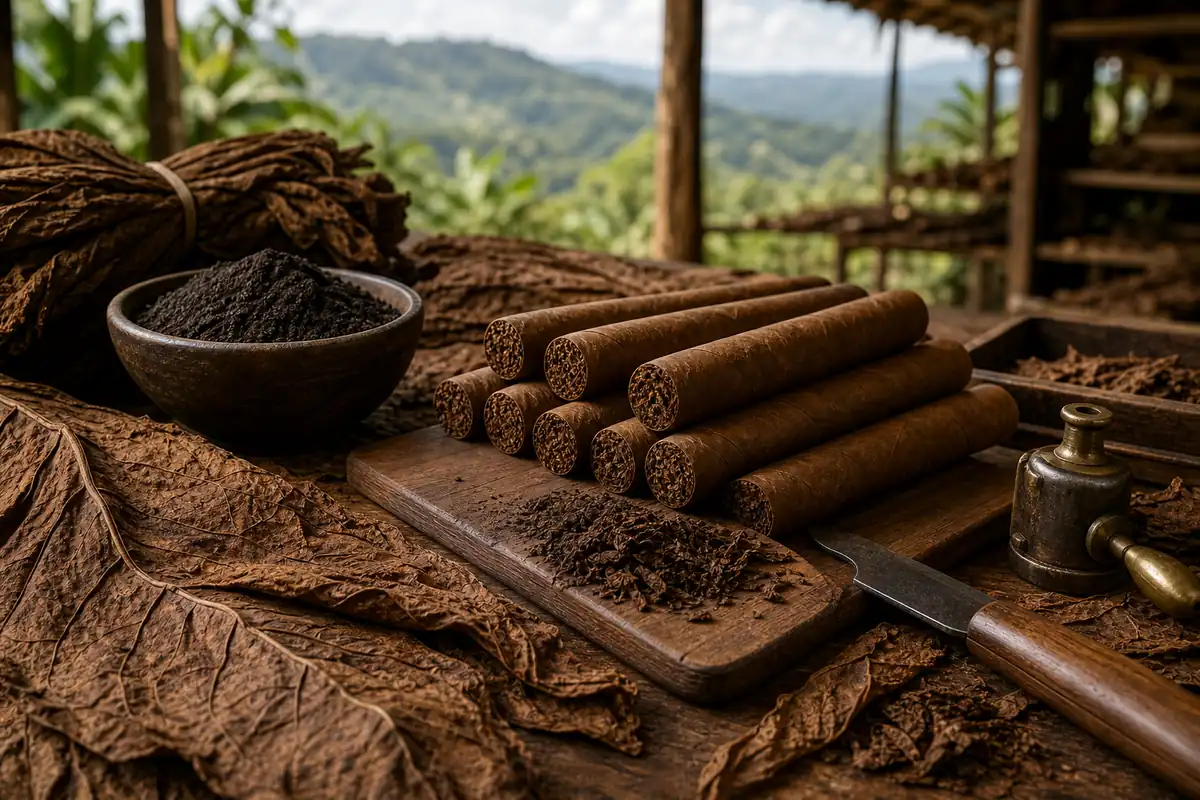
Honduran Cigars: What Makes Them Different
Honduran cigars sit in the middle ground between Dominican elegance and Nicaraguan power — earthy, woody, with a natural spiciness that's less aggressive than Nicaraguan pepper but more assertive than Dominican cream. Honduras is the third-largest premium cigar producer and the country that most cigar smokers have tried without realizing it — many multi-national blends use Honduran filler or binder as a balancing component.
The Honduran tobacco industry, like Nicaragua's and the DR's, was built by Cuban exile families after 1960. But Honduras took a different path — while Nicaragua and the Dominican Republic developed strong national identities in cigar marketing, Honduras became the quiet workhorse. Its tobacco appears in hundreds of blends but the country itself gets less attention than its neighbors.
The Terroir
Jamastrán Valley
The primary tobacco-growing region in eastern Honduras. Higher altitude than Nicaragua's lowland valleys, with rich volcanic soil and a climate that produces medium-bodied tobacco with natural earthiness and cedar. Jamastrán leaf is the backbone of many Rocky Patel, Camacho, and Alec Bradley blends.
Copán Region
In western Honduras, near the Guatemalan border. Copán produces darker, fuller tobacco — more similar to Nicaraguan Estelí in character. The altitude and cooler nights develop more oils in the leaves. Some blenders source their strongest Honduran components from Copán.
La Entrada
Known for wrapper-quality tobacco. The soil produces thin, elastic leaves with fewer veins — ideal for wrapper use. Some of the world's finest Corojo and Connecticut-seed wrapper tobacco grows in La Entrada. The General Cigar Company operates major growing operations here.
The Flavor Profile
Honduran tobacco's signature characteristics:
- Earth and wood: Cedar, oak, and mineral notes dominate. Less chocolate than Nicaraguan, less cream than Dominican.
- Natural spice: A white pepper and black pepper combination that's present but controlled — not the face-punching ligero spice of Nicaraguan tobacco.
- Medium body: Honduran puros typically land in the medium to medium-full range. Rarely mild, rarely overwhelming.
- Consistency: Honduran tobacco is prized by blenders for its reliability — crops are consistent year to year, making it excellent for blending and maintaining brand consistency.
Key Honduran Brands
Camacho
The brand most associated with Honduras specifically. Camacho grows its own tobacco in Jamastrán and produces bold, earthy cigars that showcase Honduran leaf without apology. The Camacho Connecticut, Ecuador, and Corojo lines let you taste Honduran filler through different wrapper lenses. After Davidoff acquired Camacho, production quality increased while maintaining the rugged Honduran character.
Alec Bradley
Alan Rubin's brand produces primarily in Honduras (Raíces Cubanas factory in Danlí). The Prensado, Tempus, and Black Market lines are Honduran-made with Honduran tobacco as major components. Alec Bradley represents the modern Honduran cigar — accessible pricing, consistent quality, medium-plus body.
Rocky Patel
Many Rocky Patel blends are manufactured at the TAVICUSA factory in Honduras. The Vintage series (1990, 1992, 1999, 2003) are among the most popular cigars in America and rely heavily on Honduran tobacco. They demonstrate Honduras's sweet spot: well-priced, flavorful, reliable.
Punch / Hoyo de Monterrey (General Cigar)
These historic Cuban brand names were reborn in Honduras after the embargo. General Cigar's Honduran operations produce Punch and Hoyo de Monterrey cigars that honor the Cuban originals' character through Honduran-grown Cuban-seed tobacco. The Punch Rare Corojo is a benchmark Honduran cigar.
Honduras vs. Nicaragua vs. Dominican Republic
- Strength: Honduras typically medium to medium-full. Between DR (mild-medium) and Nicaragua (medium-full to full).
- Character: Honduras = earth, wood, controlled spice. Nicaragua = dark chocolate, intense pepper, leather. DR = cedar, cream, mineral.
- Role in blends: Honduran tobacco is the world's best blending component — it bridges gaps between stronger and milder leaves. Many multi-country blends use Honduran binder or filler for exactly this balancing effect.
- Value: Honduras offers the best value in the $7-10 range. Alec Bradley, Rocky Patel, and Camacho consistently deliver more complexity per dollar than DR competitors at similar prices.
Why Honduras Gets Overlooked
Honduras suffers from a branding problem. Nicaragua has the "New Cuba" narrative. The DR has Arturo Fuente and Davidoff's luxury positioning. Honduras has no single iconic brand that drives country-level recognition. Its tobacco appears everywhere but its name appears on fewer boxes.
This is changing. Camacho's marketing specifically emphasizes Honduran origin. Newer brands are proud of their Honduran identity. But for now, Honduras remains the cigar world's best-kept utility player — present in far more blends than most smokers realize.
Compare with Nicaraguan style and Dominican character to understand all three major producing countries. For approachable Honduran options, many of our medium-bodied picks feature significant Honduran tobacco.
Honduran Growing Regions
Honduras contains several distinct tobacco-growing regions each producing different flavor characteristics. The Jamastran Valley in the southeastern department of El Paraiso produces tobacco with mineral-forward, slightly acidic character distinct from Nicaraguan or Dominican profiles. The Copan region near the Guatemalan border grows tobacco at higher elevation with cooler temperatures, developing more nuanced aromatics. The La Entrada area in western Honduras has emerged more recently as a quality region producing wrapper-grade tobacco that competes with Ecuadorian and Connecticut alternatives.
The country's varied topography creates micro-climates within small geographic areas. A farm in a valley bottom produces different tobacco than a farm on the hillside above it despite sitting only a mile apart. This variation gives Honduran blenders access to diverse flavor building blocks without importing foreign tobacco, enabling complex puros from domestic sources alone. Rocky Patel's Honduran operations and Alec Bradley's factory both exploit this regional diversity extensively in their blending programs.
Major Honduran Manufacturers
Camacho, now owned by Oettinger Davidoff Group, operates one of Honduras's most modern factories in Danli, producing bold Honduran puros that showcase the country's capacity for full-bodied cigars. Alec Bradley manufactures in Danli using Honduran tobacco alongside Nicaraguan and Dominican components, producing best-sellers like the Prensado and Black Market lines. Rocky Patel's Honduran facility produces several of his brand's most popular lines including the Vintage series using Honduran-grown wrappers aged 6-8 years.
The Plasencia family deserves special mention. Growing tobacco in Honduras since the 1960s, Nestor Plasencia and his sons operate some of the largest farms in the country while also growing tobacco in Nicaragua and manufacturing for dozens of brands. Their own Plasencia brand line launched in 2017 showcases decades of accumulated Honduran tobacco expertise in cigars priced and positioned to compete with the finest offerings from any origin. Their vertical integration from seed to finished cigar gives them cost control and quality consistency that non-farming manufacturers cannot replicate.
The Honduran Flavor Profile
Honduran tobacco tends toward earthy, mineral, and slightly tangy characteristics that sit between Dominican mildness and Nicaraguan boldness. Think of Honduran cigars as the middle ground with their own distinct personality: less sweet than Dominican, less peppery than Nicaraguan, with a mineral backbone and cedar character that provides structure rather than flashy top notes. This makes Honduran tobacco an excellent blending component even in cigars marketed as Nicaraguan or Dominican, adding structural depth and complexity to multi-origin blends without calling attention to itself in the way Nicaraguan ligero or Dominican Connecticut shade does.
For smokers exploring Honduran cigars, start with Camacho's core lines like the Ecuador, Connecticut, and Corojo which showcase different Honduran tobacco expressions at accessible price points between 7-10 dollars. Move to Alec Bradley Prensado for a bolder Honduran experience with box-pressed format and aged filler. Then explore Plasencia's Alma Fuerte or Reserva Original for the pinnacle of what Honduran tobacco achieves when given premium treatment and extensive aging. This progression from accessible to premium reveals Honduran tobacco's full range of capabilities without overwhelming your palate early in the exploration.
Frequently asked questions
Are Honduran cigars good for beginners?
Many are — the medium body and controlled spice make them approachable without being bland. Rocky Patel Vintage 1999 and Camacho Connecticut are commonly recommended starters that showcase Honduran tobacco at manageable strength.
Why don't I see 'Honduras' on cigar bands more often?
Most Honduran-made cigars emphasize brand rather than country of origin. Unlike Nicaragua (which markets itself aggressively), Honduras appears more in blend components than in country branding. Check the band's small print for 'Hecho en Honduras.'
What's the difference between Honduran and Nicaraguan tobacco?
Honduran is earthier, woodier, less intense. Nicaraguan is darker, more peppery, more powerful. In blending, Honduran provides balance and body while Nicaraguan provides strength and dramatic flavor peaks. Many premium cigars combine both.
Is Honduras affected by political instability?
Historically yes — Honduras has experienced disruptions that affected cigar production. However, the tobacco regions (Jamastrán, Danlí, La Entrada) have generally maintained stable operations even during national turbulence. The industry employs thousands and has local political protection.
Community tasting notes
No community notes yet. Be the first to share how this smoked for you.
Log in to share your tasting notes and photos.