
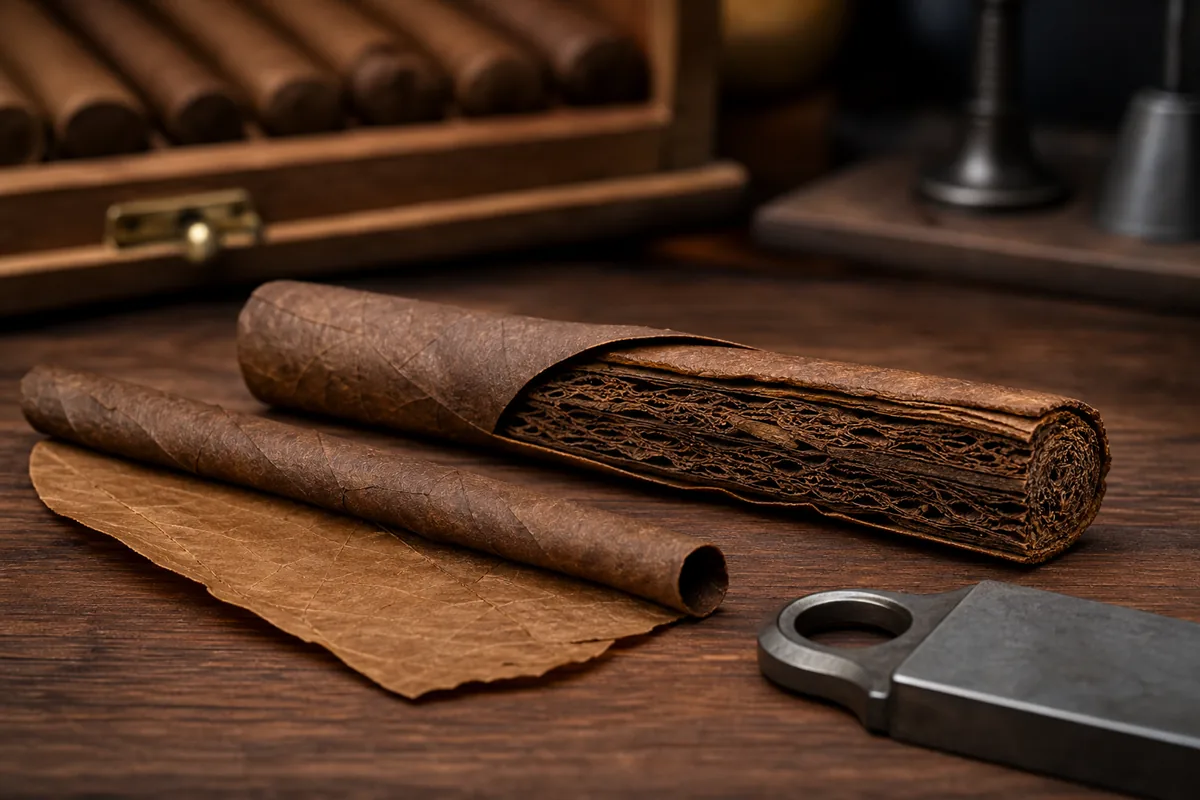
Anatomy of a Cigar: Filler, Binder, Wrapper Explained
A premium cigar has three components: filler (the inside tobaccos that generate most of the flavor), binder (the structural leaf that holds the filler together), and wrapper (the visible outer leaf that contributes aroma and 20-30% of flavor). Understanding this anatomy changes how you read cigar reviews, choose blends, and evaluate what you're tasting with each puff.
Every cigar is essentially a tube of different tobaccos engineered to deliver a specific flavor experience over a 45-90 minute burn. The blender's job is choosing which filler leaves to combine, which binder supports the blend, and which wrapper complements the whole — then arranging them so the cigar burns evenly, draws properly, and evolves through three distinct phases (thirds).
Filler: The Core (60-70% of Flavor)
Filler is the cigar's engine. It's a combination of 2-7 different tobacco leaves (called the "bunch") that generate the primary flavor and nicotine delivery. When you taste chocolate, pepper, earth, leather, or coffee in a cigar — that's mostly filler.
The leaves in a filler blend come from different farms, different priming levels, and often different countries. A cigar like the Padrón 1964 Anniversary uses all-Nicaraguan tobaccos aged four years, while a Montecristo Espada might blend Nicaraguan Ligero with Dominican Seco and Honduran Volado. The blender is balancing strength, flavor complexity, and burn characteristics across every leaf in the bunch.
Filler Leaf Types (by Plant Position)
Tobacco leaves are categorized by where they grow on the plant — higher leaves get more sun, producing more oils and nicotine:
- Ligero (top leaves): Maximum sun exposure = most nicotine, thickest texture, strongest flavor. Burns slowest. The "power" component. More ligero = stronger cigar.
- Seco (middle leaves): Moderate sun = medium body, most aromatic. Burns at medium pace. The "flavor" component — provides the complex taste notes that make a blend interesting.
- Volado (bottom leaves): Least sun = mildest flavor, thinnest texture, most combustible. Burns fastest. The "combustion" component — ensures the cigar stays lit and burns evenly.
A blender combines these three types (and sub-varieties from different regions) to achieve a target flavor profile. A mild cigar uses mostly Seco and Volado. A full-strength cigar uses heavy Ligero with just enough Volado for combustion.
Long Filler vs. Short Filler
Long filler: Whole leaves running the cigar's full length. All premium hand-rolled cigars use long filler. It produces even burn, consistent draw, and flavor that develops progressively because different leaves engage as the cherry advances.
Short filler: Chopped tobacco scraps. Used in machine-made cigars and cheap "hand-rolled" cigars. Burns unevenly, tastes one-dimensional, prone to plugging. If a cigar costs under $4, it's probably short filler.
Mixed filler: Some brands use a combination — long filler leaves with short filler scraps packed in to fill gaps. This shows up in the $4-6 range. It performs better than pure short filler but lacks the progressive flavor development of 100% long filler. You'll sometimes see "sandwich" construction where short filler is rolled inside long filler leaves — a compromise that improves draw consistency over straight short filler.
Binder: The Structure (10-15% of Flavor)
The binder is a single leaf wrapped around the filler bunch before the wrapper is applied. Its primary job is structural — holding the filler together during rolling and smoking. But the binder also contributes flavor, especially as the cigar burns into the second and third thirds where the binder's contribution increases relative to the diminishing filler.
What Makes a Good Binder
- Elasticity: Must stretch around the bunch without cracking
- Even burn rate: Burns at the same pace as filler — a binder that burns faster creates tunneling (filler burning ahead of wrapper)
- Flavor compatibility: Shouldn't fight the filler's profile. Many blenders use the same tobacco region for binder and filler to ensure harmony.
- Adhesion: Holds together when wrapper is applied and stays intact for the cigar's full burn time
Common binder origins: Connecticut Broadleaf, Honduran, Mexican San Andrés, Nicaraguan. Binders are often "cosmetically imperfect" leaves from wrapper tobacco crops — same leaf quality, but with veins or spots that disqualify them from the visible exterior position.
The Binder's Hidden Role in Flavor Transitions
Most smokers underestimate the binder's flavor impact. In the first third, the binder is one of many layers contributing smoke. But as the cigar shortens, the binder-to-filler ratio shifts. By the final third, the binder leaf is close to your palate and generates a meaningful percentage of what you taste. Blenders like A.J. Fernandez are known for selecting binders that add a pepper or spice kick that intensifies as the cigar progresses — that escalating spice isn't just concentrated filler, it's the binder revealing itself.
Wrapper: The Presentation (20-30% of Flavor)
The wrapper is what you see — the outermost leaf, applied last by the roller. It's the most expensive component because only 10-15% of harvested leaves meet wrapper quality standards (thin, few veins, consistent color, no tears, elastic enough to stretch without cracking).
Wrapper's Flavor Contribution
Despite being a single layer, wrapper contributes 20-30% of overall flavor because you taste it directly — it's the leaf your lips contact, and the outermost smoke touches your palate first. Wrapper defines the cigar's immediate impression: sweetness, spice, or smoothness you notice on the first puff before filler flavors build.
Major Wrapper Types
- Connecticut Shade: Grown under cloth tents, producing thin, golden, mild leaves. Creamy, slightly sweet. The beginner-friendly wrapper.
- Habano: Cuban-seed wrapper grown in multiple countries. Medium-brown, oily, delivers spice and earth. The versatile "default" for premium cigars.
- Maduro: Not a tobacco type but a processing method — extended fermentation darkens the leaf, caramelizing sugars. Dark brown to black. Sweet, rich, full-bodied.
- Connecticut Broadleaf: Thick, dark, grown in the Connecticut River Valley without shade. Rustic, earthy, strong. The wrapper behind Liga Privada.
- Cameroon: Thin, toothy (small bumps on surface), naturally sweet. Grown in Central Africa. The wrapper behind Arturo Fuente Hemingway.
Why Wrapper Costs So Much
Growing wrapper-grade tobacco is expensive because it demands perfection. Shade-grown wrappers require erecting and maintaining massive cheesecloth structures over entire fields — the infrastructure cost alone adds $2-5 per cigar to production. Sun-grown wrappers don't need shade tents but face harsher conditions that damage more leaves. Either way, after harvesting, sorting, and fermentation, a tobacco farm might yield only 10-15% of leaves good enough for wrapper duty. The rest become binders or get sold for filler. A single premium wrapper leaf can cost a manufacturer $1-3 — multiply that by thousands of cigars per day and you see why wrapper selection drives retail pricing.
How They Work Together
The three components interact throughout the smoke:
First third: Wrapper dominates. You taste wrapper characteristics most clearly here because the ratio of wrapper surface to filler volume is highest at the head. Lighter, wrapper-forward flavors.
Second third: Balanced. All three components contribute equally. This is where complexity peaks — filler is fully engaged, binder contributes, wrapper continues. Most blenders design their cigars to taste best in this section.
Final third: Filler concentrates. Tar and oils accumulate, heat increases, and the reduced cigar length means smoke is hotter and more intense. Strength increases. Flavors darken and concentrate. Some smokers stop before the final inch; others consider it the best part.
Common Mistakes When Reading Cigar Reviews
Understanding anatomy helps you interpret reviews more accurately. When a reviewer says "Connecticut wrapper" and you assume the cigar is mild — that's incomplete thinking. A Connecticut Shade wrapper over Nicaraguan Ligero filler (like the Undercrown Shade) still delivers medium-plus body because the filler drives 60-70% of flavor. The wrapper only softens the entry, not the core experience.
Similarly, "Maduro" doesn't automatically mean full-bodied. A Maduro wrapper over mild Dominican filler produces a sweet, medium-bodied cigar. The wrapper adds sweetness and color, but the filler determines overall strength. Read the full blend description — origin of filler, type of binder — not just the wrapper name.
For a deeper dive into how wrapper specifically changes your experience, read our wrapper types guide. And to understand how size interacts with these components, check ring gauge explained — a thinner cigar emphasizes wrapper, while a thicker cigar lets filler complexity shine.
Frequently asked questions
Is wrapper the most important part?
No — filler contributes 60-70% of flavor. But wrapper creates your first impression and defines the cigar's visible character. A great filler with a bad wrapper tastes wrong in the first third. Both matter.
Why are Maduro cigars sweeter?
Extended fermentation caramelizes natural sugars in the wrapper leaf — similar to how caramelizing onions makes them sweet. The dark color and sweetness come from this processing, not from added sugar.
What does 'puro' mean?
A puro uses filler, binder, and wrapper all from the same country. A Nicaraguan puro uses all-Nicaraguan tobacco. A puro showcases a single country's terroir without blending across origins.
Can I tell cigar quality by looking at the wrapper?
Partially. Premium wrappers are uniform in color, have minimal visible veins, feel oily to the touch, and have no cracks or tears. But visual quality only guarantees the wrapper leaf itself — the filler (most of the flavor) is invisible until you smoke it.
Community tasting notes
No community notes yet. Be the first to share how this smoked for you.
Log in to share your tasting notes and photos.