
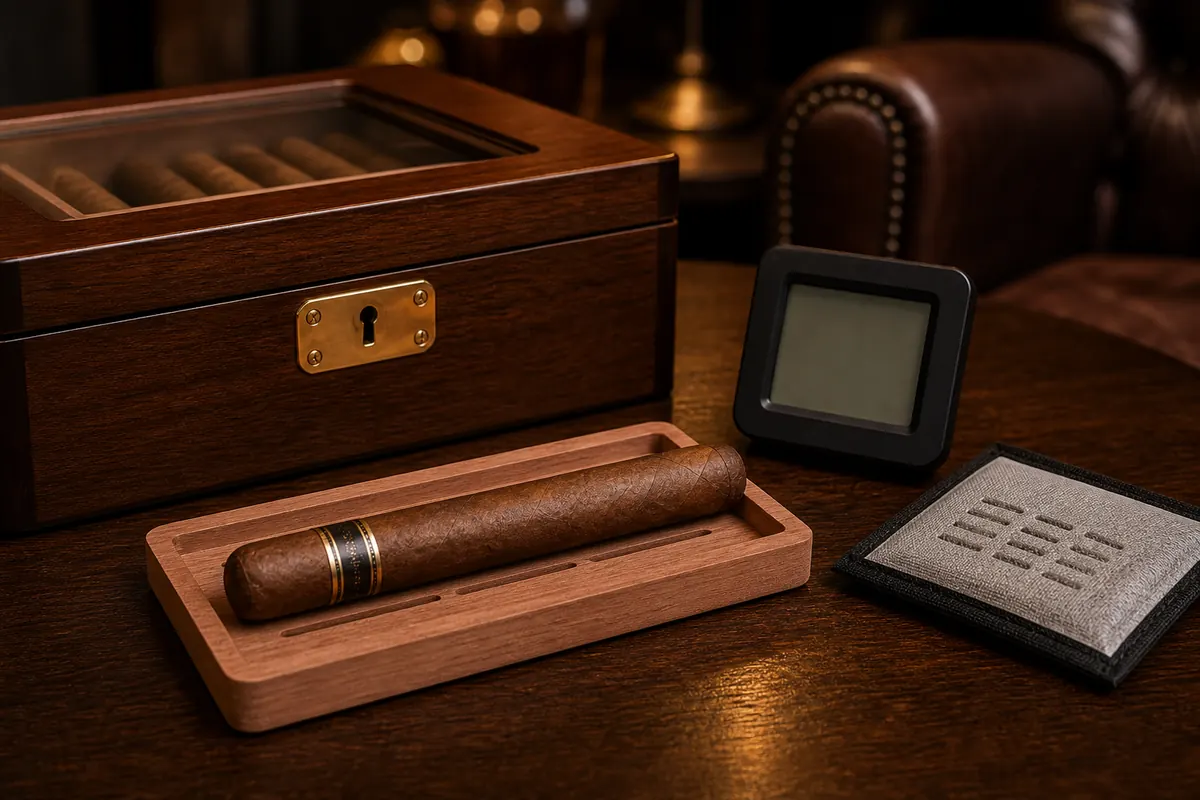
How to Properly Rest a Cigar Before Smoking
The short answer: rest new cigars in your humidor for at least 2 weeks before smoking. The ideal is 30-90 days. The reason is simple — cigars endure temperature swings, humidity shifts, and physical jostling during shipping. Resting allows them to re-equilibrate to stable storage conditions so they smoke as the blender intended.
Why Resting Matters
Shipping Stress
From factory to retailer to your mailbox, cigars experience:
- Temperature fluctuations (warehouse → truck → porch in summer = possible 60-110°F range)
- Humidity drops (packaging protects but doesn't maintain 65-70% RH perfectly over days)
- Physical compression from stacking and handling
- Cellophane preventing moisture equalization with ambient air
A cigar that arrives slightly dry on the outside but moist in the center will burn unevenly. One that's been cold-shocked will smoke tight. These aren't defects — they're transit effects that dissipate with rest.
Flavor Normalization
Different tobacco leaves within a cigar absorb and release moisture at different rates. After shipping disruption, the wrapper, binder, and various filler leaves may be at different humidity levels. Resting in stable conditions (65-70% RH, 65-70°F) allows all components to reach equilibrium — the same moisture level throughout. This means even burn, consistent draw, and the flavor profile the blender designed.
How Long to Rest
Minimum: 2 Weeks
Two weeks in a stable humidor corrects most shipping damage. Temperature equalizes in hours, but moisture migration through tightly rolled tobacco takes days. Two weeks gives the outer wrapper and inner filler time to reach the same humidity level.
Ideal: 30-90 Days
A month or more allows what enthusiasts call a "settling period" — beyond just humidity equalization, flavors continue to marry and mellow after any disruption. If you've bought a box, smoking the first cigar at 2 weeks and another at 3 months often reveals meaningful improvement in smoothness and complexity.
Extended: 6+ Months (Aging)
This crosses from "resting" into "aging" — a different practice with different goals. Aging transforms flavors over months to years. Resting simply restores the cigar to its intended state. For aging, see our guide to aging cigars at home.
When Resting Matters Most
Online Purchases
Highest priority for resting. Online orders spend 2-7 days in transit (sometimes extreme temperatures), pass through multiple handling points, and arrive in variable condition. Always rest online purchases minimum 2 weeks.
Seasonal Extremes
Cigars shipped in summer (heat exposure) or winter (cold/dry exposure) need longer rest — 3-4 weeks minimum. Summer heat can sweat oils from wrappers; winter cold can dry the outer layer while the center stays moist. Both need time to equalize.
Freshly Rolled (Factory Fresh)
Some brands sell "fresh from factory" cigars with minimal aging. These benefit most from extended rest — 60-90 days lets residual ammonia from fermentation dissipate and sharp flavors mellow. Fresh Cuban cigars in particular are known to improve dramatically with 6-12 months of rest.
When It Matters Less
- In-store purchases from a well-maintained humidor: These have been resting in stable conditions already. You can smoke same-day if the shop's humidor is properly maintained.
- Cigars stored at proper humidity long-term by the previous owner: No disruption = no rest needed.
How to Rest Properly
- Remove cellophane (optional): Opinions vary. Cellophane slows moisture exchange, which means slower equalization but also protection from handling oils and damage. Either way works — without cellophane equalizes faster (days vs. weeks).
- Don't overcrowd: Cigars need air circulation. Don't jam 50 new cigars into a full humidor — space them so humidity can reach all surfaces.
- Stable temperature: Avoid placing near windows, exterior walls, or heat sources during rest. Stable 65-70°F is the target.
- Separate strong from mild (optional): Heavily infused or flavored cigars can transfer scent to natural cigars in close proximity. If you rest infused cigars, separate them or keep in original cellophane.
How to Tell When a Cigar Is Ready
No objective test exists, but indicators of proper equilibration:
- Feel: Gentle squeeze produces slight give with springback. No hard spots (dry) or mushy areas (over-humidified patches).
- Appearance: Wrapper has subtle sheen (oil presence). No dry, ashy-looking patches. No wet/dark spots.
- Consistency: The cigar feels uniform from foot to head — same firmness throughout. Unequal rest shows as varying firmness along the length.
For setting up the storage environment: tupperdor storage guide or choosing your first humidor.
The Science Behind Resting
When a cigar arrives from a retailer, it has been subjected to temperature and humidity fluctuations during transit that stress the tobacco. Shipping trucks, delivery vehicles, and mailboxes expose cigars to conditions outside ideal storage parameters for hours or days. Resting allows the tobacco to reacclimate to your humidor's stable environment, with moisture redistributing evenly throughout the filler, binder, and wrapper rather than concentrating in surface layers or depleting unevenly from the exposed outer wrapper surface inward.
The molecular explanation: tobacco leaves contain oils, sugars, and aromatic compounds that migrate between cells based on humidity and temperature gradients. Transit creates artificial gradients that push these compounds into unnatural distributions. Resting in stable conditions allows diffusion to return them to equilibrium positions. A cigar at equilibrium burns more evenly, produces more consistent flavor, and draws with less resistance than one where moisture and oils are distributed erratically from recent environmental stress.
Rest Times by Situation
Minimum rest for online purchases shipped in standard packaging: 5-7 days. This allows transit moisture loss to recover and temperature-shocked tobacco to stabilize. For cigars shipped during extreme weather (summer heat or winter cold): 10-14 days, because thermal shock pushes moisture deeper out of equilibrium requiring longer recovery. For cigars purchased from a well-maintained local humidor: 1-3 days is typically sufficient since the cigar already resided in proper conditions and only experienced brief transition during your drive home.
Special cases requiring extended rest: cigars from Cuban retailers shipped internationally may arrive at very high humidity (75-plus percent) and need 2-3 weeks to acclimate downward to your 65% target without shocking the wrapper. Vintage or aged cigars purchased at auction that sat in unknown storage conditions benefit from a full month of rest at proper humidity before evaluation, giving the tobacco maximum time to either recover from poor previous storage or reveal irreversible damage that extended rest cannot remediate.
How to Tell a Cigar is Ready
After resting, perform a physical inspection before lighting. The cigar should feel uniformly firm when rolled gently between your fingers with no soft spots indicating moisture pockets or hard spots indicating dry sections. The wrapper should have slight oily sheen on dark cigars or smooth matte finish on light ones without dry flaking or excessive tackiness. Cold draw should feel like breathing through an open straw with steady gentle resistance. If any of these checks fail after your minimum rest period, extend rest time and recheck weekly until the cigar passes all three physical assessments.
The practical takeaway: patience costs nothing and prevents disappointment. A cigar smoked immediately after purchase without resting may perform adequately, but the same cigar given a week of humidor rest almost always performs noticeably better in burn quality, draw consistency, and flavor clarity. For expensive or anticipated cigars you have been waiting to try, the extra week of rest ensures you experience the cigar at its current best rather than at its stressed and travel-fatigued worst. The difference between a properly rested cigar and one smoked straight from shipping is often dramatic enough that the same blend tastes like two different cigars entirely depending on preparation versus impatience.
Frequently asked questions
Can I smoke a cigar the day I buy it?
From a good brick-and-mortar humidor, yes — the shop already provided stable storage. Online purchases: not recommended. Transit disrupts the cigar's equilibrium. You can smoke it, but it likely won't perform as well as after 2+ weeks of rest.
Does resting in cellophane work?
Yes, but slower. Cellophane is semi-permeable — moisture passes through, just more slowly than bare tobacco. Resting with cellophane on takes roughly 2x longer to achieve full equalization compared to cellophane removed. Either approach works.
How do I know if a cigar wasn't rested enough?
Signs: wrapper cracks when lit (too dry on outside), tunneling (wet center/dry exterior), tight draw that loosens after an inch (moisture gradient), or muted/flat flavor that you know should be more complex from reviews. If the first cigar from a shipment seems 'off,' let the rest sit longer.
Is resting the same as aging?
No. Resting (2-12 weeks) restores a cigar to its intended condition after transit disruption. Aging (6 months to years) transforms the cigar into something different — mellower, more complex, with changed flavor characteristics. Resting brings it back; aging takes it forward.
Community tasting notes
No community notes yet. Be the first to share how this smoked for you.
Log in to share your tasting notes and photos.