
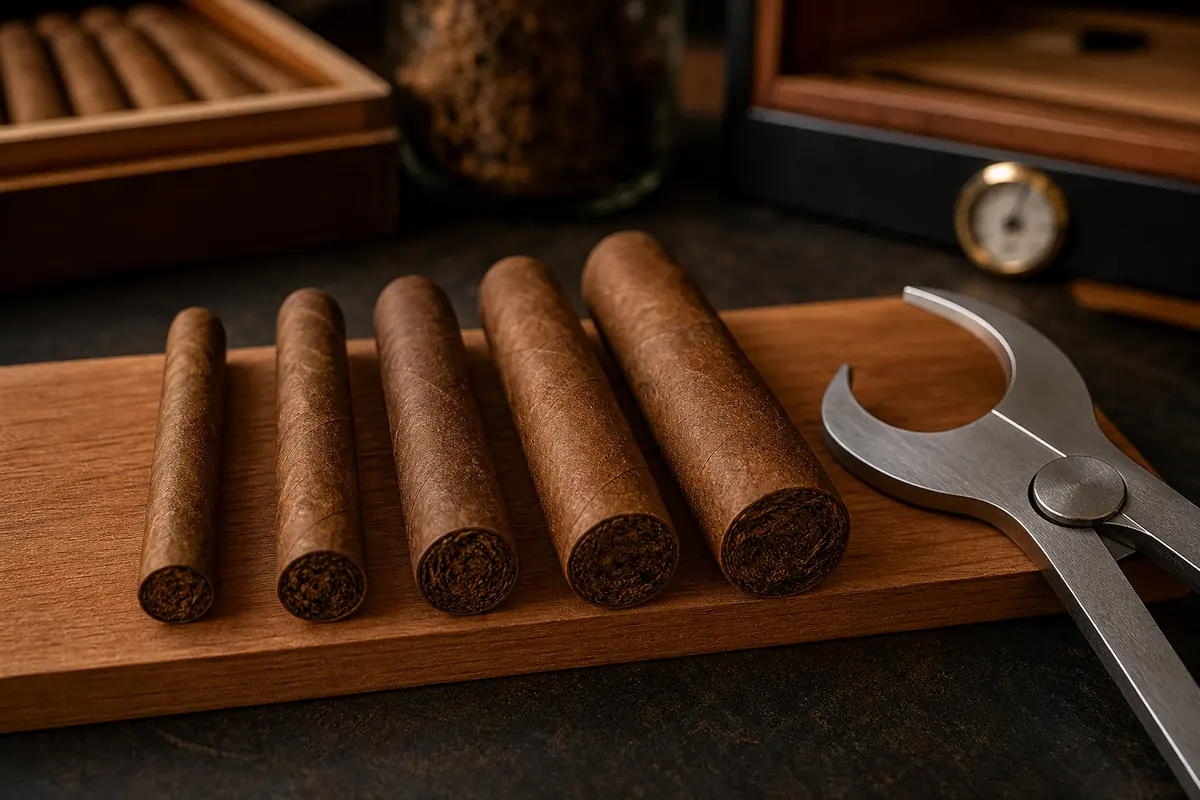
Cigar Ring Gauge Explained: How Size Affects Flavor
Larger ring gauge cigars burn cooler, deliver more complexity from the blend, and last longer — but they also commit you to a longer session. A 50 ring gauge Robusto gives you the best balance of flavor and time for most situations. Anything smaller sacrifices blend complexity. Anything larger demands over an hour of your day.
Ring gauge measures a cigar's diameter in 64ths of an inch. A 50 ring gauge cigar is 50/64 of an inch across — roughly three-quarters of an inch. The number tells you how thick the cigar is, which determines how much filler tobacco the blender can work with and how cool the smoke stays as it travels from foot to mouth.
How Ring Gauge Affects Flavor
A cigar is a blend of multiple filler leaves — typically three to five different tobaccos plus binder and wrapper. In a thin cigar (38-42 ring gauge), the blender has limited space. Two or three filler types maximum, and the wrapper-to-filler ratio is high — meaning wrapper flavor dominates. Thin cigars taste more of their wrapper.
In a thicker cigar (50-60 ring gauge), the blender packs more filler varieties into the bunch. Five or six different tobaccos create more complexity, more transitions between thirds, more going on with each puff. The wrapper influence diminishes proportionally — it's still there, but the filler chorus gets louder.
This means:
- Thin cigars (38-44): Wrapper-forward, simpler flavor, more concentrated single-note experience
- Medium cigars (46-52): Balanced — wrapper and filler both contribute equally. The "standard" experience most brands design for.
- Thick cigars (54-60+): Filler-dominant, more complex blend expression, cooler smoke temperature
How Ring Gauge Affects Burn
Thicker cigars burn cooler because smoke travels further from the lit cherry to your mouth, losing heat along the way. Cooler smoke is smoother smoke — less bite, less harshness, less chance of overheating on a slightly fast puff. If you find cigars bitter or peppery, try a larger ring gauge before blaming the blend.
Temperature also affects flavor perception. Hot smoke emphasizes bitterness and pepper. Cool smoke reveals sweetness and nuance. The same blend in a 42 and a 54 ring gauge tastes noticeably different — the 54 version reads sweeter and smoother, the 42 reads sharper and more intense.
How Ring Gauge Affects Smoke Time
General estimates by ring gauge (assuming standard 5-6 inch length):
- 38-42 (Corona, Lancero): 30-45 minutes
- 44-48 (Corona Gorda, Lonsdale): 40-55 minutes
- 50-52 (Robusto, Toro): 50-70 minutes
- 54-56 (Toro Grande, Bull): 60-80 minutes
- 58-60+ (Gordo, Giant): 75-100 minutes
Length matters too — a 7-inch Churchill at 48 ring gauge lasts as long as a 5-inch Robusto at 54. But ring gauge determines the character of that time, while length determines the duration.
Common Vitolas and Their Ring Gauges
Vitola is the industry term for a specific size format:
- Petit Corona: 4.5" × 42 — quick smoke, classic proportions
- Corona: 5.5" × 42-44 — the original cigar format, elegant and wrapper-forward
- Robusto: 5" × 50 — the most popular modern vitola, balanced in every way
- Toro: 6" × 50-52 — more time than Robusto, same balance
- Churchill: 7" × 47-48 — long, thinner, elegant. Named after Winston who preferred this size.
- Gordo/60: 6" × 60 — modern format, maximum filler complexity, very cool smoke
- Lancero: 7" × 38 — thin, long, wrapper-dominant. The connoisseur's format.
Which Ring Gauge Should You Choose
New to cigars: Start with Robusto (50 ring gauge). It's the format most blenders design around — you're tasting the cigar as the blender intended. Duration is manageable (50-60 minutes) and smoke stays cool enough to be forgiving.
Short on time: Petit Corona or Corona (42-44). Done in 30-40 minutes. Accept that you'll get a more wrapper-forward, less complex version of the blend.
Maximum flavor: Toro or Gordo (52-60). More filler varieties, cooler smoke, more transitions. Commit to over an hour.
Wrapper lover: Lancero (38) or Corona (42). The thin format lets wrapper dominate — if you love a particular wrapper type, go thinner to taste more of it.
The same cigar brand in different vitolas gives you different experiences. Try your favorite cigar in two or three sizes — you'll find your preferred ring gauge for that blend. Most smokers settle on Robusto or Toro as their default and keep a few Coronas for short sessions.
Check our beginner picks — most are recommended in Robusto for a reason. And a precision cutter matters more on thinner ring gauges where a bad cut can crack the entire cap.
How Ring Gauge Affects Flavor Profile
Ring gauge directly influences your flavor experience through a simple principle: thicker cigars have more filler relative to wrapper, while thinner cigars emphasize wrapper flavor. A lancero at 38 ring gauge delivers prominent wrapper character because the thin diameter means wrapper constitutes a larger percentage of what you taste. A 60-ring-gauge gordo lets the complex filler blend dominate because wrapper is a proportionally smaller surface area of the total smoke composition you inhale.
This means the same blend tastes different across ring gauges. A Padron 1926 in lancero format tastes notably different from the same blend in 80th Anniversary (54 gauge) because the filler-to-wrapper ratio changes. Blenders account for this by adjusting filler recipes across sizes within the same line, but the fundamental wrapper influence shifts regardless. If you prefer wrapper-driven flavors like sweetness, creaminess, and spice, lean toward thinner formats. If you prefer filler-driven complexity with multiple flavor layers, wider gauges reward your attention more fully.
Ring Gauge and Burn Time
Thicker cigars burn longer assuming equal length because more tobacco must combust at each position along the cigar. A 5-inch robusto at 50 ring gauge burns approximately 45-60 minutes. The same 5-inch length at 60 ring gauge extends to 60-75 minutes because each cross-section contains 44% more tobacco volume. Conversely, a 5-inch petite corona at 42 ring gauge finishes in 35-45 minutes. Choose your ring gauge partly based on available time: wider for long sessions, thinner for shorter breaks.
Burn temperature also correlates with gauge. Thinner cigars concentrate heat into a smaller cherry area, producing hotter smoke that can turn harsh if you puff too frequently. Wider cigars spread their cherry across a larger surface area, producing cooler smoke that remains comfortable even at moderate puffing frequency. This is why many new smokers find wider-gauge cigars more forgiving: the thermal buffer of a large-diameter burn prevents the overheating that creates bitterness in thin cigars when puffing rhythm is still inconsistent.
Finding Your Preferred Gauge
Most experienced smokers settle into a preferred ring gauge range through trial and error. The 48-52 range centered around the robusto format remains the industry's most popular because it balances burn time, flavor complexity, and comfortable mouthfeel for average-sized hands and mouths. Smokers with smaller hands and mouths often prefer 42-46 gauges that feel proportionate. Those wanting maximum burn time and coolest smoke gravitate toward 54-60. There is no objectively correct gauge, only personal preference shaped by physical comfort, time availability, and flavor priorities.
Modern Gauge Trends
The cigar industry has trended toward wider ring gauges over the past two decades. In the 1990s, the 42-gauge corona was standard. Today, the 50-gauge robusto dominates production and sales. Some manufacturers push into 60, 64, and even 70-plus gauge territory with extreme formats. This trend reflects both manufacturing capability improvements and smoker preference for longer burn times and cooler smoke temperatures that wide gauges provide. However, a counter-movement among premium brands like Warped, Roma Craft, and Crowned Heads has revived interest in traditional thin-gauge lanceros and coronas that emphasize wrapper flavor and quick flavor transitions over extended session length.
Frequently asked questions
Does bigger ring gauge mean stronger cigar?
Not necessarily. Ring gauge affects complexity and temperature, not inherent strength. A mild blend in a 60 ring is still mild — just smoother and more nuanced than the same blend in a 42.
Why are Robustos so popular?
Blenders design most blends around the Robusto format (5" × 50). It balances wrapper-to-filler ratio perfectly, keeps smoke cool, and finishes in under an hour. It's the 'default' cigar experience.
Is a Lancero better than a Gordo?
Neither is objectively better. Lanceros showcase the wrapper — ideal when the wrapper is exceptional. Gordos showcase the full blend — ideal when the filler is complex. Different experiences from the same blend.
What ring gauge for a 30-minute break?
Look for Petit Corona (4" × 42) or Short Robusto (4" × 50) formats. Any ring gauge works for short smokes — just cut the length. Many brands offer 'short' versions of their popular blends for exactly this purpose.
Community tasting notes
No community notes yet. Be the first to share how this smoked for you.
Log in to share your tasting notes and photos.