
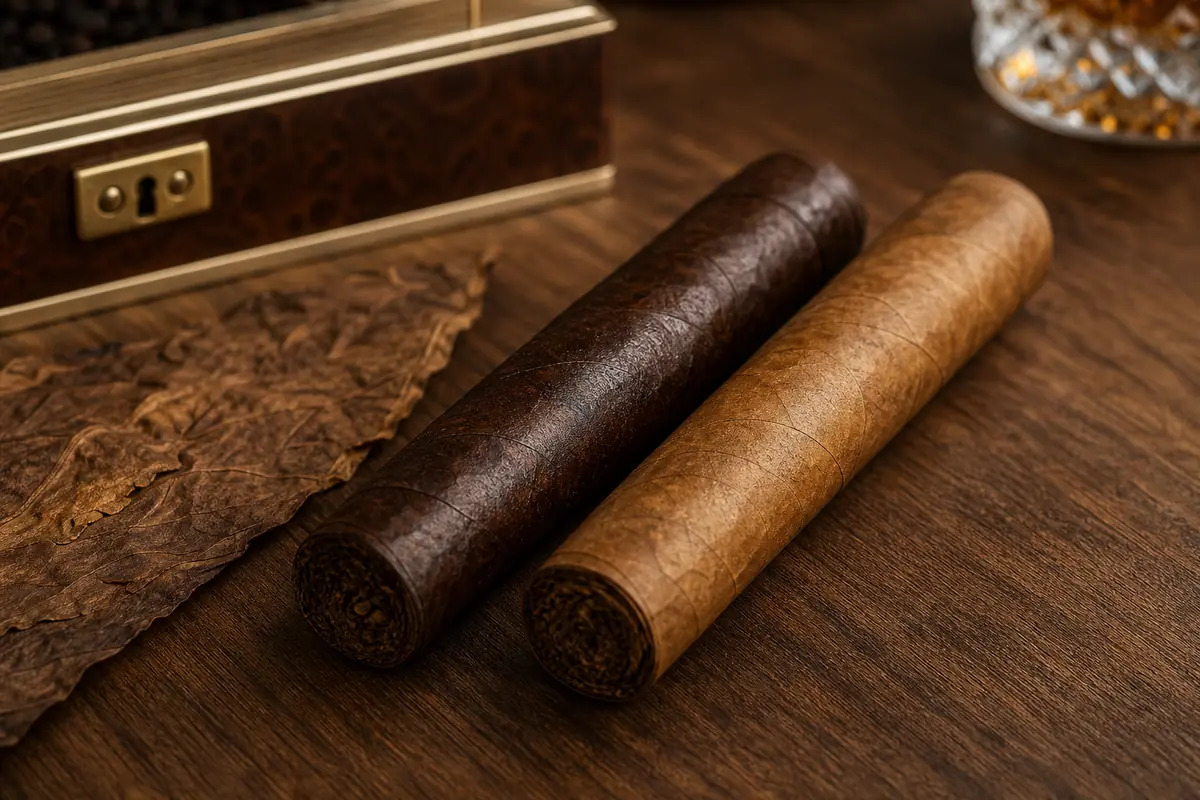
Maduro vs Natural Cigar Wrappers: What's the Difference
Maduro wrappers are sweeter, richer, and fuller-bodied than natural wrappers — the extended fermentation caramelizes sugars in the leaf, producing chocolate, coffee, and dried fruit flavors that natural wrappers don't have. "Maduro" means "mature" in Spanish, referring to the extra processing time that develops the dark color and sweet character. It's not a tobacco variety — it's a process applied to specific leaves.
The same tobacco plant can produce both Maduro and natural wrappers depending on how the harvested leaves are processed. A natural wrapper is fermented normally and preserves the leaf's original character. A Maduro wrapper undergoes additional fermentation at higher temperatures and pressure for weeks or months longer — transforming the leaf's chemistry.
Natural Wrappers
What They Are
"Natural" wrapper is a catch-all term for any non-Maduro wrapper. Colors range from light tan (Claro) to medium brown (Colorado). The leaf is fermented at standard temperatures and retains more of its original terroir character — the inherent flavors of the tobacco variety and growing region.
Flavor Profile
- Cedar, grass, hay (lighter naturals)
- Nuts, cream, white pepper (medium naturals)
- Leather, earth, mild spice (darker naturals/Colorado)
- Generally less sweet than Maduro
- More terroir expression — you taste where the tobacco was grown
Common Natural Wrapper Types
- Connecticut Shade (Claro): Light golden, grown under cloth. Mild, creamy, smooth.
- Habano: Medium brown, Cuban seed. Spicy, earthy, medium body.
- Cameroon: African-grown, light brown, toothy texture. Sweet, nutty, aromatic.
- Corojo: Cuban heritage, reddish-brown. Peppery, bold, oily.
- Sun Grown: Direct sunlight produces thicker, darker natural leaves with more body.
Maduro Wrappers
What They Are
Maduro wrappers are natural leaves that undergo extended, intensive fermentation — additional months in pilons (tobacco bales) at higher temperatures (up to 130°F+). This prolonged process breaks down starches into sugars, darkens the leaf through caramelization, and develops complex sweet compounds not present in the original leaf.
Flavor Profile
- Dark chocolate, cocoa, espresso
- Brown sugar, molasses, caramel
- Dried fruit, raisin, fig
- Sweet earth, dark wood
- Less terroir expression — the fermentation process dominates
Common Maduro Wrapper Types
- Connecticut Broadleaf Maduro: Thick, dark, grown in CT River Valley. Earthy, intense. Used in Liga Privada, CAO Flathead.
- San Andrés Maduro: Mexican-grown, dark and oily. Sweet, chocolatey. Used in My Father, Perdomo Maduro.
- Brazilian Maduro: Arapiraca or Mata Fina leaf. Coffee-forward, slightly acidic. Used in many budget-friendly Maduros.
- Habano Oscuro: Darker-fermented Habano. Maintains some Habano spice under the sweet Maduro character.
Key Differences
AttributeNaturalMaduro ColorLight tan to medium brownDark brown to near-black SweetnessLow to moderateModerate to high BodyVaries (mild to full)Usually medium-full to full Dominant flavorsCedar, nuts, spice, creamChocolate, coffee, caramel, fruit Terroir expressionHigh — taste originLower — process dominates StrengthVaries widelyNot inherently strongerCommon Misconceptions
"Maduro means stronger." False. Maduro processing adds body and sweetness, not nicotine. The filler determines strength. A Maduro-wrapped cigar with mild filler is still mild in strength — just fuller and sweeter in body. Many smokers actually find Maduros smoother and easier to smoke than equivalent natural-wrapped versions.
"Darker wrapper = more flavor." Not exactly. Darker means different flavor, not more. A light Connecticut wrapper has plenty of flavor — cream, almond, cedar. It's just different from Maduro's chocolate and sweetness. Neither is inherently "more flavorful."
"Maduro wrappers are dipped in sugar." Myth. The sweetness comes from natural caramelization during fermentation — the same chemistry that makes caramelized onions sweet. No sugar is added. The process converts existing starches in the tobacco leaf.
Which Should You Choose
Choose natural when: You want terroir expression, lighter body, or pairing with delicate beverages (wine, light beer). Also for morning smokes when sweetness feels too rich.
Choose Maduro when: You want sweetness, richness, and dessert-like flavors. After dinner. With bourbon or port. When you want comfort food in cigar form.
Try both versions of the same blend: Many brands offer natural and Maduro versions of the same blend (Padrón 1964, Perdomo Lot 23, Oliva Serie V). Smoking both side-by-side teaches you exactly what Maduro processing adds — same filler, different wrapper experience.
Learn more about all wrapper varieties in our complete wrapper guide, or understand how wrapper interacts with filler and binder in our cigar anatomy breakdown.
Production Process Differences
Natural wrapper tobacco undergoes standard curing and moderate fermentation lasting 6-12 months. The leaf retains much of its original color, ranging from light gold (claro) through medium brown (colorado) depending on sun exposure during growing and fermentation intensity. Flavor characteristics from natural wrappers tend toward cedar, leather, earth, and spice with moderate sweetness from natural leaf sugars that remain intact through mild processing.
Maduro wrapper undergoes extended fermentation, typically 18-36 months in controlled pilon stacks reaching 120-130 degree internal temperatures. This prolonged heat exposure breaks down chlorophyll completely, caramelizes sugars deeply, and transforms tannins into smoother compounds. The result: dark brown to jet-black color, distinctly sweet flavor with chocolate, coffee, and molasses notes, and reduced bitterness from tannin degradation. The extended processing also reduces nicotine content, making many maduros milder in strength than their natural-wrapped counterparts despite looking more intense to the eye.
Choosing Between Them
Natural wrappers suit smokers who prefer nuanced, complex flavor that changes frequently throughout the cigar. The moderate processing preserves subtle aromatic compounds that extended fermentation would destroy. Earthy, spicy, and cedar-forward profiles dominate natural wrappers, making them pair well with whiskey, red wine, and coffee. They perform best in medium to full-bodied blends where filler complexity can interact with wrapper's preserved botanical character.
Maduro wrappers suit smokers who prefer sweet, rich, chocolatey profiles with less spice and more dessert-like qualities. The caramelized sugars provide immediate sweetness that doesn't require palate development to detect, making maduros popular with newer smokers as well as experienced enthusiasts who appreciate sweetness in its own right rather than viewing it as a beginner's preference. Maduros pair naturally with bourbon, port wine, coffee, and chocolate due to shared caramel-family flavor compounds created by parallel processes of heat-driven sugar transformation.
The Same Blend in Both Wrappers
Many cigar lines offer identical filler and binder with both natural and maduro wrapper options, letting you taste how wrapper alone changes the experience. The Oliva Serie V comes in both Habano natural and San Andres maduro. The Perdomo Champagne offers Connecticut, Sun Grown, and Maduro versions of the same core blend. Smoking both back-to-back on different days provides the clearest possible demonstration of wrapper's 20-30% flavor contribution. The filler stays identical but the overall experience changes noticeably based solely on whether the outer leaf was processed mildly or extensively before wrapping the cigar.
Aging Potential Differences
Natural wrappers with their preserved complexity tend to age more dynamically than maduros. The subtle compounds retained through lighter processing continue evolving over years in your humidor, meaning a natural-wrapped cigar may taste noticeably different after 2-3 years of aging compared to the same cigar smoked fresh. Maduro wrappers, having already undergone extensive transformation during their extended fermentation, have less remaining evolutionary potential. They start closer to their final flavor expression, meaning aging provides diminishing returns compared to aging the same blend's natural version.
This doesn't mean maduros shouldn't be aged. They still benefit from the filler and binder marriage that occurs during humidor rest. But the wrapper itself has less room to change because its chemical transformation is largely complete before it's even applied to the cigar. For aging experiments, prioritize natural-wrapped versions of blends you enjoy since they will show the most dramatic improvement over time. Smoke your maduros with less urgency about aging windows since they arrive closer to their peak expression already, ready to enjoy sooner after purchase without extended rest periods providing meaningful improvement to the overall smoking experience.
Community tasting notes
No community notes yet. Be the first to share how this smoked for you.
Log in to share your tasting notes and photos.