
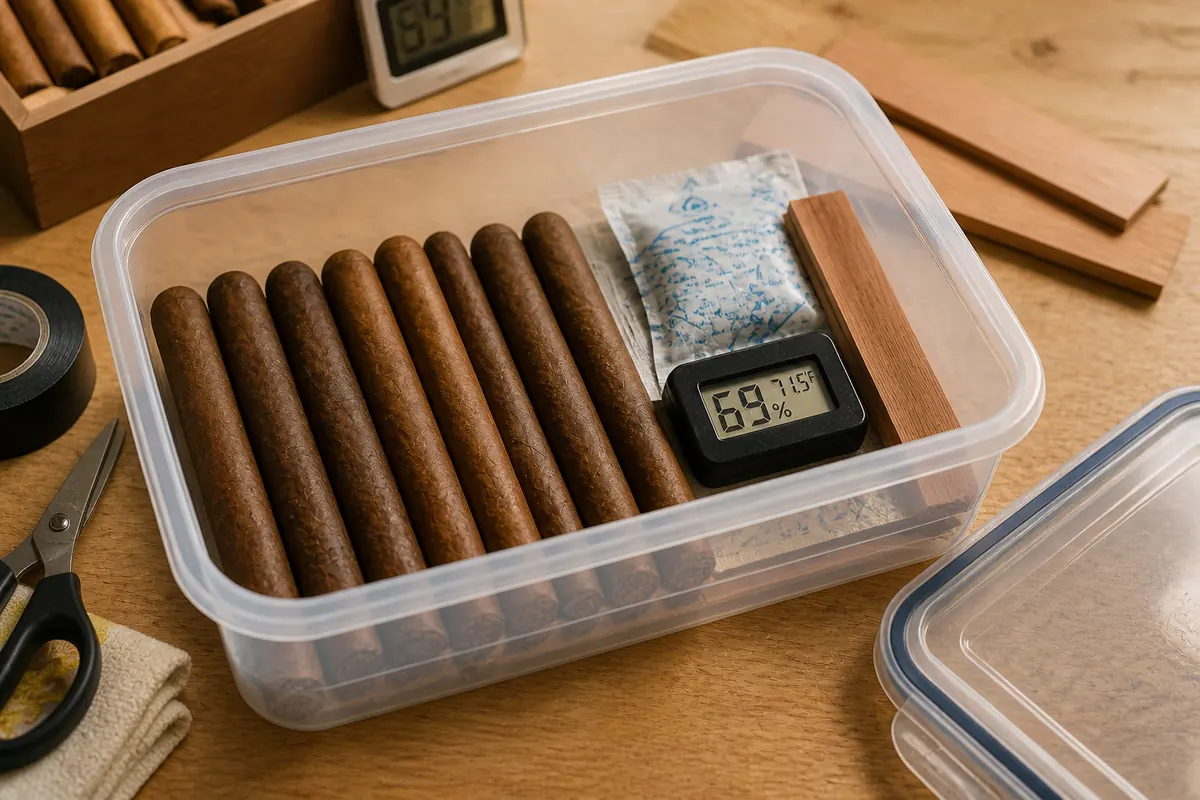
How to Build a Tupperdor (Budget Cigar Storage)
A tupperdor is an airtight plastic container with a Boveda humidity pack inside — and it's the best cigar storage method for most people. No seasoning period, no leaky seals, no re-humidifying Spanish cedar every season. Buy a container, drop in a Boveda pack, add cigars. Done. Total cost: $15-20. Setup time: 5 minutes.
Why Tupperdors Beat Traditional Humidors
Wooden humidors look beautiful on a desk. But functionally, most sub-$200 humidors have mediocre seals, require seasoning, and lose humidity in dry environments. A $12 airtight container with a rubber gasket maintains humidity more consistently because:
- Zero air exchange. The rubber gasket seal prevents ambient humidity from affecting internal conditions. A wooden humidor breathes — that's fine in stable 50% ambient environments but terrible in 20% winter air or 80% tropical summers.
- No seasoning required. Plastic doesn't absorb moisture. Drop in your Boveda, wait an hour for air equalization, and you're at target humidity. Wooden humidors need 3-7 days of seasoning before use.
- Boveda packs last longer. In a sealed container, Boveda packs work less (less moisture lost to ambient air exchange) and last 3-6 months instead of 4-8 weeks in a leaky wooden humidor.
- Scalable. Want more storage? Buy another container. A Sistema 7-liter holds 30-40 cigars. Stack three for 100+ capacity at $36 total.
What You Need
- Airtight container with rubber gasket seal. Brands: Sistema, Lock & Lock, IRIS, Rubbermaid Brilliance, or any food-storage container with latching clips AND a rubber gasket. The gasket is non-negotiable — snap-lid containers without gaskets are not airtight.
- Boveda pack(s). 65% RH is the modern standard (69% is outdated and promotes mold). One 60-gram Boveda per 25 cigars of capacity. Buy 2-3 for a large container.
- Spanish cedar sheet or tray (optional). Adds subtle cedar aroma and helps buffer humidity micro-swings. Not required — cigars store perfectly fine without it. Available as thin sheets from cigar accessory retailers.
- Digital hygrometer (recommended). A small digital hygrometer inside lets you verify conditions without opening the container. Models with external display or Bluetooth (like SensorPush) let you monitor without breaking the seal.
Step-by-Step Build
Step 1: Choose Your Container Size
- 2-3 liters: 10-15 cigars. Travel or small collection.
- 5-7 liters: 25-40 cigars. The sweet spot for most smokers.
- 10-15 liters: 50-80 cigars. Serious collection without furniture-sized humidor.
- 20+ liters (cooler/bin): 100-200+ cigars. Use a cooler (Coleman, Igloo) with the same Boveda approach for large collections. These are called "coolerdors."
Step 2: Clean the Container
Wash with warm water and mild dish soap. Rinse thoroughly. Dry completely — no water droplets. New plastic containers sometimes have a faint chemical smell; washing eliminates it. If smell persists, air out open for 24 hours before sealing with cigars.
Step 3: Add Cedar (Optional)
Line the bottom with a Spanish cedar sheet or place a cedar tray/divider inside. Cedar serves three purposes: absorbs/releases micro humidity fluctuations, adds subtle aroma that complements tobacco, and provides a stable surface for cigars (prevents rolling around). Not essential — skip if you want pure simplicity.
Step 4: Place Boveda Pack(s)
65% RH Boveda. Place on top of cigars or alongside them — placement doesn't matter in a sealed container since humidity equalizes throughout. Don't remove the Boveda from its original packaging membrane — it's designed to work through the paper wrapper.
Step 5: Add Cigars and Seal
Place cigars inside. Don't overcrowd — leave some air space for circulation. Latch all clips firmly. That's it. Your tupperdor is operational.
Step 6: Verify (24-48 Hours Later)
Check your hygrometer. Should read 63-67% RH. If it's lower, add another Boveda pack. If higher (unlikely in a new setup), crack the lid for 10 minutes and reseal. Once stable, check monthly.
Common Mistakes
- No gasket container. A snap-lid Tupperware without rubber gasket is NOT airtight. It'll leak humidity. Look for containers specifically marketed as airtight or waterproof — they have gaskets.
- Using 69% or 72% Boveda. Old-school advice. Modern consensus: 62-65% is optimal. Higher promotes mold and over-humidification (cigars taste spongy, burn poorly).
- Never checking. Tupperdors are low-maintenance, not zero-maintenance. Monthly glance at the hygrometer and visual inspection for mold takes 30 seconds.
- Mixing flavored and natural cigars. Infused/flavored cigars transfer their scent in sealed containers faster than in wooden humidors. Store flavored cigars in a separate tupperdor or keep them in cellophane.
Tupperdor vs. Humidor: When to Choose Which
FactorTupperdorWooden Humidor Cost$12-30$50-500+ Setup time5 minutes3-7 days (seasoning) Humidity stabilityExcellent (sealed)Variable (depends on seal quality) MaintenanceMonthly checkWeekly check + re-humidify AestheticsPlastic containerBeautiful wood furniture DisplayNone (opaque)Glass-top options availableChoose tupperdor for: function over form, challenging climates (dry/humid), travel, budget, large collections. Choose wooden humidor for: display, desk presence, gifting, aesthetic pleasure. Many collectors use both — a nice humidor on the desk for daily-rotation cigars, tupperdors in a closet for bulk storage.
For more on humidity management in different climates: humidity climate guide. For traditional humidor selection: choosing your first humidor.
Choosing the Right Container
Not all plastic containers work for cigar storage. Look specifically for containers with airtight gasket seals, food-grade BPA-free plastic that won't off-gas chemicals into your cigars, and locking lids that maintain seal pressure over time without warping. Sistema, Rubbermaid Brilliance, and Lock and Lock all produce containers meeting these specifications in sizes from 3-liter single-box capacity to 30-plus liter multi-box storage. Avoid containers where the lid simply snaps on without a gasket because these allow humidity to escape over days.
Size your container to your collection plus 20% growth space. Overpacking prevents air circulation that distributes humidity evenly across all cigars. Underpacking with too much empty space makes Boveda packs work harder to maintain humidity in a larger air volume. For most new collectors, a 6-liter container holding approximately 25-30 cigars in their cellophane with two 60-gram Boveda packs provides the ideal balance of capacity, humidity stability, and manageable size for placement on a bookshelf or closet shelf.
Advanced Tupperdor Upgrades
Spanish cedar sheets or trays placed inside your tupperdor add aroma, absorb excess moisture spikes, and give your cigars the traditional cedar environment that enhances flavor development during storage. Cedar sheets are available from cigar accessory retailers for 5-10 dollars and should be seasoned with distilled water before use. Cut them to fit your container's bottom and one side wall, leaving space for Boveda placement and airflow around the cigar stack.
For larger tupperdor setups exceeding 50 cigars, consider dividing your collection across multiple containers organized by smoking timeline. A daily-smoker container stays accessible on your desk or near your smoking area. An aging container holds cigars with 6-plus months of intended rest before smoking and can be stored in a closet or cabinet where temperature remains stable. This separation prevents the daily opening and closing that disrupts humidity in containers holding long-term aging inventory that benefits from undisturbed dark storage conditions.
Tupperdor vs. Traditional Humidor: Honest Comparison
Tupperdors outperform many traditional humidors under 100 dollars in humidity stability because their gasket seals are genuinely airtight while cheap humidors often leak from poor lid fit, dried-out seals, or insufficient wood thickness. A 15-dollar Sistema container with a 7-dollar Boveda pack maintains more stable humidity than a 50-dollar glass-top desktop humidor from a department store. The tradeoff is aesthetics: no one displays a Tupperware container on their office desk, and guests are not impressed by your plastic cigar storage regardless of its functional superiority over attractive but leaky wooden boxes.
Step by step
- Choose container with rubber gasket sealSistema, Lock & Lock, or any food-storage container with latching clips AND rubber gasket. Size: 5-7 liters for 25-40 cigars.
- Wash and dry completelyWarm water, mild soap, rinse thoroughly. Dry all moisture. Air out 24 hours if chemical smell persists.
- Add Spanish cedar (optional)Line bottom with cedar sheet for aroma and humidity buffering. Skip for pure simplicity.
- Place Boveda 65% pack(s)One 60-gram Boveda per 25 cigars capacity. Place on top or alongside cigars.
- Add cigars, seal, verify after 24-48 hoursDon't overcrowd. Latch all clips. Check hygrometer reads 63-67% after 1-2 days. Adjust Boveda count if needed.
Frequently asked questions
Do cigars taste like plastic in a tupperdor?
No — if the container is food-safe and washed before use. Food-grade plastic is inert and doesn't off-gas flavors. Spanish cedar lining adds positive aroma if you want it, but even without, cigars taste like cigars. Thousands of collectors store cigars this way with zero flavor issues.
How often should I open my tupperdor?
Opening monthly to grab cigars and check conditions is fine. Brief openings (30 seconds) don't meaningfully affect internal humidity in a sealed container. You don't need to 'air out' a tupperdor — unlike wooden humidors, there's no risk of stagnant air causing problems.
Can I use a regular Tupperware container?
Only if it has a rubber gasket seal with latching clips. Standard snap-on Tupperware lids are not airtight — they'll leak humidity over days. Look for containers with 4 side-clips and a visible rubber ring in the lid. Sistema and Lock & Lock are reliable options.
Should I keep cigars in cellophane inside the tupperdor?
Either works. Cellophane on: prevents cigars from sticking to each other, protects wrappers from physical damage, slightly slows humidity equalization. Cellophane off: faster humidity exchange, cigars share flavors between them (can be positive). Most collectors keep cellophane on for convenience.
Community tasting notes
No community notes yet. Be the first to share how this smoked for you.
Log in to share your tasting notes and photos.