
Cigar vs Cigarette: What's Actually Different
A cigar and a cigarette are both rolled tobacco you set on fire. That's where the similarities end. They use different tobacco, different construction, different curing methods, and require completely different smoking techniques. Treating one like the other guarantees a bad experience.
The core distinction: cigarettes deliver nicotine through lung inhalation using processed, additive-laden tobacco in a paper tube. Cigars deliver flavor through mouth-tasting using whole-leaf, naturally fermented tobacco in a tobacco-leaf wrapper. One is engineered for addiction efficiency. The other is crafted for sensory experience.
The Tobacco: Processed vs Whole-Leaf
Cigarette tobacco is shredded, reconstituted, and blended with hundreds of additives — humectants to control moisture, sugars to mask harshness, ammonia compounds to speed nicotine delivery. The 'tobacco' in a cigarette is more of a delivery system than a natural product.
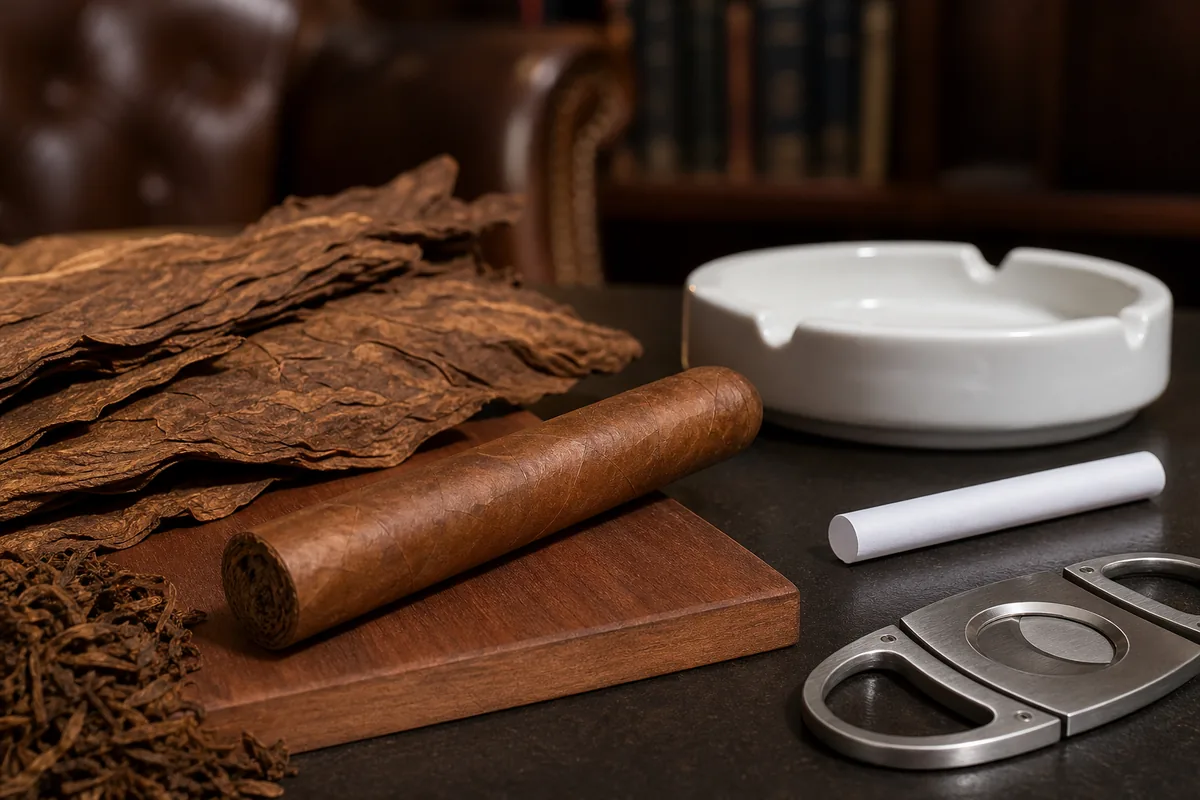
Cigar tobacco is whole-leaf. The wrapper is a single unbroken leaf selected for appearance and burn quality. The binder is another whole leaf holding the bunch together. The filler is either long-leaf (premium cigars, with leaves running the full length) or short-filler (machine-made cigars, using chopped pieces). Premium handmade cigars contain nothing but tobacco — no paper, no additives, no chemical processing.
This distinction matters for flavor. Cigar tobacco undergoes natural fermentation over months or years, developing complex flavor compounds the way aged cheese or wine develops complexity. Cigarette tobacco is cured in days using accelerated heat and chemical processes.
Construction: Paper vs Tobacco Leaf
A cigarette is tobacco wrapped in treated paper with a filter attached. The paper burns at a controlled rate and the filter traps some tar and particulates. The whole thing is machine-made to identical specifications — every cigarette in a pack is functionally the same.
A premium cigar is three layers of tobacco: filler (the interior blend), binder (a tough leaf holding the filler), and wrapper (the exterior leaf you see and taste). No paper, no filter, no adhesives beyond a tiny dot of vegetable gum on the cap. The wrapper leaf alone can account for 60-70% of a cigar's flavor — it's the most expensive component and the most difficult to grow.
Size and Smoking Time
- Cigarette: uniform size, 5-7 minutes smoking time
- Small cigar/cigarillo: 10-20 minutes
- Robusto (5x50): 45-60 minutes
- Toro (6x52): 60-75 minutes
- Churchill (7x48): 75-90 minutes
- Double Corona (7.5x52): 90-120 minutes
This time difference isn't just about size. Cigars burn cooler and slower because whole-leaf tobacco is denser than shredded paper-wrapped tobacco. The burn rate is part of the engineering.
How You Smoke Them: Inhale vs Taste
This is the most important practical difference. Cigarette smokers inhale — they pull smoke into their lungs where nicotine crosses into the bloodstream through pulmonary tissue. This delivers a fast, intense nicotine spike.
Cigar smokers do not inhale. You draw smoke into your mouth, taste it across your palate, and blow it out. Nicotine absorbs through the mucous membranes in your mouth and sinuses — slower delivery, less intense, but sustained over the longer smoking session.
Why not inhale cigar smoke? Three reasons:
- pH level: Cigar smoke is alkaline (pH 7-8.5), meaning nicotine absorbs through mucous membranes without needing lung contact. Cigarette smoke is acidic (pH 5.5-6), requiring inhalation for efficient absorption.
- Volume: A single puff of cigar smoke contains far more particulate matter and nicotine than a cigarette puff. Inhaling that into your lungs causes immediate coughing and nausea.
- Purpose: The point is tasting. You can't taste anything if the smoke bypasses your palate and goes straight to your lungs.
Nicotine Content: It's Not Even Close
A typical cigarette contains 8-12mg of nicotine, of which the smoker absorbs 1-2mg through inhalation. A premium cigar contains 100-400mg of nicotine depending on size and blend, of which a mouth-smoker absorbs 5-15mg over the session.
The per-session nicotine intake is higher with cigars, but the delivery curve is completely different. Cigarettes spike fast and drop fast — driving the re-dosing cycle that creates dependency. Cigars provide a gradual, sustained level that peaks slowly and fades slowly. This is partly why cigar smokers report less compulsive use patterns than cigarette smokers.
That said: nicotine is nicotine. Cigars can cause nicotine sickness in newcomers, and regular use creates tolerance and dependency regardless of delivery method.
Flavor Complexity: Why Cigars Cost More
A cigarette has one flavor profile from first puff to last. Whatever you taste at the start is what you get at the end — there's no evolution because the tobacco is homogeneous and the smoking time is too short for meaningful change.
A cigar evolves in thirds. The first third introduces the blend. The second third deepens and shifts — new flavors emerge as different filler leaves come into play. The final third concentrates and intensifies. A good cigar takes you on a flavor journey that changes every ten minutes.
This complexity comes from blending. A single cigar might contain tobacco from four different countries, three different priming levels, and two different fermentation periods. The master blender layers these to create progression. It's closer to blending whiskey than manufacturing a consumer product.
Cost Structure: Why the Price Gap Exists
A pack of cigarettes costs $7-15 depending on location and brand. A single premium cigar costs $8-30 for a daily-smoke quality, with luxury cigars reaching $50-100+.
The cost difference reflects production reality:
- Cigarettes are entirely machine-made at thousands per minute
- Premium cigars are hand-rolled — a skilled torcedor makes 100-200 per day
- Cigar tobacco ages 2-5 years before rolling; cigarette tobacco is ready in weeks
- Wrapper leaves have a 30-40% reject rate for cosmetic imperfections
- Small-batch production vs industrial scale
Health Considerations: Different Risks, Not No Risk
Neither product is safe. But the risk profiles differ because the smoking methods differ.
Cigarette smoking's primary risks center on lung cancer, COPD, and cardiovascular disease — driven by inhaling combustion products directly into pulmonary tissue thousands of times daily.
Cigar smoking without inhalation primarily elevates risk for oral cancers, esophageal cancer, and periodontal disease. The risk is real but statistically lower than daily cigarette use, partly because most cigar smokers consume fewer units (1-3 per week vs 20+ cigarettes daily) and don't inhale.
The key variable is frequency. A daily cigar habit carries meaningfully different risk than a weekend-only habit. And any cigar smoker who inhales takes on lung risks similar to cigarette smokers.
Culture and Usage Patterns
Cigarettes are a nicotine delivery mechanism consumed out of dependency, often 20+ times daily, usually alone, frequently while doing something else. The average cigarette break is five minutes of chemical maintenance.
Cigars are a leisure activity consumed 1-5 times per week, often socially, with deliberate time set aside. The average cigar session is 45-90 minutes of intentional relaxation. The cultural framing is closer to craft beer or single-origin coffee than to nicotine replacement therapy.
This isn't to moralize one over the other. It's to explain why the communities, rituals, and spending patterns look nothing alike.
Can Cigarette Smokers Switch to Cigars?
Yes, but it requires retraining two habits: you must stop inhaling, and you must slow down. Cigarette smokers transitioning to cigars often puff too fast (cigarette cadence) and inhale out of reflex. Both ruin the experience.
The nicotine delivery from cigars can satisfy a cigarette smoker's craving, but the timing is different. If you need instant nicotine relief, a cigar won't provide that in the first 30 seconds the way a cigarette does. The satisfaction comes later and lasts longer.
Start with smaller cigars — a petite corona or a cigarillo — to get comfortable with the technique before committing to a 90-minute smoke.
The Bottom Line
Cigars and cigarettes share a raw material the way grape juice and aged Burgundy share a fruit. The processing, construction, technique, and intent are fundamentally different products serving different purposes. If you're curious about cigars, start with our beginner's guide to smoking — unlearning cigarette habits is half the battle. And understanding strength vs body vs flavor will help you pick cigars that match your tolerance level as you transition.
Community tasting notes
No community notes yet. Be the first to share how this smoked for you.
Log in to share your tasting notes and photos.