
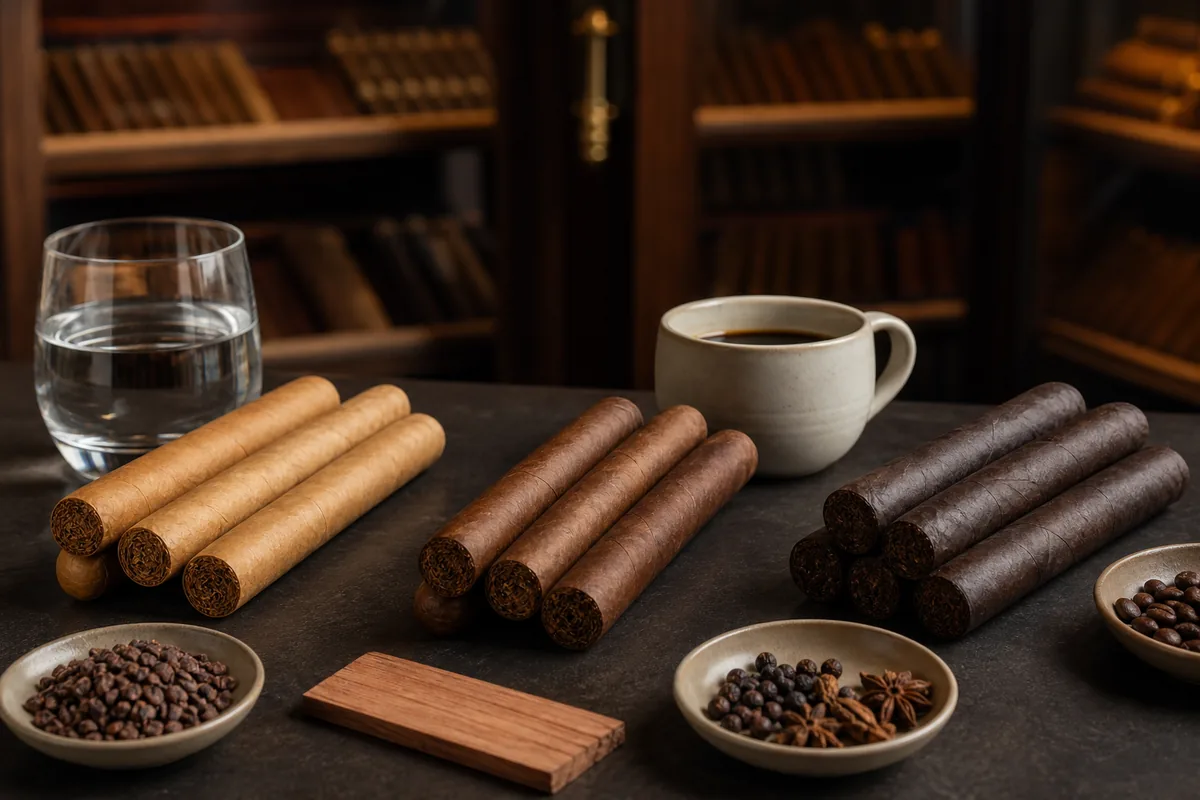
Cigar Strength vs Body vs Flavor: What's the Difference
Strength is nicotine. Body is flavor density. Flavor is what you taste. A cigar can be full-flavored (lots of complex taste) and mild-strength (low nicotine) at the same time — and most beginners miss this distinction because reviews collapse all three into one vague "strong" or "mild" rating.
Understanding these three separate axes changes how you buy cigars. Instead of asking "is this cigar strong?" you start asking "does this cigar have the strength I can handle, the body I enjoy, and the flavors I like?" That precision saves you from rejecting entire categories of cigars based on a misunderstanding.
Strength: The Physical Impact
Strength is exclusively about nicotine delivery. A strong cigar makes you feel it in your body — lightheadedness, slight nausea, accelerated heart rate, the "nicotine buzz" that experienced smokers enjoy and beginners fear. Strength has nothing to do with what you taste.
What determines strength:
- Ligero content: Ligero is the top priming of the tobacco plant — the leaves that get the most sun produce the most nicotine. More ligero in the filler = stronger cigar.
- Tobacco origin: Nicaraguan tobacco (especially Estelí) tends higher in nicotine than Dominican or Honduran.
- Size: A larger ring gauge cigar delivers slightly more nicotine per puff because more filler burns simultaneously.
The scale: mild → medium → medium-full → full. Most smokers are comfortable up to medium-full with experience. Full-strength cigars like Liga Privada, Padrón 1926, or La Flor Dominicana Double Ligero challenge even veteran smokers.
Body: The Weight of Flavor
Body describes how dense or heavy the flavor sits on your palate. Consider it like the difference between skim milk and whole cream — both are "milk," but one has weight, substance, presence. A full-bodied cigar fills your mouth with rich, layered flavors. A light-bodied cigar feels thin and airy.
Body is independent of strength. You can have:
- Full body + mild strength: Rich, complex flavors without much nicotine. Rare but exists — some aged Dominican cigars achieve this.
- Light body + medium strength: Thin flavor but noticeable nicotine. Common in poorly constructed budget cigars.
- Full body + full strength: The heavy hitters — Padron 1964 Maduro, Liga Privada. Both intense flavor and intense nicotine.
Most premium medium cigars are medium-bodied too — the correlation between body and strength exists but isn't absolute.
Flavor: What You Actually Taste
Flavor is the specific taste notes you detect — chocolate, pepper, leather, cream, cedar, nuts, fruit, earth. Flavor is entirely separate from both strength and body. A mild-strength, light-bodied cigar can have interesting flavors (think Cameroon-wrapped Arturo Fuente). A full-strength, full-bodied cigar can taste one-dimensional if poorly blended.
Common flavor categories in cigars:
- Sweet: chocolate, caramel, vanilla, dried fruit, honey
- Earthy: soil, leather, wood, mushroom
- Spicy: black pepper, white pepper, cinnamon, clove
- Nutty: almond, cashew, peanut, walnut
- Roasted: coffee, toast, char, dark roast
- Creamy: butter, cream, milk, smooth richness
Flavor complexity means multiple categories present and shifting between puffs or thirds. A complex cigar might open with cream, transition to earth and cedar, and finish with pepper and dark chocolate. A simple cigar delivers one note from start to finish.
Why This Matters for Buying
When someone asks "what's a good full-bodied cigar that won't make me sick?" they're asking for full body with medium strength. These exist — Oliva Serie V Melanio, Perdomo Habano Maduro, Arturo Fuente Don Carlos all deliver rich, dense flavor without brutal nicotine. Knowing the difference means you can find what you actually want instead of settling for less.
When someone says "mild cigars are boring," they usually mean light-bodied. A mild-strength cigar with medium body and complex flavors — like an Ashton VSG or a well-aged Cameroon-wrapped stick — might change their mind. They don't need more nicotine; they need more flavor density.
How to Read Reviews With This Framework
Most cigar reviews give a single "strength" rating. Translate it:
- "Mild" usually means mild strength AND light body. But check — some reviewers call low-nicotine cigars "mild" even when they're flavorful.
- "Full" usually means full strength AND full body. The correlation is common.
- "Complex" tells you about flavor specifically. A cigar can be "mild and complex" — that's a different animal than "mild and simple."
Start your exploration with mild cigars that have flavor, then work toward medium-bodied once your tolerance builds. The goal isn't to smoke the strongest cigar you can handle — it's to find the flavor profile you enjoy at a strength level you're comfortable with.
Why This Distinction Matters for Buying
Understanding the difference between strength, body, and flavor prevents expensive purchasing mistakes. A new smoker reading a review that says a cigar has complex flavor might buy it expecting a mild experience, not realizing it also has high strength that will make them sick. Conversely, an experienced smoker seeking bold flavor might buy a high-strength cigar only to find it is one-dimensional in taste despite its powerful nicotine delivery. Separating these three dimensions lets you shop precisely for what you actually want.
When reading reviews, look for specific terminology. Strength language includes words like powerful, potent, heavy nicotine, and kicks hard. Body language uses words like thick smoke, dense, full mouthfeel, and coating. Flavor language appears as complex, layered, transitions, notes of chocolate and leather, and developing. A cigar can score high on one dimension and low on others. The Davidoff Grand Cru offers complex flavor with low strength and medium body. The Liga Privada T52 delivers high marks across all three dimensions simultaneously.
Practical Application: Building Your Profile
Create a simple rating system for cigars you smoke: rate strength, body, and flavor separately on a 1-5 scale. After 20-30 cigars, patterns emerge showing your preferred combination. Maybe you like medium strength with full body and complex flavor. Maybe you prefer low strength with light body but high flavor complexity. This personal profile guides future purchases more reliably than aggregate review scores that average three different dimensions into a single meaningless number.
Time of day affects ideal strength more than body or flavor. Morning palates are sensitive, making low-strength cigars taste richer because you perceive more from less input. Evening palates tolerate higher strength because food and drink have already engaged your system. Body and flavor preferences tend to remain constant regardless of timing. Use this insight: vary strength by occasion while keeping body and flavor consistent with your known preferences for maximum enjoyment at any hour you choose to smoke.
Common Misconceptions Debunked
Dark wrapper does not mean strong cigar. Maduro processing creates sweetness through sugar caramelization, not increased nicotine. Many maduro-wrapped cigars are actually lower in strength than their lighter-wrapped siblings because the fermentation process that darkens the leaf also breaks down some nicotine compounds. Similarly, a large ring gauge does not mean more strength, only more volume of the same blend burning per puff. And price has zero correlation with strength: expensive mild cigars and cheap strong cigars exist in equal abundance across the market.
The cigar industry's shift toward detailed tasting notes and three-axis reviews reflects maturing consumer knowledge. Twenty years ago, cigars were described simply as mild, medium, or full. Today's informed buyer expects separate assessments of each dimension because they understand that these characteristics operate independently. This evolution mirrors the wine industry's progression from simple red-versus-white categorization to detailed analysis of tannin structure, acidity, fruit expression, and finish length as separate measurable qualities within a single bottle that each contribute differently to the drinking experience.
Frequently asked questions
Can a full-bodied cigar be mild strength?
Yes, though it's uncommon. Well-aged Dominican cigars and certain Cameroon-wrapped blends achieve rich, dense flavor (full body) with minimal nicotine (mild strength). They're rare but exist.
Does Maduro wrapper mean full strength?
No. Maduro adds body and sweetness but doesn't inherently add nicotine. A Maduro-wrapped cigar with mild filler is still mild in strength — just fuller in body and sweeter in flavor than the same cigar with a lighter wrapper.
Why do some mild cigars make me dizzy?
Possible causes: smoking too fast (concentrates nicotine delivery), smoking on an empty stomach (amplifies nicotine effect), or the cigar is actually medium-strength despite being marketed as mild. Also check if you're accidentally inhaling.
What should beginners prioritize: strength, body, or flavor?
Start with mild strength (safety), medium body (enough to be interesting), and varied flavor (exploration). The Robusto format in Connecticut or Cameroon wrapper gives you all three reliably.
Community tasting notes
No community notes yet. Be the first to share how this smoked for you.
Log in to share your tasting notes and photos.