
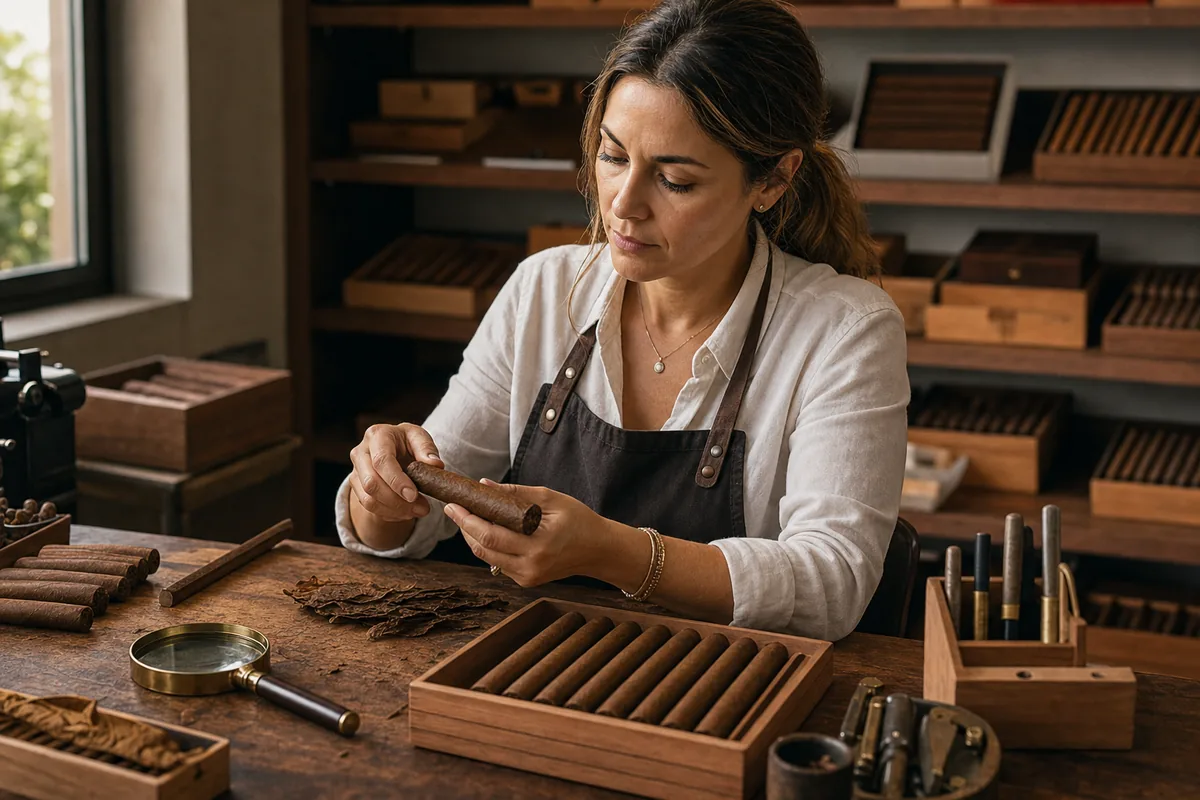
Women in the Cigar Industry
Women have been central to cigar production since the industry began. In Cuban factories, women torcedoras (hand-rollers) have always comprised a significant portion of the workforce — and in many factories, the majority. The idea that cigars are exclusively men's domain ignores who actually makes them, and increasingly, who leads the companies producing them.
The Torcedoras: Foundation of Cuban Cigar Making
Cuba's cigar factories have employed women rollers since the 19th century. At El Laguito factory in Havana — where Cohiba is produced — women torcedoras have historically dominated the rolling floor. The factory was originally established as a training school for women cigar rollers in 1961 before becoming Cohiba's production facility.
Why were women prominent in rolling? The traditional (and somewhat patronizing) explanation cites smaller hands and greater finger dexterity. The practical reality: cigar rolling was one of the few skilled trades open to women in colonial and early-republic Cuba, and women who entered the profession often excelled due to the fine motor precision and patience the work demands. Whatever the origin, Cuban torcedoras became legendary for quality.
Norma Fernández, who rolled at El Laguito for decades, was among Cuba's most celebrated rollers — her work on Cohiba Lanceros set a standard that newer rollers were measured against. In modern Cuba, women still represent a major portion of factory staff across all Habanos production facilities.
Modern Industry Leaders
Nirka Reyes — Joya de Nicaragua
Nirka Reyes serves as factory manager at Joya de Nicaragua, one of Nicaragua's oldest and most respected cigar producers. She oversees the entire production operation — from leaf selection through quality control and shipping. In a country where cigar factories are the economic backbone of Estelí, her role carries significant industry weight.
Maria Sierra — Drew Estate
Maria Sierra worked as the head roller and quality control lead at Drew Estate's Nicaraguan factory. Her expertise in evaluating tobacco and maintaining rolling standards contributed to Drew Estate's rise as one of the boutique industry's major success stories.
Patricia Palmer — La Aurora
La Aurora, the Dominican Republic's oldest cigar factory (founded 1903), has had women in leadership positions throughout its history. The Palmer family's female members have held operational and quality roles spanning generations, maintaining the family business through political and economic upheavals.
Janine Holder — Toscano (Italy)
Italy's Toscano cigar brand (the country's indigenous cigar tradition, using Kentucky tobacco and fire-curing) has employed women in production since the 18th century. Italian cigar factories were among Europe's largest female employers during the industrial era. The tradition continues in modern Toscano production.
Brand Founders and Blenders
Eiroa Family Women
The Eiroa family (Camacho, CLE Cigars) includes women who've worked in Honduras's tobacco fields and blending operations. The family's multi-generational involvement in Honduran tobacco farming means women have participated in growing, sorting, and processing since the family's operations began.
Yaneth Rojas — Nicarao Cigars
Yaneth Rojas operates as a blender and production lead in Nicaragua's boutique cigar sector. She represents a growing cohort of women who've moved from rolling floors into blending and brand development roles — positions that were historically male-dominated at the decision-making level.
The Retail and Media Side
Women's visibility in cigar culture extends beyond production:
- Retail: Women-owned cigar lounges and shops have multiplied since the 2010s, particularly in the US market. These spaces often explicitly welcome female smokers who felt unwelcome in traditional male-dominated lounges.
- Media and education: Female cigar reviewers, writers, and educators have established significant followings — providing perspectives that broaden the conversation beyond traditional male-voiced cigar media.
- Habanos Festival: Women attend and participate in Havana's annual cigar festival in growing numbers — as buyers, retailers, brand representatives, and enthusiasts.
Breaking the Perception Gap
The disconnect between reality and perception is stark: women have always made cigars but were long invisible in marketing, media, and retail spaces. Cigar advertising historically targeted men exclusively — bikini models holding cigars for male gaze rather than depicting actual female smokers or industry professionals.
This is changing, but slowly. The industry's marketing still skews heavily male, and some lounges maintain an unwelcoming atmosphere for women. But the production side — where actual cigar quality is determined — has never excluded women. The best Cohiba you've ever smoked was likely rolled by a woman at El Laguito.
For more on how Cuban factories operate: how cigars are made in factories. For the history of Cuban tobacco: how tobacco is grown and harvested.
Frequently asked questions
Were Cuban cigars always rolled by women?
Not exclusively, but women have always been a significant portion of Cuban factory workers. El Laguito specifically was established in 1961 as a women's training program. Other factories have mixed workforces, but women torcedoras are common across all Habanos production facilities.
Are there female master blenders in the cigar industry?
Yes, though fewer than men in named roles. Women work in blending at multiple Nicaraguan, Dominican, and Honduran factories. The industry is moving toward more visible female blending credits, but many women have contributed to blends without named recognition.
Why is cigar marketing still mostly male-targeted?
Inertia and demographics — the existing customer base is majority male, so marketing follows. But it's circular: male-targeted marketing discourages female entry, maintaining male-majority demographics. Brands targeting broader audiences (Davidoff, some boutiques) are shifting this approach.
Do women smoke cigars differently than men?
No physiological difference in how anyone smokes a cigar. Flavor preferences vary by individual, not gender. The stereotype that women prefer mild cigars isn't supported by evidence — female cigar smokers' preferences span the full strength spectrum, same as male smokers.
Community tasting notes
No community notes yet. Be the first to share how this smoked for you.
Log in to share your tasting notes and photos.