
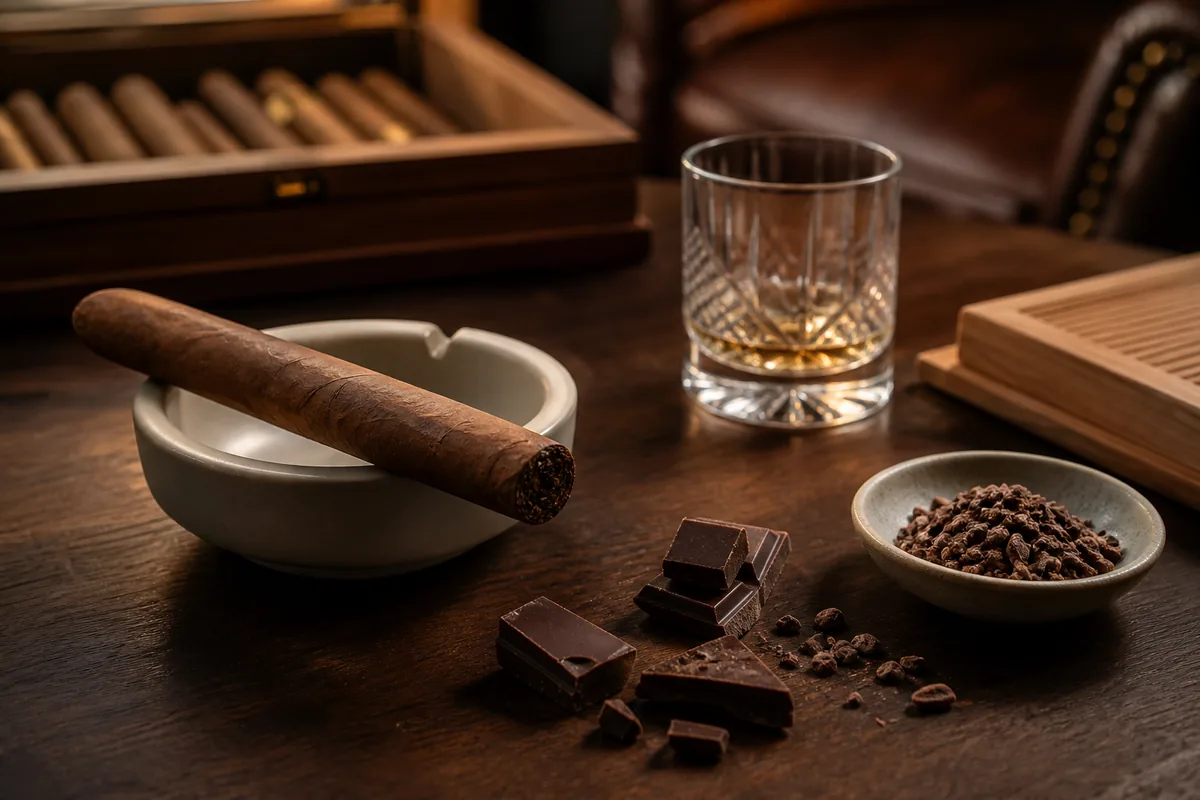
Cigar and Chocolate Pairing Guide
A square of 70% dark chocolate between puffs of a Padrón 1926 Serie No. 9 Maduro does something remarkable — it pulls out the cigar's buried sweetness while the smoke amplifies the chocolate's roasted depth. This isn't a gimmick pairing. Cocoa and tobacco share chemical compounds (pyrazines, Maillard reaction products) that make them natural complements at a molecular level.
The key is cacao percentage. Too low and the sugar overwhelms the cigar. Too high and the bitterness stacks with smoke to become unpleasant. The sweet spot for most cigars sits between 65% and 80% cacao.
Why Chocolate and Cigars Work Together
Both cacao beans and tobacco leaves undergo fermentation. Both develop complex flavors through controlled heat application — roasting for cacao, curing for tobacco. The resulting flavor compounds overlap significantly: earthy bitterness, caramel sweetness from sugars breaking down, nutty aromatics.
Chocolate's fat content coats your palate, which serves two purposes. First, it protects against smoke's drying effect. Second, it carries fat-soluble flavor compounds from the cigar that water-based beverages would wash away. You taste more of the cigar with chocolate than you do with water.
Cacao Percentage Guide
60-65% (Semi-Sweet) — Mild Cigars: The higher sugar content in this range bridges delicate, creamy cigars without overpowering them. Pair with Connecticut-wrapper sticks: Davidoff Aniversario No. 3, Ashton Classic, or Griffin's. The chocolate provides sweetness the mild cigar doesn't produce on its own.
68-75% (Dark) — Medium-Bodied Cigars: This is the versatile range. Enough bitterness to engage medium-strength smoke, enough residual sweetness to maintain pleasure. Pair with Montecristo No. 2, Arturo Fuente Hemingway Classic, or Romeo y Julieta Short Churchill. The chocolate's fruit and nut notes interact beautifully with cedar and leather profiles.
78-85% (Extra Dark) — Full-Bodied Cigars: At this percentage, chocolate becomes a serious counterpart to heavy ligero blends. The intense roast notes match espresso and dark earth in cigars like Liga Privada No. 9, Padrón Family Reserve, or La Flor Dominicana Double Ligero. Both demand your attention — this is focused tasting, not casual snacking.
Bean Origin Matters
Single-origin chocolate behaves differently from blends, just like single-region cigars differ from multi-country blends.
Venezuelan Cacao (Chuao, Porcelana) + Nicaraguan Cigars: Venezuelan cacao carries red fruit acidity and floral high notes. These cut through the earth and pepper of Nicaraguan tobaccos beautifully. Try Amedei Chuao (70%) with an AJ Fernandez New World — the chocolate's acidity lifts the cigar's weight.
Ecuadorian Cacao (Arriba Nacional) + Dominican Cigars: Arriba Nacional's jasmine and citrus notes mirror the lighter, aromatic character of Dominican tobacco. Pair Pacari 72% with an Arturo Fuente Opus X — both share floral complexity with underlying strength.
Madagascar Cacao + Cuban Cigars: Madagascar beans deliver bright citrus and berry notes that contrast beautifully with Cuban tobacco's earthy, hay-forward profiles. A Menakao 72% with a Cohiba Siglo IV creates a pairing where contrast drives interest rather than harmony.
West African Cacao (Ghana, Ivory Coast) + Honduran Cigars: These beans produce straightforward, deep cocoa with less acidity — a natural match for the straightforward power of Honduran blends. Pair with an Alec Bradley Prensado or Camacho Triple Maduro.
Texture and Form
How you eat the chocolate matters. A thin square melted on the tongue coats the palate gradually and interacts with each draw over 30-60 seconds. A thick chunk chewed quickly gives a burst of flavor that fades before your next puff.
We prefer thin squares (3-4mm), placed on the tongue and allowed to melt between draws. This creates a continuous flavor baseline that evolves with the cigar. Breaking off a piece every 10-15 minutes keeps the palate engaged without chocolate fatigue.
Chocolate-covered espresso beans are a worthy alternative — they combine caffeine stimulation with cacao coating in bite-sized format. Two or three beans between draws gives you enough chocolate presence without commitment to a full bar.
Specific Pairings We've Tested
Valrhona Guanaja (70%) + Oliva Serie V: The Guanaja's bitter orange and almond notes find the Serie V's cocoa and red pepper. Both are medium-full, both have defined edges. A benchmark starting point.
Lindt Excellence 78% + Padrón 1926 No. 9 Maduro: Accessible chocolate, iconic cigar. The Lindt's clean bitterness doesn't distract from the Padrón's complexity — it frames it. The cigar's natural sweetness becomes more apparent against the chocolate's darkness.
Dandelion Chocolate Madagascar 70% + Hoyo de Monterrey Epicure No. 2: Bright meets earthy. The fruity acidity in the chocolate lifts the Hoyo's hay and light coffee notes. A pairing that emphasizes contrast over harmony, and is more interesting for it.
Raaka Virgin 75% (unroasted) + Davidoff Grand Cru: Unroasted cacao has a nutty, green character that pairs with mild cigars in unexpected ways. The Davidoff's cream and white pepper interact with the chocolate's raw grassiness. Unusual, but compelling.
What Doesn't Work
Milk chocolate below 40% cacao fails with all but the mildest cigars. The sugar overwhelms and the thin cocoa layer can't engage with smoke. White chocolate is a non-starter — there's no cacao solids to interact with tobacco compounds.
Chocolate with chili or mint inclusions creates confusion. The capsaicin or menthol interferes with your ability to taste the cigar accurately. Save those for dessert, not the lounge.
Bonbons and filled chocolates are too complex — the ganache, caramel, or fruit filling introduces variables that make the pairing unpredictable. Stick to plain single-origin bars.
Building Your Tasting Session
Start with a 70% bar and a medium-bodied cigar — this is your baseline calibration. Taste the cigar alone for the first third, introduce chocolate in the second third, then finish with cigar alone. Note what the chocolate revealed. Next time, adjust cacao percentage up or down based on whether you wanted more bitterness or more sweetness. Within three sessions, you'll know your personal sweet spot.
Choosing the Right Chocolate
Chocolate quality matters as much as cigar quality in this pairing. Mass-market bars like Hershey or Cadbury contain too much sugar and milk powder to interact meaningfully with tobacco. Their sweetness overwhelms rather than complements. Choose single-origin dark chocolate in the 65-80% cacao range from Valrhona, Callebaut, Lindt Excellence, or artisan producers. These have genuine terroir character, cocoa butter richness, and balanced bitterness that creates interesting dialogue with cigar smoke.
Match chocolate intensity to cigar intensity. A 70% dark chocolate pairs with medium-bodied cigars where both operate at similar volumes. An 85% extra-dark pairs with full-bodied maduros where shared bitterness creates depth. Milk chocolate at 40-50% cacao works with mild Connecticut-wrapped cigars where both stay gentle and creamy. White chocolate pairs only with the mildest cigars due to overwhelming sweetness.
Technique for Chocolate-Cigar Pairing
Let the chocolate melt on your tongue for 10-15 seconds before drawing on the cigar. This coats your palate with cocoa butter and flavor compounds that interact with incoming smoke. If you chew and swallow quickly before puffing, you lose the interaction window where both flavors coexist simultaneously. The overlap period is where cocoa compounds bind with tobacco volatiles to create third-flavor sensations neither produces alone.
Break chocolate into small pieces rather than taking large bites. A thumbnail-sized piece every 5-7 minutes maintains the pairing through the full cigar without chocolate dominating or causing sugar fatigue. A single 40-gram bar is more than enough for an hour-long session when portioned across the three thirds. Store your pairing chocolate at cool room temperature rather than refrigerated since cold dulls flavor release on the tongue.
Experiment with chocolate from different cacao-growing regions to discover personal preferences. Madagascar chocolate brings bright citrus acidity that cuts through heavy smoke. Venezuelan chocolate offers deep earthy notes mirroring tobacco's own terroir. Ecuadorian cacao provides floral aromatics that complement lighter wrapper styles. Each origin tells a different story alongside your cigar, making chocolate pairing an endlessly varied practice rather than a one-combination habit.
Frequently asked questions
What percentage dark chocolate goes best with cigars?
68-75% is the most versatile range for cigar pairing. It provides enough bitterness to engage with smoke while retaining enough sweetness to remain pleasant. Go higher (78-85%) for full-bodied cigars, lower (60-65%) for mild ones.
Can you pair milk chocolate with cigars?
Milk chocolate below 40% cacao doesn't work — too much sugar overwhelms and the thin cocoa layer can't engage smoke. The only exception is ultra-mild Connecticut-wrapper cigars where you're barely producing smoke.
How do you eat chocolate while smoking a cigar?
Place a thin square (3-4mm) on your tongue and let it melt between draws. This creates a continuous flavor layer rather than a burst-and-fade pattern. Break off a piece every 10-15 minutes throughout the second and final thirds.
Does chocolate origin matter for cigar pairing?
Significantly. Venezuelan cacao with red-fruit acidity complements Nicaraguan cigars. Madagascar's citrus brightness contrasts beautifully with earthy Cuban tobacco. West African cocoa's straightforward depth matches Honduran power blends.
Community tasting notes
No community notes yet. Be the first to share how this smoked for you.
Log in to share your tasting notes and photos.