
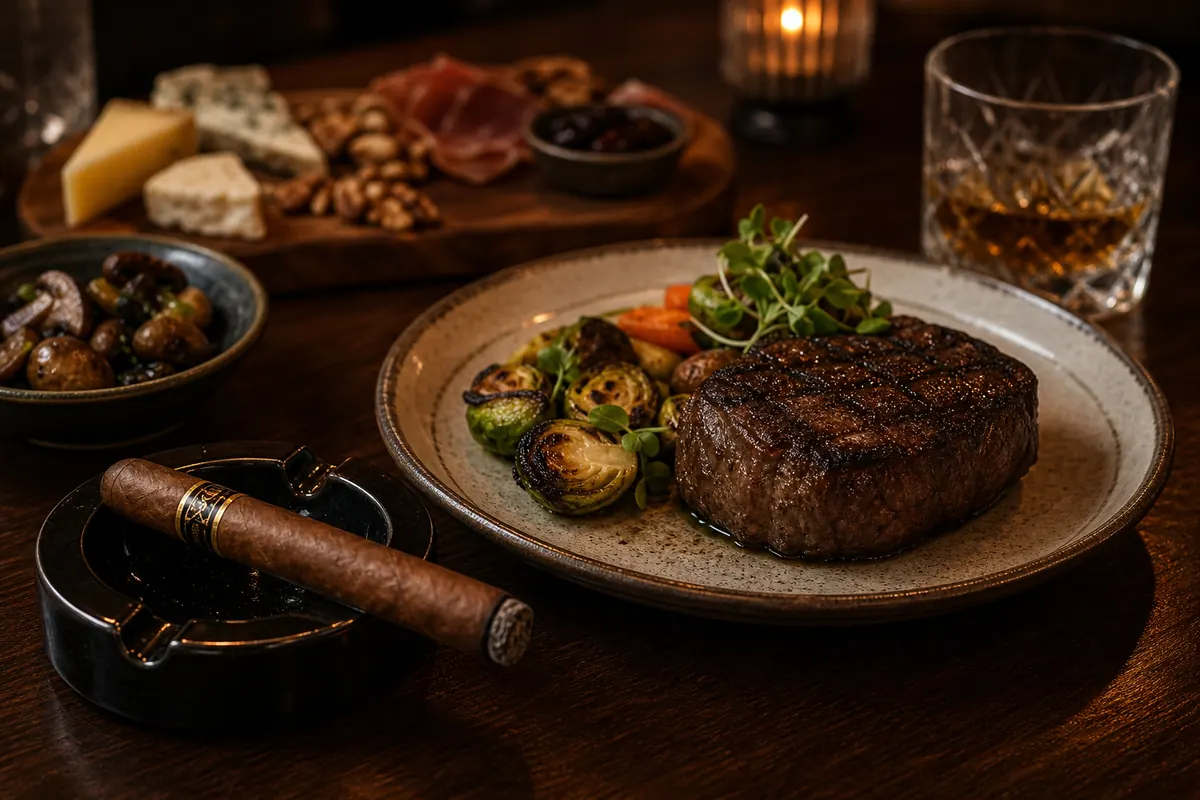
How to Pair Cigars with Food
The single best food to smoke a cigar with is aged Comté cheese — 24 months or older. Its crystalline amino acid crunch, butterscotch sweetness, and hazelnut finish complement virtually every medium to full-bodied cigar without competing or cloying. If you're hosting and want one food pairing that works universally, a wedge of aged Comté and a Padrón 1964 Anniversary Natural will satisfy everyone at the table.
Food pairing with cigars operates on different principles than drink pairing. You're dealing with textural interaction (fat coating the palate), flavor bridging (shared compounds between food and smoke), and timing logistics (you can't eat continuously while smoking). The successful food-cigar pairing accounts for all three — flavor match alone isn't enough if the mechanics don't work.
Why Certain Foods Work and Others Don't
Cigar smoke contains fat-soluble compounds that bind with dietary fats on your palate. Foods high in fat — cheese, cured meats, chocolate, nuts — create a lipid layer that captures smoke aromatics and prolongs their presence on your tongue. This is why a piece of cheese eaten before a draw makes the cigar taste more complex: you're literally trapping more flavor molecules against your taste receptors.
Salt enhances retrohale perception. Salty foods (prosciutto, aged Parmesan, salted almonds) amplify the perception of cigar aromatics during retrohale by stimulating saliva production and opening receptor channels. This is the same mechanism that makes salt enhance food aroma — applied to smoke.
Acid resets. A squeeze of citrus, a pickled cornichon, or a sharp mustard clears accumulated bitterness from tannins in cigar smoke, allowing each draw to land fresh. Acid is your tool for preventing palate fatigue during long smokes.
Sugar competes. Highly sweet foods fight with tobacco's natural sugars for receptor attention, creating a muddled experience. Keep sweetness moderate — dried fruit yes, glazed pastries no.
Aged Cheese: The Foundation Pairing
Hard aged cheeses are the single most reliable food category for cigars. Their concentrated fat, salt, and umami hit every mechanism that makes food-cigar pairing work.
Comté (24-36 months) + Padrón 1964 Anniversary Natural: The universal starting point. Comté's caramel and hazelnut meet the 1964's cedar and cocoa. The cheese's crystalline texture provides textural interest between draws. Both products share Maillard reaction compounds from their respective aging processes.
Parmigiano-Reggiano (36 months) + Oliva Serie V Melanio: Parmigiano's intense umami and granular texture pairs with Melanio's spice and earth. The cheese's tyrosine crystals release concentrated amino acid flavor that bridges between draws. Break into irregular chunks rather than slicing — the fractured surface releases more aromatics.
Aged Gouda (3-5 years) + My Father La Opulencia: Aged Gouda develops butterscotch, caramel, and fudge — remarkably close to Maduro wrapper flavors. The pairing is almost too harmonious; add a few Marcona almonds to introduce contrast.
Manchego (12 months) + Arturo Fuente Hemingway Short Story: Sheep's milk Manchego has a distinctive tangy sharpness that cuts through the Hemingway's creaminess. The cheese's slightly gamey character adds depth to the perfecto's concentrated final third.
Roquefort + Liga Privada No. 9: Bold pairing. Roquefort's aggressive blue mold and salt intensity demands an equally aggressive cigar. Liga Privada's dark, brooding earth and tar meet the cheese's funk and create something savory and complex. Not for mild palates.
Charcuterie: Smoke Meets Cure
Cured meats share fundamental chemistry with cigars — both undergo controlled fermentation and drying that develops umami, reduces moisture, and concentrates flavor compounds.
Jamón Ibérico de Bellota + Padrón 1926 Serie: Ibérico ham fed on acorns develops a distinctive nutty sweetness in its fat. Sliced paper-thin, it melts on the tongue and coats the palate with oleic acid — the same fat in olive oil. The 1926's intensity cuts through the richness while the ham's sweetness softens the cigar's pepper.
Prosciutto di Parma (24 months) + Ashton VSG: Parma ham's salt and delicate sweetness complement the VSG's cedar and leather. The thinner the slice, the better — you want it to dissolve quickly and let the fat do its work before your next draw.
Soppressata + Rocky Patel Vintage 1990: Dry-cured soppressata's fennel and black pepper echo similar notes in the RP 1990. The salami's chew provides textural engagement during the cigar's more linear middle third.
Bresaola + Davidoff Signature 2000: For mild cigars, bresaola's lean beef and delicate herb cure won't overwhelm. The meat's subtle gaminess adds a savory dimension to Davidoff's clean cream and cedar without competing.
Slice charcuterie before lighting — you want pieces ready to eat one-handed. A dedicated cutting board with pre-arranged portions keeps the experience seamless.
Nuts: Simple but Effective
Roasted nuts work through fat content and shared Maillard compounds. Their portability and shelf stability make them the easiest cigar food pairing.
Marcona almonds (roasted, salted) + any medium-full cigar: Marcona's higher oil content and buttery texture make them superior to regular almonds for smoking. The salt boosts retrohale, the fat coats, and the roast flavor bridges with tobacco. Universal pairing.
Candied walnuts + Fuente Fuente OpusX: The OpusX's intensity needs something with sweetness to tame it. Candied walnuts provide sugar without going overboard, and their bitter tannin (from the skin) echoes the cigar's tannic structure.
Smoked cashews + Drew Estate Undercrown Maduro: Smoke-on-smoke with a creamy cashew buffer. The cashew's natural sweetness prevents the double-smoke from becoming harsh.
Pistachios (in-shell) + La Flor Dominicana Double Ligero: The act of shelling slows your snacking pace to match smoking pace. Pistachio's subtle sweetness and slight salt complement the DL's power without getting lost.
Grilled and Smoked Meats: Before the Cigar
Heavy protein works best as a pre-cigar course rather than during. A full steak or rack of ribs competes for sensory bandwidth. But structured correctly, the transition from grilled food to cigar creates a coherent arc.
After grilled ribeye → Padrón Family Reserve: The residual fat coating from a well-marbled ribeye primes your palate for a full-bodied cigar. The Maillard crust on grilled beef shares compounds with tobacco. Light the cigar 10-15 minutes after your last bite — enough time for initial digestion but while fat still coats your mouth.
After smoked brisket → Liga Privada Único Serie Papas Fritas: Brisket's bark (the smoky crust) creates a flavor bridge to cigars. The Papas Fritas short smoke (30-40 minutes) makes it practical as a post-dinner cigar without committing to a 90-minute session.
After lamb chops → Ashton ESG: Lamb's distinctive gamey quality finds a complement in the ESG's more complex, aged Virginia wrapper. The herb crust (rosemary, thyme) on properly cooked lamb echoes herbal notes in the cigar.
The principle: eat first, smoke second, but close enough in time that residual palate coating from fat enhances the cigar's opening third.
Desserts: Careful Territory
Most desserts are too sweet for cigar pairing. The exceptions share common traits: moderate sweetness, high fat, and bitter or roasted elements that bridge to tobacco.
Dark chocolate mousse + Padrón 1964 Maduro: Mousse's airy texture dissolves quickly, leaving cocoa fat without lingering sugar. A small ramekin per smoke — a spoonful per third.
Crème brûlée (just the top) + Davidoff Winston Churchill The Late Hour: The caramelized sugar crust — bitter-sweet and crunchy — paired with the Late Hour's Scotch-barrel-influenced tobacco creates a campfire quality. Crack the top, eat the shards, leave most of the custard.
Espresso panna cotta + Oliva Serie V: Coffee-infused cream with minimal sugar. The espresso flavor bridges to the Serie V's roasted quality while the cream fat coats for enhanced smoke perception.
With desserts, less is more. A few bites provide flavor bridging; a full portion creates sugar overload that dulls your palate for the remainder of the cigar.
Building a Cigar-Friendly Spread
For hosting, assemble a board that covers all pairing mechanisms:
Fat: aged cheese (Comté or Gouda), Marcona almonds
Salt: prosciutto or jamón, Parmigiano shards
Acid: cornichons, grain mustard, dried cranberries
Bitter: dark chocolate (70%+), espresso in demitasse
Sweet: fig paste, honeycomb (small amounts)
This spread lets each smoker find their own combinations based on what their cigar needs at each stage. The acid and bitter elements serve as palate resets; the fat and salt elements enhance smoke perception; the sweet elements soften intensity.
Timing and Logistics
You can't eat with both hands full (cigar in one, food in the other requires a rest). Set your cigar on the ashtray before eating — 30 seconds of rest won't affect the burn. Eat your piece, let it settle for 10-15 seconds, then pick up the cigar. This rhythm prevents flavor collision.
Front-load heavier food in the cigar's first third when your palate is fresh. By the second third, the cigar's own flavors have built up — switch to lighter bites (individual nuts, thin cheese shards). Final third: stop eating and let the cigar finish on its own terms.
Room temperature food pairs better than cold. Cold fat sits inert on the palate; warm fat melts and interacts with smoke compounds. Take cheese and charcuterie out of the fridge 30-45 minutes before the session.
Principles for Experimentation
Fat content is your primary variable. Higher fat foods enhance smoke perception; lean foods provide minimal interaction. When in doubt, add fat (butter, oil, cheese) to make a food pairing viable.
Umami bridges to tobacco naturally. Anything high in glutamates — aged cheese, cured meats, soy sauce, mushrooms, tomato paste — shares savory depth with fermented tobacco leaf.
Texture matters as much as flavor. Crunchy foods (nuts, cheese crystals, breadsticks) provide textural contrast to smoke's ethereal quality. This contrast keeps your palate engaged over a long session.
Once you've found your baseline food pairings, explore the liquid side: bourbon's caramel sweetness, wine's acid structure, or coffee's roasted bridge all interact differently with these same foods. For cigar recommendations that span mild to full body, check the medium-bodied and full-bodied guides.
Frequently asked questions
What food goes best with cigars?
Aged hard cheeses — particularly Comté, Parmigiano-Reggiano, and aged Gouda — are the most reliable food pairings for cigars. Their concentrated fat coats the palate to enhance smoke perception, their salt boosts retrohale, and their Maillard compounds from aging bridge naturally to tobacco flavors.
Can you eat while smoking a cigar?
Yes, but with technique: set the cigar down, eat a small piece, let flavors settle for 10-15 seconds, then resume smoking. Front-load heavier foods in the first third when your palate is fresh. Switch to lighter bites in the second third and stop eating by the final third.
What meat pairs well with cigars?
Cured meats pair best during smoking — Jamón Ibérico, prosciutto, and soppressata share fermentation chemistry with tobacco. Grilled meats (ribeye, brisket) work better as a pre-cigar course: eat first, then light up within 10-15 minutes while residual fat still coats your palate.
Should you pair dessert with cigars?
Only desserts with moderate sweetness, high fat, and bitter or roasted elements: dark chocolate mousse, crème brûlée crust, or espresso panna cotta. Most desserts are too sweet and create palate fatigue. A few bites is sufficient — a full portion overwhelms the cigar.
Community tasting notes
No community notes yet. Be the first to share how this smoked for you.
Log in to share your tasting notes and photos.