
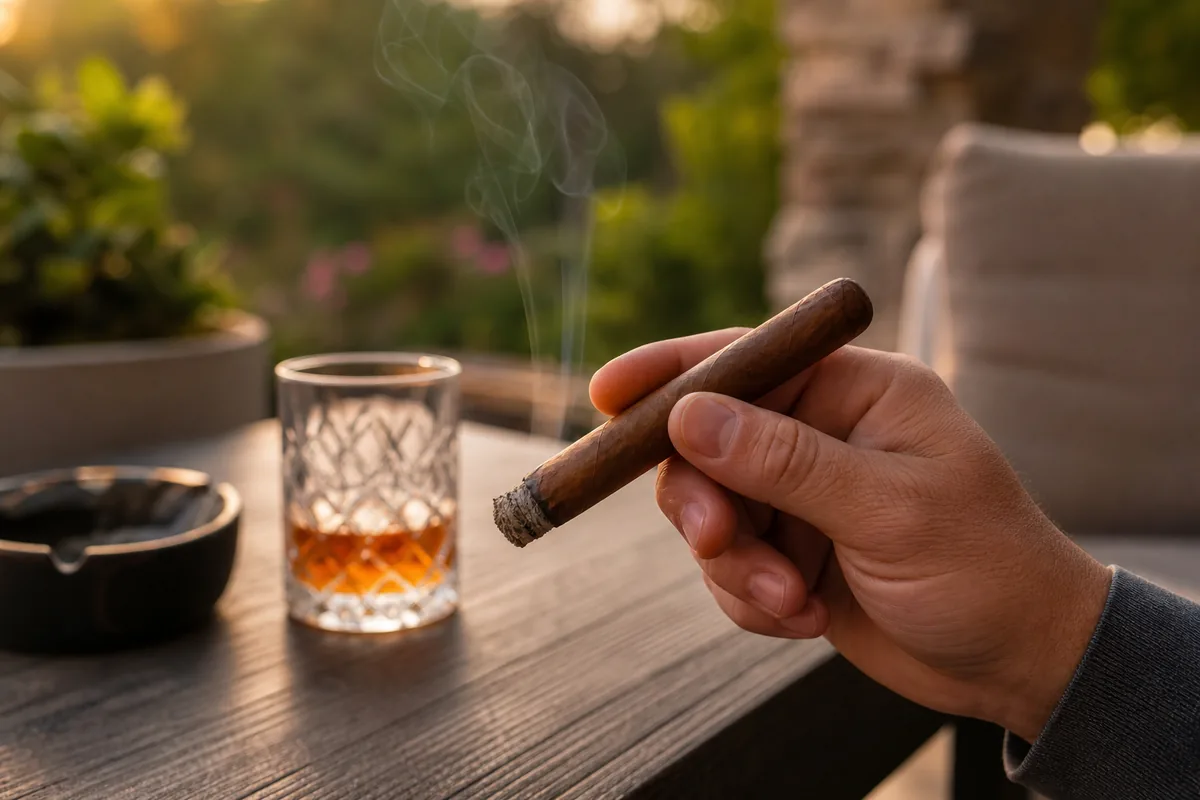
How to Smoke a Cigar Outdoors
To smoke a cigar outdoors, bring a torch lighter and a cutter, carry your cigars in a protective travel case, choose a sturdy medium-ring-gauge cigar that handles a breeze, and smoke slowly while shielding the foot from wind. The outdoors is where most people enjoy cigars, on a porch, a patio, a boat, or a walk, but open air adds variables you do not face inside: wind, sun, temperature swings, and humidity. A little preparation turns those variables from frustrations into a relaxed, reliable smoke.
Read the Conditions First
Before you light up, take stock of the weather. Wind is the biggest factor, because it feeds the ember and burns the cigar fast and hot; our dedicated guide on how to smoke a cigar in the wind covers that in depth. Direct sun and heat can dry a cigar out over a long session and make the ember run warmer, so seek shade when you can. Cold, damp air makes cigars harder to keep lit and can leave the wrapper feeling tight. High humidity is generally kinder to the cigar than dry heat, but a soggy day can slow the burn. None of these are dealbreakers; they just tell you how to adjust your pace and your setup.
Pack the Right Gear
Outdoor smoking rewards good tools. At minimum, carry a wind-resistant torch lighter, a reliable cutter, and something to protect your cigars from getting crushed. A hard travel case is worth its weight, and for longer outings a case with a small humidification element keeps cigars from drying in the sun. If you plan to be out all day or you are heading somewhere far, read how to travel with cigars for packing, humidity, and transport tips. A quick tip many smokers swear by: if you forget your cutter, a clean fingernail can pinch or split a small opening in the cap in a pinch, though a proper cut is always better, as our how to cut a cigar guide explains.
Choose a Cigar That Handles Open Air
Not every cigar is a good outdoor companion. Thin, delicate cigars are vulnerable to wind and heat, while a larger ring gauge, roughly 50 and up, has a denser ember that burns more forgivingly. A medium-bodied blend also tends to taste better outdoors, where breezes carry away some of the subtler aromas that a mild cigar relies on. Match the length to how long you will be out; a shorter cigar suits a quick break, while a longer one fits an afternoon by the fire pit. If you are still learning what suits you, how to choose your first cigar breaks down size, strength, and shape.
Light and Smoke for the Environment
Light with a torch, shield the foot with your cupped hand, and confirm the entire foot is glowing before you draw; see how to light a cigar for the toasting method. Outdoors, smoke a little slower than you would inside, because moving air already keeps the ember active between puffs. Puffing too hard or too often overheats the cigar and turns the smoke bitter. If a gust or a lull puts your cigar out, do not panic; how to relight a cigar shows how to knock off the ash, char the foot, and get it going again cleanly.
Keep the Cigar Safe on the Move
Walking, boating, or golfing with a lit cigar takes a little care. Hold it loosely between your fingers rather than clenching it, and keep the lit foot pointed away from your body and clothing. A stable, relaxed grip protects the wrapper and the burn line; our guide on how to hold a cigar covers this. When you need both hands, rest the cigar on a proper surface or an ashtray rather than the ground, where dirt and moisture can ruin it. If you must pause for a few minutes, letting it go out and relighting later is often better than letting it smolder into a hot, harsh state.
Mind the Ash and Your Surroundings
Outdoors it is tempting to flick ash anywhere, but be considerate: use an ashtray or a portable ash holder, keep butts off lawns and trails, and be mindful of dry brush and fire risk in hot, arid areas. Never toss a lit or smoldering cigar into vegetation. Being tidy keeps shared outdoor spaces welcoming for everyone and reflects the same courtesy covered in our broader cigar etiquette guide.
Enjoy the Pace
The best part of an outdoor cigar is that it slows you down. Give yourself enough time, adjust to the weather instead of fighting it, and keep your expectations realistic; a breezy day will burn faster than a still one. With a torch, a cutter, a protective case, and a cigar chosen for the conditions, you are set for a genuinely relaxing smoke almost anywhere.
Step by step
- Check the weatherAssess wind, sun, heat, and humidity, then seek shade or a windbreak as needed.
- Pack your kitBring a torch lighter, cutter, and a protective travel case for your cigars.
- Pick the right cigarChoose a sturdy medium-ring-gauge, medium-bodied cigar sized to your available time.
- Cut and lightMake a clean cut, then toast and light with the torch while shielding the foot.
- Smoke and move carefullyPuff slowly, hold the cigar loosely, keep the foot clear of clothing, and use an ashtray.
Frequently asked questions
What should I bring to smoke a cigar outdoors?
A wind-resistant torch lighter, a reliable cutter, and a protective travel case, ideally one with humidification for longer outings.
What kind of cigar is best outdoors?
A larger ring gauge, around 50 and up, in a medium-bodied blend. It burns more forgivingly in wind and its flavor carries better in open air than a mild, thin cigar.
Can I use a fingernail to cut a cigar if I forget my cutter?
In an emergency you can pinch or split a small opening in the cap with a clean fingernail, but a proper cut with a cutter gives a much cleaner, better draw.
How do I keep my cigar lit while walking or moving?
Smoke slowly, hold the cigar loosely with the foot pointed away from you, and relight if it goes out rather than puffing hard to save it.
Community tasting notes
No community notes yet. Be the first to share how this smoked for you.
Log in to share your tasting notes and photos.