
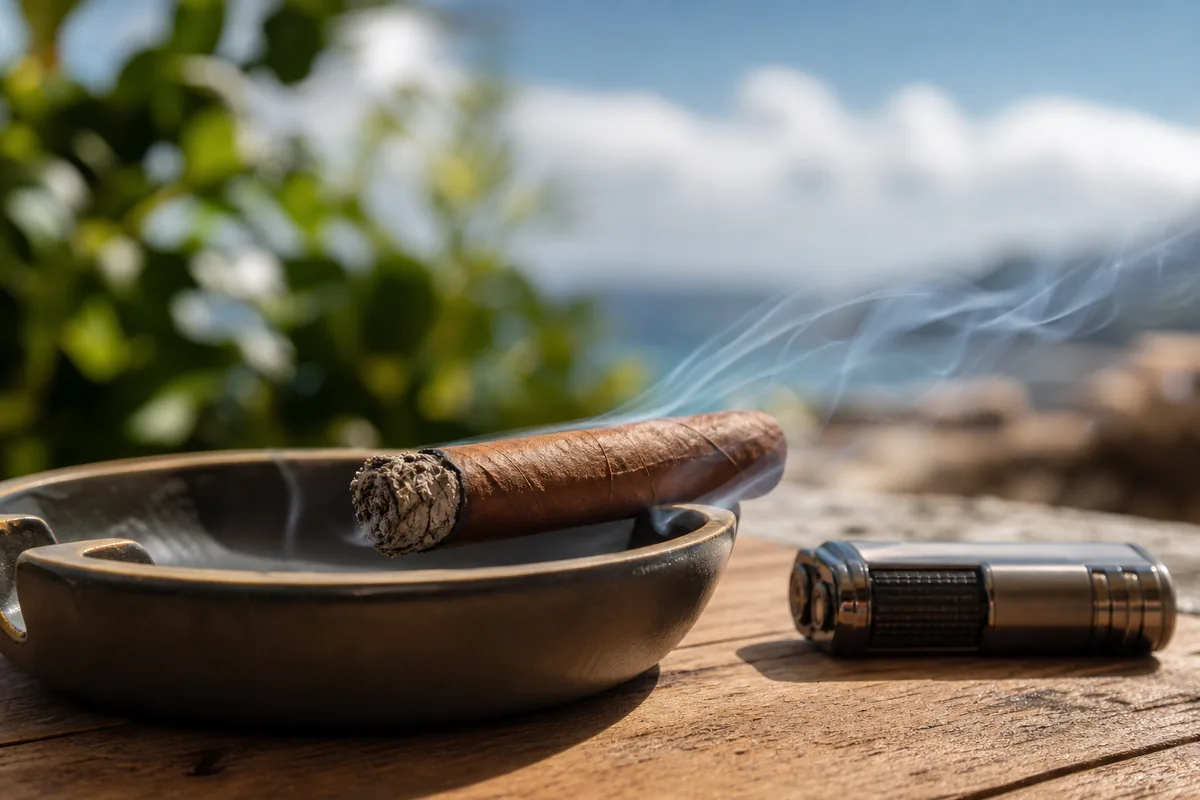
How to Smoke a Cigar in the Wind
To smoke a cigar in the wind, turn your back to the breeze, shield the foot with your hand or body, light it with a wind-resistant torch flame, and slow your draw so the wind does not overheat the ember. Wind is the single biggest enemy of a good outdoor smoke because it pumps extra oxygen across the burning foot, which speeds combustion, throws the burn line off, and makes the smoke hot and harsh. A few simple adjustments keep the cigar cool, even, and enjoyable no matter how gusty it gets.
Why Wind Ruins a Cigar
A cigar burns best when air reaches the ember slowly and evenly, which is exactly what happens when you take relaxed puffs. Wind breaks that balance. A steady breeze forces oxygen across the foot between your puffs, so the tobacco keeps burning even when you are not drawing. That constant airflow does three things: it burns the cigar faster than you can smoke it, it heats the ember far past its ideal temperature, and it makes one side of the foot burn quicker than the other. The result is a hot, bitter, tunneling smoke with a jagged burn line. Understanding this is half the battle, because every technique below is really about controlling how much air the wind can push into the foot.
Position Yourself Against the Wind
Before you even light up, read the breeze and put a barrier between it and your cigar. The easiest barrier is your own body: turn so your back faces the wind and the cigar sits in the sheltered pocket of air in front of your chest. Walls, cars, a corner of a building, or a companion standing upwind all work as windbreaks too. Cup your free hand around the foot when the wind gusts, especially while lighting and during touch-ups. If you can move even a few feet into a lee, do it. Good positioning alone can cut most wind problems before you apply a single flame.
Light It With a Torch, Not a Soft Flame
Matches and soft-flame lighters are almost useless outdoors. A single-jet or multi-jet torch lighter throws a focused, pressurized flame that the wind cannot easily blow out or bend away from the foot. When you toast and light, keep the flame close, rotate the cigar, and shield it with your hand. See how to light a cigar for the full toasting technique, and remember that in wind you will want to work faster and check that the whole foot has caught before you start drawing. If you are new to the ritual, our cigar smoking for beginners guide covers the basics you can then adapt to breezy conditions.
Smoke Slower and Cooler
Indoors you might puff every 30 to 60 seconds. In the wind, the breeze is already feeding the ember between puffs, so you should draw less often, not more. Take slow, gentle puffs and give the cigar time to settle. Puffing hard or frequently only stacks your heat on top of the wind's, and that is what scorches the wrapper and sours the flavor. If the foot glows bright orange and the smoke turns hot on your tongue, set the cigar down for a moment and let it cool. Smoking cool is the core skill behind how to smoke a cigar properly, and it matters even more when wind is involved.
Choose a Bigger Ring Gauge
Cigar size affects how well it handles wind. A thin cigar has a small foot with little thermal mass, so a gust can overheat or char it almost instantly. A larger ring gauge, roughly 52 and up, has a bigger, denser ember that resists sudden temperature swings and burns more forgivingly outdoors. A slightly shorter, thicker cigar is often the smart pick for a windy patio or a walk. If you are not sure what to grab, how to choose your first cigar explains ring gauge and how it changes the experience.
Touch Up the Burn Often
Even with good technique, wind will occasionally knock your burn line crooked or let one side race ahead. Keep your torch handy and touch up as soon as you see trouble instead of waiting. Gently apply the flame to the lagging side of the foot until it evens out. Our guide on how to fix an uneven cigar burn walks through this in detail, and how to relight a cigar helps if a gust puts the cigar out entirely. Frequent small corrections beat one big rescue later.
Accept the Trade-Offs
Finally, set realistic expectations. A cigar smoked in stiff wind will burn faster and taste a touch less nuanced than the same cigar in still air, and that is normal. The goal outdoors is a relaxed, cool, even smoke, not competition-grade perfection. Save your most delicate, expensive cigars for calm conditions and reach for sturdy, medium-bodied sticks when the flags are snapping. Manage the wind instead of fighting it and you will still have a genuinely good smoke.
Step by step
- Find shelterTurn your back to the wind and use your body, a wall, or a companion as a windbreak before lighting.
- Light with a torchUse a torch lighter, cup the foot with your hand, rotate the cigar, and confirm the whole foot is lit.
- Draw slowlyTake gentle, infrequent puffs and let the cigar rest between them so it stays cool.
- Monitor the burnWatch the burn line and check the smoke temperature; set the cigar down if it gets hot.
- Touch up earlyApply the torch to any lagging side of the foot as soon as the burn goes crooked.
Frequently asked questions
Why does my cigar burn so fast in the wind?
Wind pushes oxygen across the burning foot between your puffs, so the tobacco keeps combusting even when you are not drawing. That extra airflow accelerates the burn and overheats the ember.
What lighter works best outdoors?
A single-jet or multi-jet torch lighter. Its pressurized flame resists wind far better than matches or soft-flame lighters, which blow out easily.
Should I puff more often to keep it lit in the wind?
No. The wind is already feeding the ember, so puff slower and less often. Frequent hard puffs stack heat on top of the wind and scorch the cigar.
Does cigar size matter in windy conditions?
Yes. A larger ring gauge has a bigger, denser ember with more thermal mass, so it resists overheating and burns more evenly than a thin cigar.
Community tasting notes
No community notes yet. Be the first to share how this smoked for you.
Log in to share your tasting notes and photos.