
How to Properly Light a Cigar
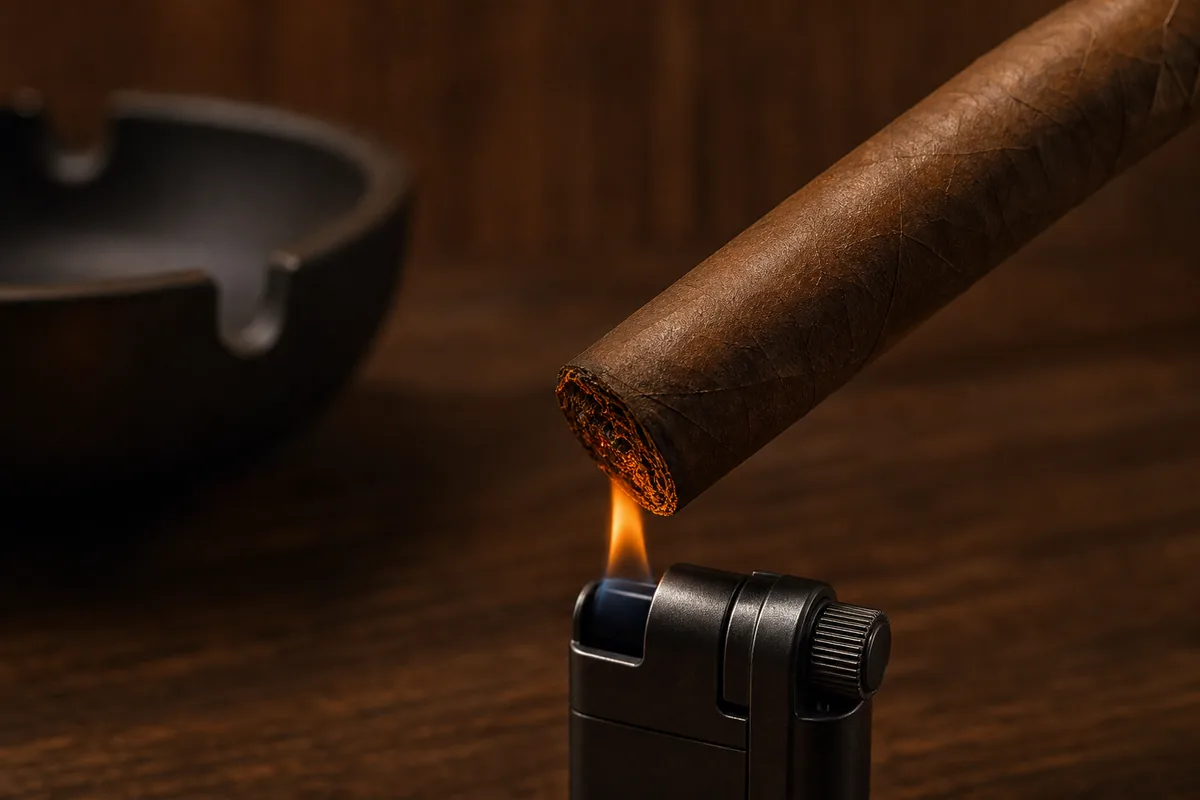
Toast the foot of the cigar by holding it at a 45-degree angle, half an inch above the flame, rotating slowly until the entire end glows orange evenly — then take your first draw. Skip the toasting step and you'll fight an uneven burn for the rest of the smoke. It takes 15 seconds of patience to save 45 minutes of frustration.
Lighting a cigar is not lighting a cigarette. A cigarette has one thin layer of paper and shredded tobacco — touch flame and it's lit. A cigar has multiple layers of whole leaves wrapped tightly together, each needing to ignite evenly for the cigar to burn correctly. Rush this and you pay for it immediately.
The Two-Step Process
Step 1: Toast the Foot
Hold the cigar at 45 degrees with the foot facing the flame. Keep the flame half an inch below the foot — the cigar shouldn't touch the flame directly. Rotate the cigar slowly between your fingers while the radiant heat chars the foot evenly. Watch for the foot to turn dark and begin to glow orange across its entire surface. This takes 10-20 seconds depending on ring gauge.
During toasting, don't puff. You're not smoking yet — you're preparing the stage. The goal is an even char across the entire surface so that when you do draw, all the filler ignites simultaneously rather than just one side.
Step 2: First Draws
Once the foot is evenly toasted (glowing orange, no dark unlit patches), bring the cigar to your mouth and take two to three gentle draws while still holding the flame near (not touching) the foot. These draws pull the flame's heat into the center of the filler, ensuring the core ignites — not just the outer wrapper.
After two or three draws, remove the flame. Blow gently on the lit foot to check — the entire surface should glow evenly. If one side is dark, toast that side for another few seconds and take one more draw.
Flame Sources: Which to Use
Butane Torch (Best for Outdoors)
Produces a focused, wind-resistant flame. Lights quickly. The risk: too much heat concentrated in one spot can char the wrapper and create bitterness on the first inch. Keep the torch moving and maintain distance. Never hold a torch in one spot for more than two seconds.
Soft Flame Butane (Best for Indoors)
Gentler, spreads heat across a wider area. Takes slightly longer but produces a more even toast with less risk of charring. The traditional choice for lounge smoking. Most purists prefer this.
Cedar Spills
A thin strip of Spanish cedar lit with a match. Adds a subtle cedar flavor to the first few puffs. The ceremonial option — slower than any lighter, but some smokers find the ritual worth the extra 30 seconds. A nice touch when you have time.
Matches
Use long wooden matches (not cardboard book matches). Let the sulfur burn off for 2-3 seconds before bringing the match to the cigar — sulfur taste transfers if you light too quickly. Need multiple matches for larger ring gauges. Functional but impractical in wind.
What to Avoid
Zippo and gasoline lighters. The fuel imparts a chemical taste to the tobacco that you'll detect for the first half-inch of smoking. Candles are equally bad — paraffin fumes do the same thing. Stick to butane (odorless when combusted) or natural cedar.
Common Lighting Mistakes
Torching without toasting. Shoving a torch directly at the foot while puffing aggressively. This lights only the windward side and creates immediate canoeing. Always toast first, draw second.
Touching the flame to the cigar. Direct contact chars the wrapper black and creates a bitter, acrid first inch. Keep flame below the foot — radiant heat is what you want, not direct combustion of wrapper leaf.
Puffing during toasting. Drawing while toasting pulls heat unevenly through whatever part of the filler has the loosest draw. This ignites one channel while leaving the rest cold. Toast without puffing, then puff to pull fire into the core.
Giving up too early. Large ring gauge cigars (54-60) need 20-30 seconds of toasting. If the entire foot isn't glowing, you're not done. Patience here prevents 45 minutes of burn correction later.
After Lighting
Let the cigar rest for 30 seconds after your first draws. Then take a slow draw and observe the smoke output. A well-lit cigar produces consistent smoke volume on each draw with no hot spots. If you see one side smoking more than the other, one gentle touch-up now saves repeated corrections later.
The first inch of any cigar is the harshest — flavors haven't stabilized yet. Don't judge a cigar by its first few puffs. Give it an inch of smoking before forming an opinion. If you need a good lighter and a clean cut, those choices matter as much as lighting technique.
The Toasting Phase
Proper lighting begins before the cigar touches your lips. Hold the cigar at a 45-degree angle with the foot facing your lighter flame. Keep the flame about half an inch below the foot without touching it directly. Rotate the cigar slowly to toast the entire foot surface evenly. You should see the foot begin to glow uniformly around its full circumference, with the tobacco edges charring slightly black while the center starts showing orange. This toasting phase takes 15-30 seconds and establishes even combustion across the full diameter before you take your first puff.
Rushing this phase by immediately puffing while applying flame produces uneven burn from the very first inch. The side where you directed the flame gets a head start over the unlit side, creating a burn differential that compounds throughout the cigar's length. Patience during toasting prevents the most common lighting error that plagues new smokers: having to touch up an uneven burn within the first five minutes because they didn't establish even combustion at the start.
The First Draw
After toasting produces an even glow across the entire foot, bring the cigar to your lips and take your first draw while holding the flame just below the foot. This draw pulls heat into the filler, igniting the interior tobacco that toasting alone doesn't reach. The first puff often tastes slightly bitter or sulfuric, especially with torch lighters. This is normal and dissipates within 2-3 subsequent puffs. Some smokers blow the first puff outward through the cigar (a purge) to expel any lighter fluid or sulfur residue before settling into normal smoking rhythm.
After the first draw, remove the cigar from your mouth and inspect the burn line. It should glow evenly around the entire circumference. If one side appears darker or more advanced, apply a brief touch of flame to the lagging section before taking your second puff. Correcting immediately in this first-puff window is far easier than fixing a canoeing problem that develops over subsequent inches. Take 3-4 initial puffs spaced 15-20 seconds apart to fully establish combustion, then settle into your normal once-per-minute rhythm for the remainder of the smoking session.
Lighter Choice and Its Impact
Your lighter affects flavor for the first few puffs. Butane torch lighters produce clean, odorless combustion that does not transfer taste to the tobacco. Soft-flame butane lighters burn slightly cooler and may require more time to toast but also leave no flavor residue. Zippo-style naphtha lighters can impart a chemical taste detectable in the first third of the cigar, making them poor choices for premium cigars despite their wind resistance and iconic aesthetics. Cedar spills (thin strips of Spanish cedar lit separately, then used to light the cigar) produce the cleanest possible light with a subtle cedar aroma that actually complements tobacco rather than contaminating it.
Step by step
- Toast the footHold cigar at 45 degrees, flame half-inch below, rotate slowly for 10-20 seconds until entire foot glows orange. Do not puff.
- First drawsBring cigar to mouth, take 2-3 gentle draws while holding flame near the foot. This pulls fire into the center filler.
- Check the lightRemove flame, blow gently on foot. Entire surface should glow evenly. Touch up dark spots if needed.
- Rest and observeWait 30 seconds, take a slow draw. Even smoke output means you're good. Uneven means one touch-up now saves problems later.
Frequently asked questions
Can I relight a cigar that went out?
Yes. Gently blow through the cigar to push stale smoke out of the filler, then re-toast and relight as if starting fresh. The flavor may be slightly harsher for a few puffs but will normalize. Relight within an hour for best results.
Does the lighter type really affect flavor?
Butane is tasteless when burned. Zippo fluid and candle wax are not. The difference is detectable on the first half-inch of smoking. After that initial inch, any residual flavor dissipates — but why start with a chemical taste when butane solves the problem?
Should I cut before or after lighting?
Always cut before lighting. You need the draw to be open before you toast — otherwise you can't test the draw to check for plugs, and you can't pull flame into the filler during the lighting draws.
How do I light a cigar in wind?
Cup your hand around the foot, use a torch lighter (wind-resistant), and shield with your body. Toast takes longer in wind because heat dissipates. Don't rush — a poorly lit cigar in wind is worse than taking an extra 30 seconds to light properly.
Community tasting notes
No community notes yet. Be the first to share how this smoked for you.
Log in to share your tasting notes and photos.