
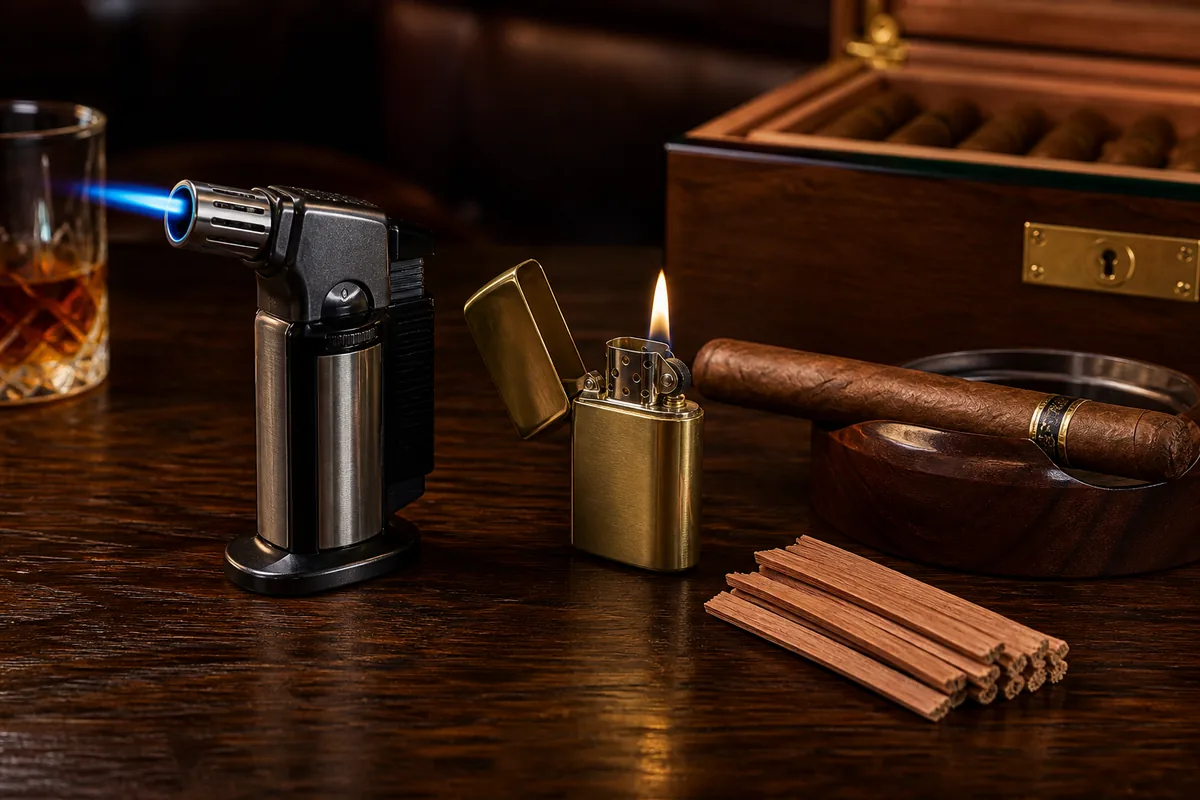
Cigar Lighter Types: Torch vs Soft Flame vs Cedar Matches
A single-flame butane torch lighter is the right choice for 90% of cigar smokers. It's wind-resistant, produces a clean odorless flame, offers precise control for toasting and touch-ups, and costs $20-30 for a lifetime of use. If you're buying one lighter, buy a single-flame torch. Decision made.
The debate between lighter types is mostly about tradeoffs: speed vs control, portability vs fuel capacity, outdoors vs indoors. Here's what each type does well and where it falls short.
Single-Flame Torch
One focused jet of butane flame, pointed like a welding tip.
Strengths
- Precise control — you can target specific sections of the foot during lighting
- Best for touch-ups and relights — pinpoint flame corrects uneven burns without charring adjacent areas
- Wind-resistant — jet flame holds steady in moderate wind
- Clean burn — no fuel taste imparted to tobacco
- Most fuel-efficient — burns less butane per light than multi-flame
Weaknesses
- Slower initial light on large ring gauges (54+) — the small flame takes more passes to toast the full foot
- Requires more technique than multi-flame — you need to keep the flame moving evenly
Best For
Daily smoking, technical smokers who enjoy the ritual of precise toasting, smaller to medium ring gauges (42-52), and anyone who relights frequently (the precision is unmatched for corrections).
Our Pick
Xikar Xidris ($25-30): Single jet, reliable ignition, fuel window, ergonomic shape. Lifetime warranty. The default recommendation for good reason.
Double/Triple-Flame Torch
Two or three jets in a cluster, creating a wider flame spread.
Strengths
- Faster initial light — covers more foot surface per pass on large ring gauges
- Stronger wind resistance than single flame — multiple jets reinforce each other
- Less technique required — the wide flame is more forgiving of imprecise aiming
Weaknesses
- Burns more fuel — noticeably shorter refill intervals
- Hotter flame — easier to char the wrapper if held too close or too long
- Worse for touch-ups — too wide to target a specific problem area without hitting good wrapper
- Overkill for small ring gauges — the flame is wider than a Corona's foot
Best For
Outdoor smoking in wind, Gordo/60-ring gauge cigars where speed matters, smokers who want quick lights without fussing over technique.
Our Pick
Xikar Allume Double ($35-40): Two jets are enough for speed without the fuel drain of triple. Lifetime warranty. Good middle ground between precision and coverage.
Soft Flame (Traditional Butane)
A standard lighter flame — like a Bic but larger and refillable.
Strengths
- Coolest flame temperature — impossible to char the cigar even with sloppy technique
- Most fuel-efficient — a fill lasts dozens of lights
- Quietest and most aesthetically traditional
- Some purists argue the cooler light preserves more delicate flavors in the first inch
Weaknesses
- Zero wind resistance — useless outdoors in any breeze
- Slowest light — multiple passes needed even on small ring gauges
- Doesn't work well for touch-ups because the soft flame is imprecise at distance
Best For
Indoor smoking exclusively, traditionalists, cigar lounges where wind isn't a factor, smokers who enjoy a longer lighting ritual.
Our Pick
S.T. Dupont Ligne 2 ($150+): If you're committed to soft flame, this is the reference. Impeccable build, iconic ping sound, lasts decades. But at this price, it's jewelry that lights cigars.
Budget: Any quality refillable soft-flame lighter ($15-20). Avoid disposable Bics — they work but run out fast and the flame is too small for cigars.
Cedar Spills / Matches
Thin strips of Spanish cedar lit from a secondary flame source, or long cedar/wooden matches.
Strengths
- No butane at all — the "purest" light source
- The cedar combustion adds a faint cedar aroma to the first puffs
- Traditional and ritualistic — satisfying for ceremony lovers
Weaknesses
- Impractical — you need a flame source to light the spill in the first place
- Burns your fingers on short spills
- Impossible outdoors
- The "purity" argument is debunked — refined butane is completely odorless and tasteless when burning
Best For
Cigar lounge aesthetics, social occasions where ritual adds to the experience, burning in enclosed humidors to add cedar aroma (separate from lighting).
What About Zippos?
Don't use a standard Zippo for cigars. The naphtha fuel imparts a chemical taste to the first 2-3 puffs that ruins the cigar's opening flavors. Zippo makes a "Butane Insert" ($15) that converts a regular Zippo case to a torch flame using butane instead of lighter fluid — this works fine if you love your Zippo's aesthetics.
The Recommendation
One single-flame torch covers all situations for 90% of smokers. If you smoke outdoors frequently, add a double-flame for windy conditions. If you smoke exclusively in lounges, a soft flame is a luxury worth exploring. Cedar spills are theater — enjoyable theater, but theater.
Match your lighter with the right cutter and you have a complete kit. Then learn proper lighting technique — the lighter matters less than how you use it.
Fuel Considerations
Butane quality directly affects lighter performance and cigar flavor. Cheap butane contains impurities that clog jets, produce inconsistent flame, and can impart off-flavors to your cigar. Premium butane like Xikar, Colibri, or Vector is triple or quadruple refined, removing sulfur and other contaminants that affect combustion cleanliness. The price difference between cheap and premium butane is negligible, perhaps 3-5 dollars more per can, but the performance improvement is immediately noticeable in reliable ignition and clean taste.
Altitude affects butane lighter performance significantly. At elevations above 5,000 feet, reduced oxygen makes single-jet torches less reliable while soft-flame lighters struggle to stay lit in even light breezes. Multi-jet torches with adjustable fuel output perform best at altitude because they deliver more fuel to compensate for thin air. If you smoke regularly at elevation in mountain areas or high-altitude cities, choose triple-jet torches and increase fuel flow settings above what you would use at sea level.
Lighter Maintenance Essentials
Purge your lighter before every refill by pressing the refill valve with a small tool until all trapped air escapes. Trapped air pockets prevent butane from flowing properly, causing sputtering ignition and weak flames. After purging, hold the lighter upside down and insert butane canister nozzle firmly into the refill valve for 5-10 seconds until you hear sputtering indicating the tank is full. Let the lighter rest for 3-5 minutes after refilling to allow butane to reach room temperature before attempting ignition.
Torch lighter jets clog over time with carbon buildup and butane residue. Clean jet nozzles monthly using compressed air blown directly into the burner ports. For stubborn clogs, a thin wire or the tip of an unfolded paperclip gently inserted into the jet opening dislodges carbon deposits without damaging the precision-machined nozzle. Never use water or liquid solvents on lighter jets as moisture interferes with the piezo ignition system and can rust internal components in cheaper lighters.
Choosing Between Jet Counts
Single-jet torches provide precision for toasting and touch-ups with focused heat. They use the least fuel per lighting but take 30-45 seconds to fully toast a cigar's foot. Double-jet torches balance speed and precision, covering a robusto-sized foot in 20-30 seconds with good control. Triple and quad-jet torches light cigars fastest at 10-15 seconds but consume fuel rapidly and can char the foot if held too close. For most smokers, a double-jet provides the best balance between lighting speed, fuel efficiency, and reduced risk of scorching the wrapper during the initial toast.
Wind resistance correlates directly with jet count and flame intensity. Single jets extinguish in moderate wind, making them indoor-only tools for many climates. Double jets handle light breezes but struggle in sustained wind above 10 mph. Triple and quad jets push through most outdoor conditions short of strong gusts, making them the choice for golfers, fishermen, and anyone smoking in exposed outdoor environments regularly. If you primarily smoke outdoors, invest in a triple-jet that handles your local wind conditions reliably.
Community tasting notes
No community notes yet. Be the first to share how this smoked for you.
Log in to share your tasting notes and photos.