
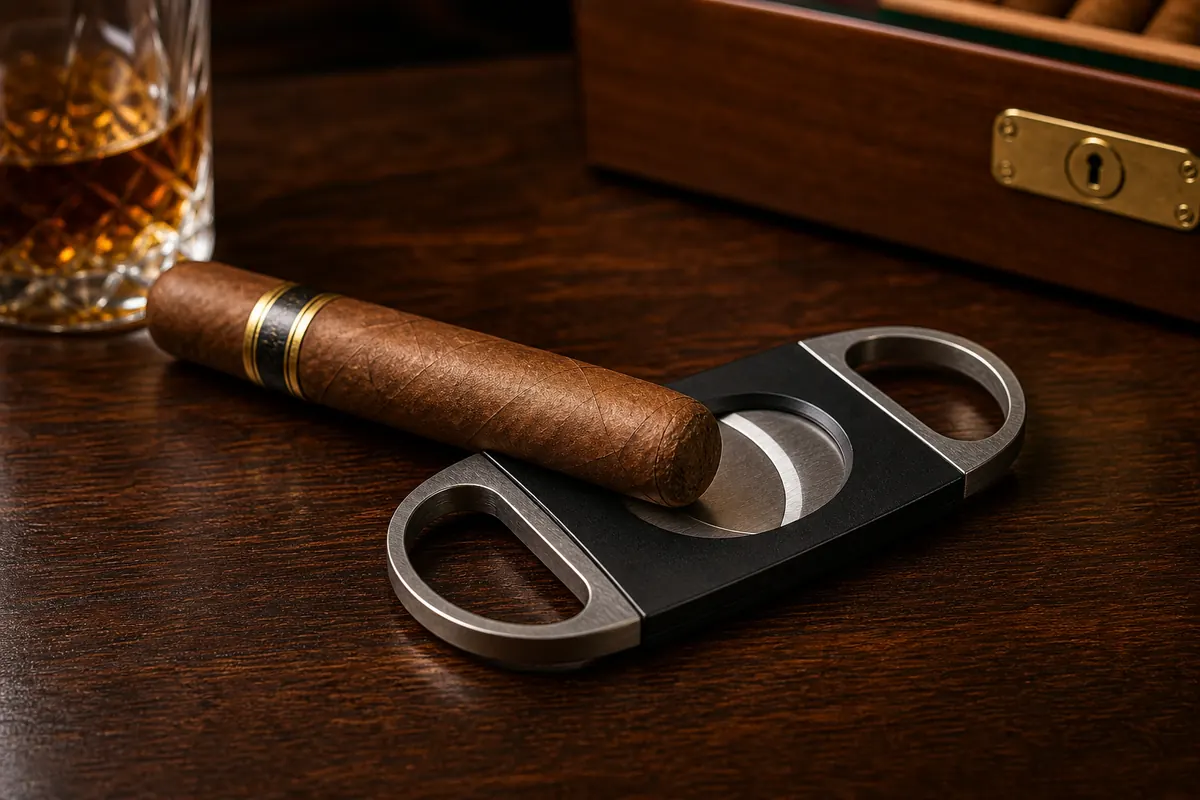
How to Properly Cut a Cigar
Place the blade just above the shoulder line (where the curved cap meets the straight body), apply firm and swift pressure through the entire cap in one motion. Hesitation cracks wrappers. A decisive cut with a sharp blade produces a clean opening every time — this is the single most important technique in cigar smoking because a bad cut ruins the entire experience before you even light up.
The cap is a small piece of tobacco glued over the head of the cigar to keep the wrapper from unraveling. Your cut removes enough cap to open the draw while leaving enough cap below the cut line to hold the wrapper together. Cut too high: tight draw, not enough smoke. Cut too low: wrapper unravels within minutes, and you're picking tobacco off your lips for the rest of the session.
The Straight Cut (Guillotine)
The most common and versatile cut. Works on every cigar shape and size.
Technique
- Hold the cigar in your non-dominant hand at a comfortable angle
- Identify the shoulder — the visible line where the rounded cap transitions to the straight barrel
- Place the cutter blade 1-2mm above the shoulder line
- In one swift motion, close the blades completely through the cap
- Don't saw, don't hesitate, don't stop halfway
The key word is "swift." A slow squeeze compresses the cap before cutting it, creating a jagged edge and micro-tears in the wrapper. Fast and decisive. If your cutter is sharp (as it should be), the blade does the work — you just need to commit to the motion.
Common Mistakes
Cutting too deep: Below the shoulder line, you remove too much cap. The wrapper has nothing holding it together and will unravel from the head down. If this happens, apply a tiny dot of food-safe adhesive or just smoke it fast before the wrapper peels further.
Hesitating mid-cut: Stopping the blade partway creates a torn edge. The compressed wrapper cracks rather than cuts cleanly. Commit to the full motion.
Dull blades: The number one cause of bad cuts. A dull cutter crushes rather than slices. If you're tearing wrappers consistently, your blades need replacement or sharpening. Quality cutters (Xikar, Palio) maintain edge for 500+ cuts. Gas station cutters dull in weeks.
The V-Cut (Wedge/Cat's Eye)
A V-shaped notch cut into the cap, creating a concentrated draw channel.
When to Use
V-cuts work best on straight-sided (parejo) cigars with standard caps. The wedge concentrates smoke through a smaller opening, increasing flavor intensity per puff. Smokers who find straight cuts too open or airy often prefer the V-cut's tighter, more flavorful draw.
Technique
- Insert the cigar head into the V-cutter's opening until it touches the blade
- Don't push too deep — the cutter's design limits depth on quality tools
- Squeeze firmly and completely in one motion
- Remove cigar and inspect — you should see a clean V-shaped wedge in the cap
Limitations
V-cuts struggle with torpedos (pointed caps) because there's no flat surface for the wedge. They also work poorly on very large ring gauges (58+) where the V-channel is too small relative to the cigar's diameter. For these shapes, use a straight cut.
The Punch Cut
A circular blade punches a round hole in the cap without removing it.
When to Use
Punch cuts are ideal when you want maximum wrapper flavor in each puff — since the cap stays intact, smoke passes through a smaller opening surrounded by cap tobacco. The concentrated draw emphasizes wrapper characteristics. Maduro lovers often prefer punch cuts for this reason.
Technique
- Press the punch tool against the center of the cap
- Twist gently while applying forward pressure — the circular blade cores through the cap
- Pull back to remove the circular plug of tobacco
- Clear any loose tobacco from the opening
Limitations
Cannot be used on torpedos or figurados (pointed tips). The small opening can accumulate tar and moisture during long smokes, requiring occasional clearing. Not ideal for large ring gauge cigars where a single punch doesn't provide enough airflow — though some smokers punch twice for a wider draw.
Which Cut for Which Cigar
- Robusto, Toro, Corona: Any cut works. Default to straight cut if unsure.
- Torpedo, Belicoso: Straight cut only. Cut the pointed tip at the widest point where it starts to taper.
- Maduro wrapper: Punch or V-cut to maximize wrapper flavor contact.
- Thin ring gauge (38-42): Straight cut. V-cut and punch are too restricted on thin cigars.
- Thick ring gauge (58-60): Straight cut for full airflow. Punch is too small alone.
For more detail on cutter types and recommendations, see our cutter buying guide. And once you've made a clean cut, move to lighting technique — the second half of starting a cigar right.
Anatomy of the Cap
Understanding cap construction helps you cut correctly. Most premium cigars have a triple cap: three circular pieces of wrapper leaf applied to the head during rolling. The cap seals the head, prevents the wrapper from unraveling, and provides a smooth surface for your lips. The visible cap line (a slight ridge where the cap meets the body wrapper) marks the safe cutting zone. Cut above this line to remove just the tip while leaving enough cap attached to keep the wrapper intact during smoking. Cutting below the cap line causes the wrapper to unravel from the head downward, ruining the cigar within minutes.
Cuban cigars use a different cap style: a single flag leaf wrapped around the head and secured with vegetable glue. This single-cap construction is more fragile and less forgiving of deep cuts. When cutting Cuban or Cuban-style cigars, err toward shallower cuts that remove only the very tip. The flag cap provides less structural holding than triple caps, making it more prone to unraveling if you cut too deep or use a dull cutter that tears rather than slices cleanly through the leaf material.
Troubleshooting Cut Problems
If your wrapper cracks or unravels after cutting, the cause is usually one of three issues: cutting too deep below the cap line, using a dull blade that tore rather than sliced, or the cigar being too dry with brittle wrapper that cannot withstand even proper cutting force. For the first issue, cut more conservatively next time. For the second, sharpen or replace your cutter. For the third, rehumidify the cigar for a few days before attempting to smoke it. A drop of food-grade pectin adhesive on an unraveling wrapper holds it together for the duration of the smoke if the damage is minor.
When in doubt about where to cut, start conservatively by removing just the very tip of the cap. You can always cut more if the draw feels too restricted. You cannot add back what you've already removed. A slightly restricted draw from a shallow cut still produces a smokeable cigar. An over-cut cigar with unraveling wrapper produces garbage. This asymmetric risk means conservative cutting is always the smarter default approach, with deeper cuts reserved for times when you can clearly see the cap line and confidently identify the safe zone.
Practice your cutting technique on inexpensive cigars before risking premium sticks. Buy a bundle of 3-4 dollar factory seconds specifically for technique development. These cigars have the same construction as their premium counterparts but cosmetic flaws making them unsuitable for branded sale. Practice guillotine, V-cut, and punch cuts on these affordable practice sticks until your hand develops muscle memory for proper positioning and pressure. The confidence gained from 10 practice cuts eliminates the nervousness that causes hesitation and jerky motion responsible for most cutting accidents on expensive cigars.
Step by step
- Identify the shoulder lineLook at the cigar from the side. The shoulder is where the rounded cap meets the straight barrel. You can feel it as a slight ridge with your fingertip.
- Position the bladePlace your cutter blade 1-2mm above the shoulder line. This removes enough cap for a good draw while leaving enough to hold the wrapper together.
- Cut in one swift motionClose the blades completely and quickly. Do not hesitate, saw, or stop partway. One decisive motion produces a clean edge.
- Inspect the cutThe opening should be clean and even. If wrapper fragments are hanging, gently remove them. If the edge looks cracked or jagged, your blade may be dull.
- Test the drawPull air through the unlit cigar. You should feel moderate resistance — like drinking through a straw. Too tight = cut slightly more. Too loose = you cut too deep (live with it).
Frequently asked questions
How do I know where the shoulder line is?
Look at the cigar head from the side. The cap is a slightly raised dome of tobacco glued over the head. Where that dome meets the flat barrel is the shoulder. You can feel it with your fingertip as a subtle ridge.
What if I cut too much off?
If the wrapper starts unraveling, apply a tiny amount of pectin-based cigar glue or even honey to the edge to reseal it. In an emergency, a thin strip of tissue paper wrapped once around the cap area holds things together. Prevention is better — cut conservatively.
Do expensive cutters cut better than cheap ones?
Yes, up to a point. A $25 Xikar cuts meaningfully better than a $5 no-name because the blade steel is harder and the hinge is tighter. Above $30, you're paying for aesthetics and materials, not cutting performance.
Should I cut before or after lighting?
Always cut first. Some smokers pre-draw (pull air through the unlit cigar) after cutting to check draw resistance before committing to lighting. If the draw is plugged, you know before wasting a light.
Community tasting notes
No community notes yet. Be the first to share how this smoked for you.
Log in to share your tasting notes and photos.