
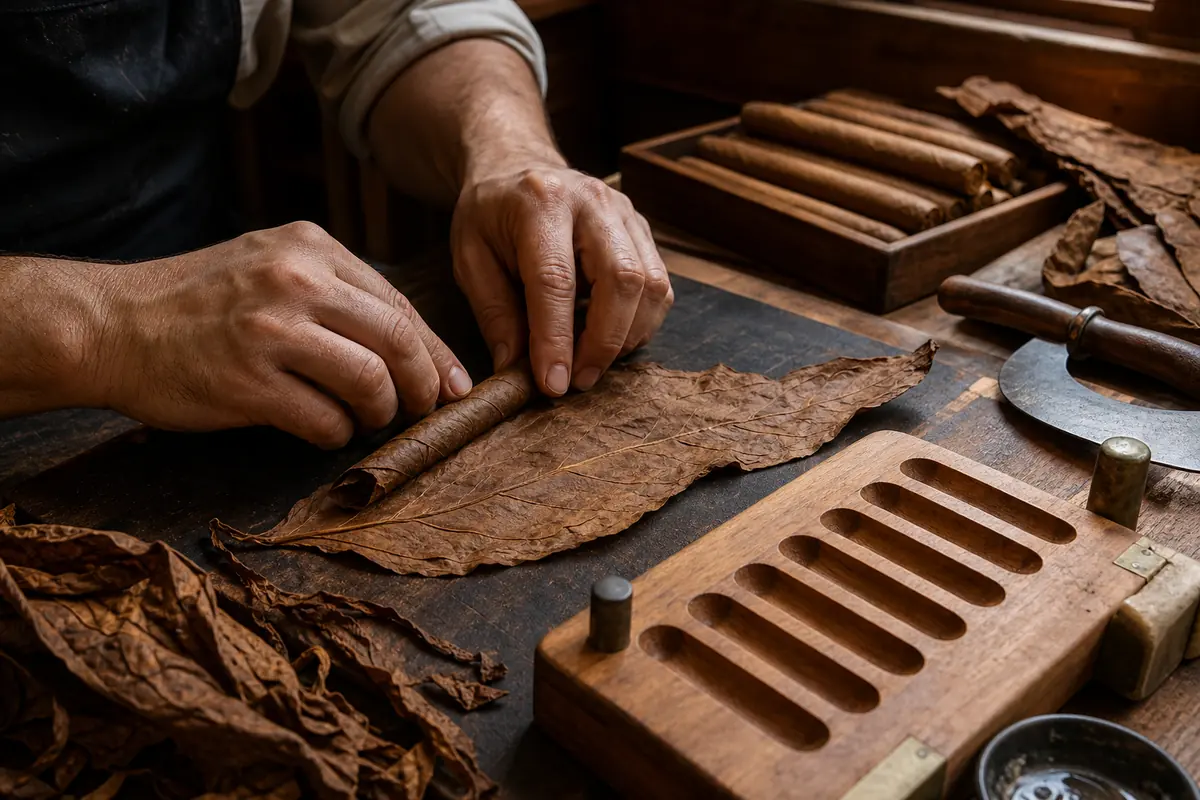
How Cigars Are Made
Cigars are made through a long process that takes tobacco from seed to finished cigar: growing, harvesting, curing, fermenting, aging, blending, and rolling. Premium cigars are hand-rolled from whole leaves, and the whole journey can take several years. Understanding these steps explains why good cigars taste the way they do and why they cost what they cost.
1. Growing
Tobacco is grown from seed in nutrient-rich soil, with different leaves destined for different jobs, wrapper, binder, or filler. Wrapper leaf is often shade-grown or specially cultivated for appearance and smoothness. The plant's position on the stalk affects a leaf's strength and flavor.
2. Harvesting
Leaves are harvested by hand, usually a few at a time as they ripen, from the bottom of the plant upward. Leaves from higher on the plant get more sun and are stronger and more flavorful.
3. Curing
Harvested leaves are hung in curing barns, where they slowly dry and turn from green to brown over weeks. Curing removes moisture and begins developing the tobacco's color and character. This is a carefully controlled stage.
4. Fermentation
Cured leaves are stacked into large piles called pilones, where heat and moisture trigger fermentation. This is one of the most important steps: it breaks down harsh compounds like ammonia, develops flavor and aroma, and mellows the tobacco. Darker wrappers are fermented longer and hotter.
5. Aging
After fermentation, tobacco is aged, sometimes for years, to further smooth and refine the flavor. Aging lets the leaf settle and mature before it is used.
6. Blending
A master blender combines different tobaccos, wrapper, binder, and filler leaves from various regions, stalk positions, and ages, to create a balanced, consistent flavor. Blending is where a cigar's character is designed.
7. Rolling
Skilled rollers (torcedores) build each premium cigar by hand:
- The filler leaves are bunched together for the core.
- The binder holds the bunch in shape.
- The wrapper is applied in a smooth spiral.
- A cap seals the head.
The rolled cigars are pressed in molds, checked for draw and quality, and banded.
8. Final aging and packing
Finished cigars often rest in aging rooms so the tobaccos "marry" before being boxed and shipped. Quality control checks appearance, construction, and consistency along the way.
Why it matters
Every step, especially fermentation and blending, shapes the final flavor. This multi-year, largely handmade process is why premium cigars are considered a craft product, and why care in storage afterward is worth it.
Where to go next
Dive deeper into cigar fermentation, see how leaves combine in binder and filler, and connect it to region in the cigar tobacco origins guide.
Step by step
- Grow and harvestTobacco is grown from seed and harvested by hand as leaves ripen up the stalk.
- CureLeaves hang in barns to dry and turn brown over weeks.
- FermentLeaves are stacked in pilones where heat and moisture develop flavor and remove harshness.
- Age and blendTobacco ages, then a blender combines wrapper, binder, and filler for balance.
- Roll and finishRollers build each cigar by hand, then it is pressed, checked, aged, and banded.
Frequently asked questions
How are cigars made?
Through growing, harvesting, curing, fermenting, aging, blending, and hand-rolling. Premium cigars are built by hand from whole leaves, and the process can take several years.
Why does making a cigar take so long?
Curing, fermentation, and aging each take weeks to years to develop flavor and remove harshness. Rushing any step produces a harsher, lower-quality cigar.
What is the most important step in making a cigar?
Fermentation and blending are key. Fermentation develops flavor and removes harsh compounds, while blending combines tobaccos to design the cigar's balanced character.
Are premium cigars really hand-rolled?
Yes. Premium cigars are rolled by skilled torcedores who bunch the filler, apply the binder and wrapper, and cap the head, then the cigars are pressed and quality-checked.
Community tasting notes
No community notes yet. Be the first to share how this smoked for you.
Log in to share your tasting notes and photos.