
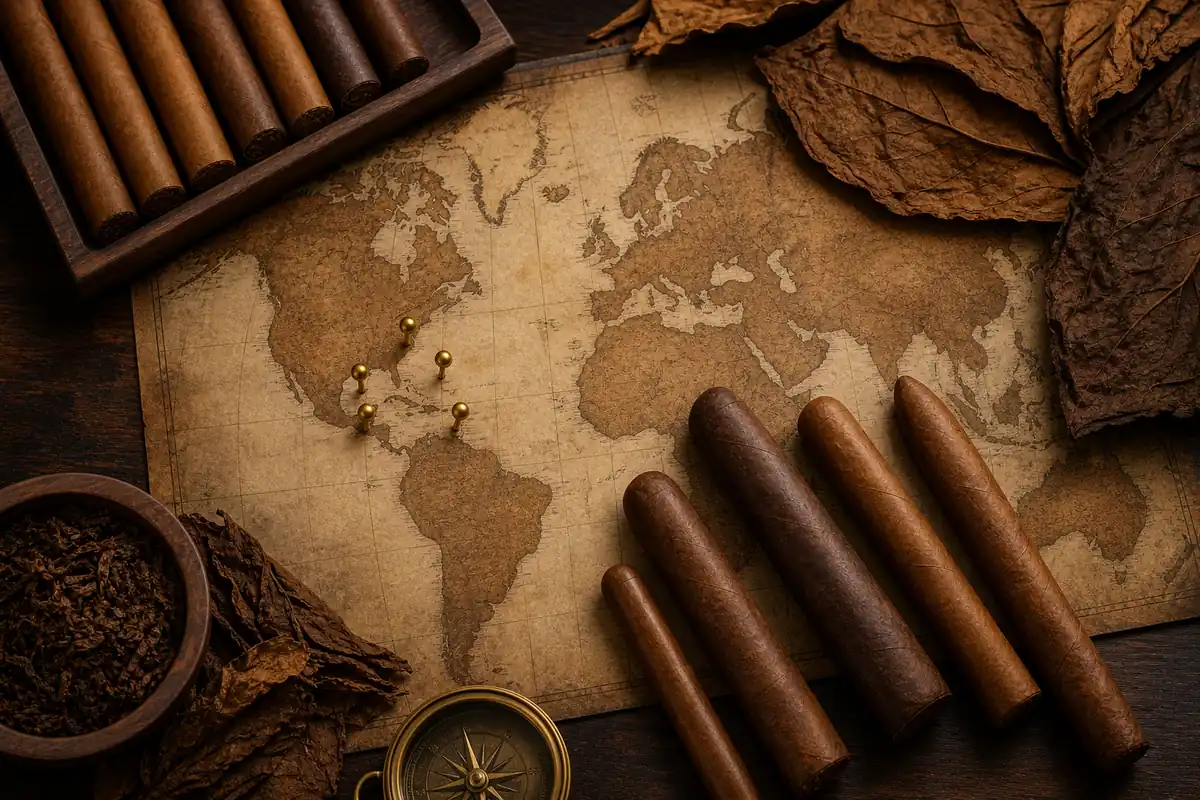
Cigar Tobacco Origins: A Guide to Where Cigars Come From
Most premium cigars come from a handful of countries in the Americas: Cuba, the Dominican Republic, Nicaragua, and Honduras, with important wrapper tobacco also grown in Ecuador, the USA (Connecticut), and elsewhere. Where the tobacco is grown shapes how a cigar tastes, because soil, climate, and local growing traditions all leave their mark. Understanding origin is one of the fastest ways to predict what a cigar will be like.
Why origin matters
Tobacco is an agricultural product, so the same seed grown in different places produces different flavor. This idea, borrowed from wine, is called terroir: the combination of soil, climate, and geography that gives a region's tobacco its character. A Nicaraguan cigar and a Dominican cigar can be built the same way and still taste distinctly different because of where their leaves grew.
The major cigar-growing countries
Cuba
The historic home of the premium cigar. Cuban cigars are known for a distinctive earthy, grassy, sometimes tangy character. They cannot be legally sold in the United States due to the embargo, which shapes the whole global market.
Dominican Republic
The largest producer of premium cigars for the US market. Dominican cigars are often smooth, refined, and range from mild to full. Home to many of the world's best-known brands.
Nicaragua
Rapidly grown into a powerhouse. Nicaraguan tobacco, thanks to rich volcanic soil, tends to be bold, rich, and full-flavored, often with pepper, earth, and sweetness.
Honduras
Produces robust, earthy, full-bodied cigars, often spicy and rich, sometimes compared to Nicaraguan profiles.
Wrapper origins matter too
A cigar's wrapper often comes from a different country than its filler. Two of the most important wrapper origins are:
- Connecticut (USA / Ecuador): pale, smooth, mild wrappers.
- Habano / Ecuador: richer, spicier, darker wrappers.
Because the wrapper contributes a large share of flavor, wrapper origin is a big part of a cigar's identity.
How much does origin tell you?
Origin is a useful guide, not an absolute rule. A skilled blender can make a mild Nicaraguan or a full-bodied Dominican. Think of country of origin as a strong starting hint about flavor, then read the specific blend for the full picture.
How cigars get their flavor
Beyond origin, flavor comes from the tobacco variety (seed), how the leaves are fermented, and how the blend combines wrapper, binder, and filler. Origin sets the raw material; craftsmanship shapes the result.
Where to go next
Explore specific countries in what are Cuban cigars, Dominican cigars explained, and Nicaraguan cigars explained, and see how flavor develops in how cigars are made.
Frequently asked questions
Where do most cigars come from?
Most premium cigars come from Cuba, the Dominican Republic, Nicaragua, and Honduras, with key wrapper tobacco grown in Ecuador and the USA (Connecticut).
Why does the country of origin affect cigar flavor?
Tobacco is agricultural, so soil, climate, and geography (its terroir) shape flavor. The same seed grown in different countries produces distinctly different tastes.
Which country makes the best cigars?
There is no single best; it depends on your taste. Cuba is prized for tradition, Nicaragua for bold flavor, the Dominican for refinement, and Honduras for robust profiles.
Does the wrapper come from the same country as the cigar?
Often not. A cigar's wrapper may be grown in a different country than its filler, and because the wrapper contributes so much flavor, its origin is a key part of the cigar's identity.
Community tasting notes
No community notes yet. Be the first to share how this smoked for you.
Log in to share your tasting notes and photos.