
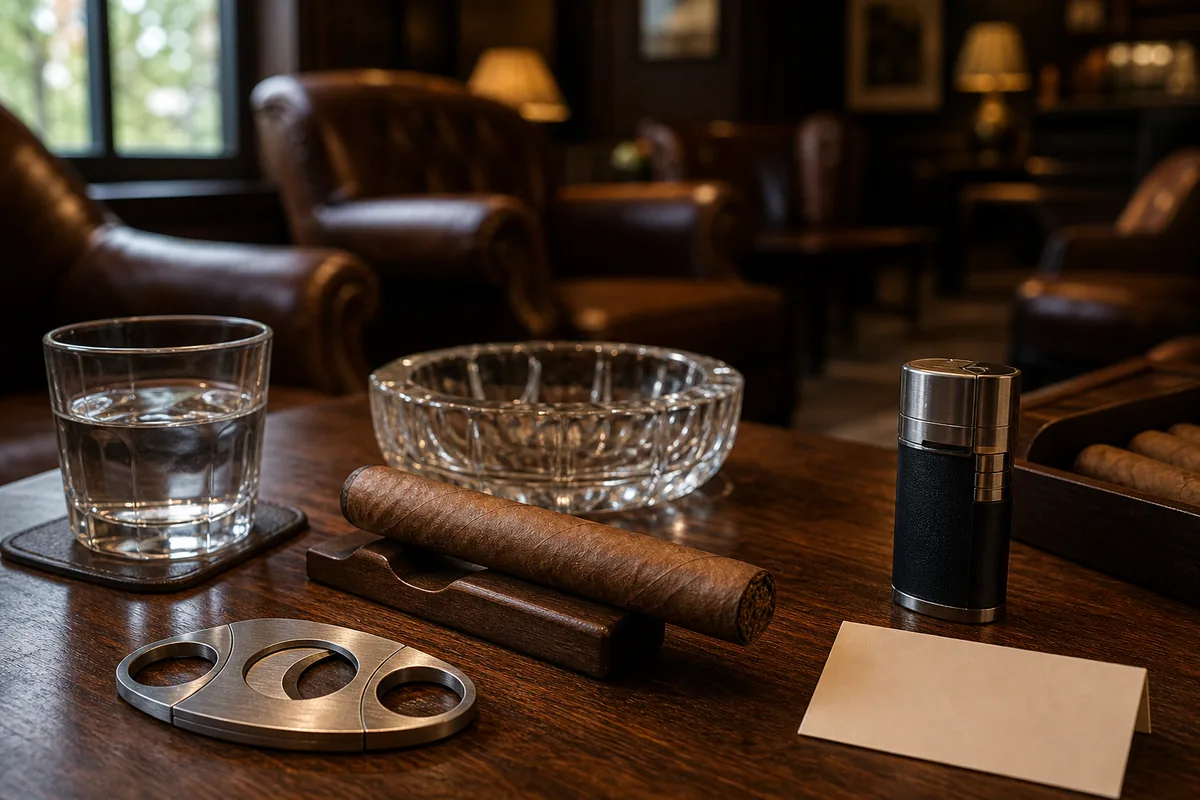
Your First Cigar: What to Expect
Your first cigar will taste, feel, and burn differently from anything you've experienced before — and knowing what's coming makes the difference between enjoying it and wondering what all the fuss is about.
Before You Light Up: Setting the Stage
The circumstances of your first cigar matter more than which cigar you choose. A great cigar smoked in a rush between meetings won't register. A decent cigar smoked slowly in good company with an hour to spare becomes a memory.
Block at least 45 minutes. An hour is better. You can't rush a cigar — they burn at their own pace, and trying to speed things up by puffing frantically ruins the experience and makes you sick.
Eat something beforehand. Not a snack — an actual meal. Smoking on an empty stomach is the fastest route to nausea for a new smoker. Your body needs fuel to handle the nicotine.
Have water nearby. You'll get thirsty. You'll also want something to sip between puffs as palate refreshment.
Choosing Your First Cigar
For a first experience, you want something mild to medium-bodied in a manageable size. A cigar suited for beginners typically means:
- Connecticut shade wrapper (that smooth, golden-tan wrapper color)
- Robusto size (5 x 50) or Corona (5.5 x 42) — not too long, not too short
- A reputable brand — Arturo Fuente, Oliva, Perdomo, or Montecristo are reliable starting points
- Expect to spend $8-15 for a single stick at a local shop
Don't let anyone hand you a "powerhouse" Nicaraguan full-bodied monster for your first smoke. They mean well. They're wrong. Start mild and work up.
The Cut: Your First Decision
A cigar has a closed cap (the rounded end you put to your lips) that needs to be cut before smoking. At a cigar shop, the staff will usually offer to cut it for you — say yes. No shame in that.
If you're doing it yourself, you want to remove just the cap — about 2-3 millimeters from the tip. Too deep and the wrapper unravels. Proper cutting technique is straightforward once you see it, but for your first time, a guillotine cutter with a decisive, quick snip gets the job done.
Test the draw after cutting. Put the unlit cigar to your lips and pull gently. You should feel resistance like drinking through a slightly pinched straw — not wide open and not plugged shut. If it's too tight, you may need a slightly deeper cut.
Lighting: Take Your Time
Lighting a cigar isn't like lighting a cigarette — you don't just touch flame to end and inhale. The process is deliberate:
Hold the cigar at a 45-degree angle. Bring a butane lighter or cedar match to the foot (the flat, open end) without letting the flame touch the tobacco directly. Toast the foot by rotating the cigar slowly, letting the heat char the tobacco evenly across the entire surface.
Once you see an even orange glow across the foot, bring the cigar to your lips and take a few gentle puffs while continuing to apply heat near (not touching) the foot. You're pulling the flame toward the tobacco, not scorching it.
The whole process takes 30-60 seconds. Don't rush. An unevenly lit cigar burns unevenly for its entire life. Detailed lighting technique is worth learning properly.
The First Few Puffs: What You'll Notice
The first thing that surprises most new cigar smokers: the smoke is thick. Heavier, denser, and more substantial than anything you'd expect if your only reference is being around cigarette smoke. It fills your mouth with a presence you can feel physically.
The taste will likely hit you as earthy, woody, perhaps slightly bitter or peppery. If you chose a mild Connecticut-wrapped cigar, you might catch cream, cedar, or a subtle sweetness. These flavors are subtle at first — your palate needs training to distinguish them clearly.
Don't expect to taste all the things reviews describe on your first cigar. "Notes of leather, espresso, and dark chocolate" are real, but they emerge as your palate develops over dozens of cigars. For now, focus on whether you find the overall experience pleasant.
The Critical Rule: Do NOT Inhale
This is the single most important instruction for your first cigar: do not draw the smoke into your lungs.
Cigar smoke is meant to be tasted in the mouth and exhaled. Draw it in, let it coat your palate, taste it, and blow it out. Your mouth and nose do the tasting — your lungs do nothing useful here and will punish you severely if you involve them.
If you've ever smoked cigarettes, you'll need to consciously override the inhale reflex. In other words, sipping a fine wine — you hold it in your mouth to taste it, you don't pour it down your throat without thinking.
Inhaling cigar smoke produces immediate coughing, burning in the chest, and dramatically accelerates nicotine sickness. Avoid it entirely.
Pacing: Slower Than You Think
Take one puff every 45-60 seconds. That's it. One puff per minute is the baseline rhythm.
This feels unnaturally slow to most beginners. You'll want to puff more often. Resist that urge. A cigar smoked too fast overheats, turns bitter and harsh, and dumps nicotine into your system faster than your body can handle.
Between puffs, just hold the cigar. Look at it. Watch the smoke curl off the foot. Talk to whoever you're with. Sip your water. The pauses between puffs are part of the experience — they're what makes cigar smoking a ritual rather than a habit.
Physical Sensations to Expect
Nicotine
You will feel the nicotine. For a first-timer, even a mild cigar on a full stomach produces some effect — a light buzz, slight head rush, maybe mild euphoria or relaxation. This is normal and generally pleasant if you've eaten and are hydrated.
If the buzz turns to dizziness, nausea, or sweating — stop immediately. Put the cigar down, eat something sweet, drink water. You've hit your nicotine ceiling. No shame in this — even experienced smokers occasionally overdo it with strong cigars.
Mouth Feel
Your mouth will feel dry and coated after 15-20 minutes of smoking. Slightly oily. The back of your throat may tingle from nicotine absorption. Sipping water regularly manages this.
Taste Lingering
Cigar taste stays in your mouth for hours afterward. Your breath will carry it. Your fingers will smell of tobacco. This is part of the deal — if you're heading somewhere important afterward, plan accordingly.
The Burn Line and Ash
As your cigar burns, watch the burn line (the lit edge). Ideally it burns fairly evenly all the way around. Some unevenness is normal, especially outdoors with wind. If one side burns much faster than the other, you can gently rotate the cigar so the slow-burning side faces down on your next few puffs, or touch up the slow side with your lighter.
The ash will build up as you smoke. Cigar ash doesn't fall off as easily as cigarette ash — good cigars can hold an inch or more of solid ash. Let it grow until it looks like it might fall, then gently tap it off into an ashtray. Don't aggressively flick — the weight of the ash actually helps the cigar burn evenly.
How Far to Smoke It
Nobody finishes a cigar to the absolute nub. Most smokers stop when they reach the final inch to inch-and-a-half. The closer you smoke to the end, the hotter and harsher the smoke becomes as concentrated oils and tar build up.
For your first cigar, stop whenever you're done. If you're enjoying it at the halfway mark but feeling the nicotine, that's a perfect stopping point. If you love it and want to take it down to two inches from the end, go for it. There's no correct stopping point — just pay attention to when flavors turn harsh or your body tells you it's enough.
When you're done, just set the cigar in the ashtray. Don't crush it out like a cigarette — that releases a burst of unpleasant smoke. An unattended cigar goes out on its own within a minute or two.
Things That Might Go Wrong (and They're Fine)
The Cigar Goes Out
Totally normal, especially for a new smoker with infrequent puffs. Just relight it using the same technique as initial lighting. Knock off any loose ash first, gently blow through the cigar to clear stale smoke, then relight the foot. A cigar relit within 20-30 minutes tastes fine.
Uneven Burn
If one side races ahead (called "canoeing" or "running"), touch up the slow side with your lighter. This is common and not a sign you did anything wrong.
It Tastes Bitter or Harsh
You might be puffing too fast. Slow down. If it's been harsh since the start, it might just be a cigar you don't enjoy — tastes are personal. Your next cigar might be completely different.
You Feel Nauseous
Put it down immediately. Eat sugar. Drink water. Read our nicotine buzz guide for the full recovery protocol. This happens to many first-timers and doesn't mean cigars aren't for you — it means you need to manage the nicotine.
After Your First Cigar
Your mouth tastes like tobacco. Your clothes smell. You might feel either pleasantly relaxed or slightly queasy depending on how the nicotine treated you. All normal.
Brush your teeth, drink water, and give yourself an honest assessment: did you enjoy the ritual? The flavor? The relaxation? Even if the specific cigar wasn't your favorite, did the overall experience appeal to you?
If yes — welcome. The world of cigars opens up dramatically once you start exploring different strengths, bodies, and flavors. If it wasn't for you, that's fine too — at least you tried it properly.
What Comes Next
If your first experience was positive, try a different cigar next time. Same mild-to-medium range, different blend. Compare. Start noticing which flavors you prefer — creamy? Peppery? Sweet? Woody? This is how a palate develops.
Consider visiting a local cigar lounge where staff can guide your exploration based on what you liked about your first smoke. Tell them what you tried and what you noticed — good tobacconists love helping new smokers find their preferences. And when you're ready, understanding shapes and sizes will help you work through the overwhelming variety in any humidor.
Frequently asked questions
How do you know when to stop smoking a cigar?
Stop when the flavors turn harsh, when you feel too much nicotine, or when you reach the final inch. Most smokers leave 1-1.5 inches unsmoked. There's no obligation to finish — stopping at the halfway mark on your first cigar is completely reasonable.
Will I get sick from my first cigar?
Possibly, if you smoke on an empty stomach, puff too fast, or choose something too strong. Eating a full meal beforehand, staying hydrated, choosing a mild cigar, and pacing yourself at one puff per minute dramatically reduces the chance of nausea.
Is it okay to relight a cigar that went out?
Absolutely. Cigars go out when not puffed frequently enough — which happens often with beginners learning proper pacing. Knock off loose ash, blow gently through the cigar to clear stale smoke, then relight normally. Within 30 minutes, a relit cigar tastes perfectly fine.
What should I pair with my first cigar?
Water is the safest choice for your first time — it cleanses the palate and keeps you hydrated. If you want something else, try coffee or a mildly sweet drink. Save whiskey and spirit pairings for after you've established your nicotine tolerance, since alcohol amplifies nicotine effects.
Community tasting notes
No community notes yet. Be the first to share how this smoked for you.
Log in to share your tasting notes and photos.