
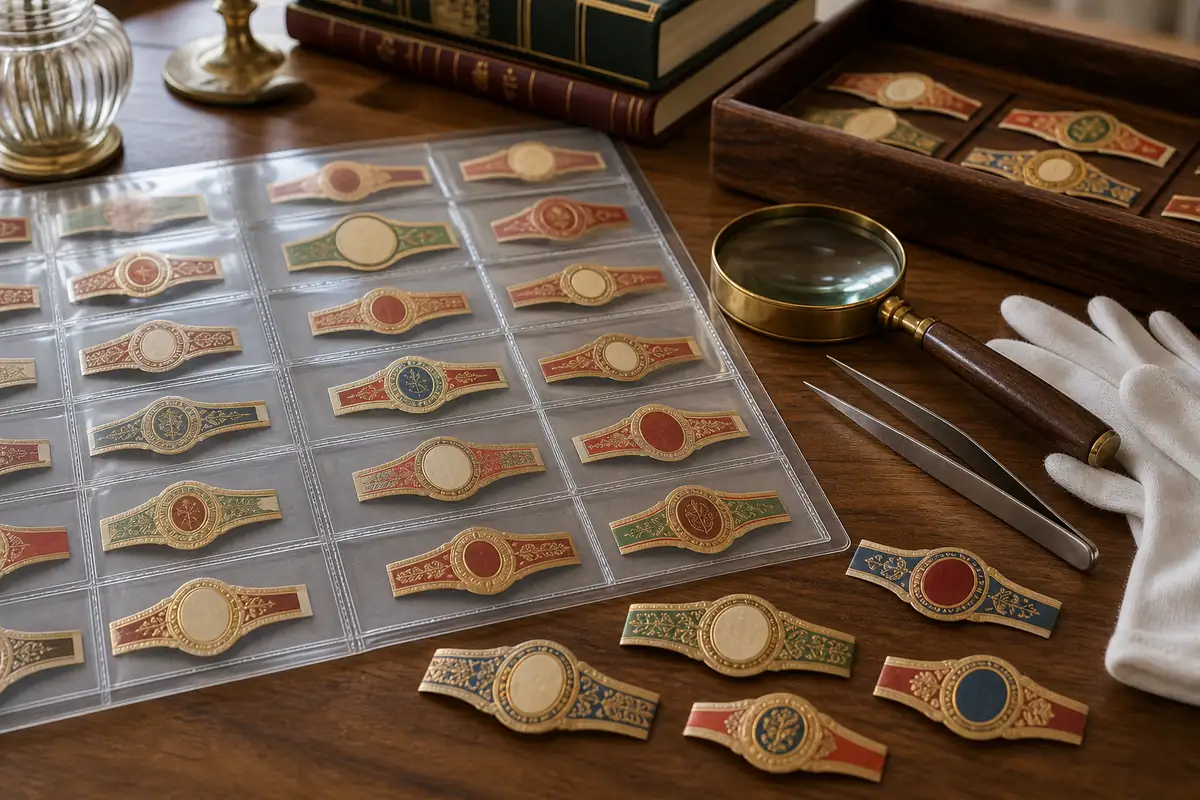
Cigar Band Collectors: How to Start
Why Collect Cigar Bands?
Every cigar band tells a story—where you smoked it, who you were with, what you were celebrating. Collecting bands is the simplest way to document your smoking journey without maintaining detailed tasting journals or spreadsheets. A glance at your collection brings back specific memories attached to each smoke in a way that a written log never quite captures.
Band collecting is also one of the few cigar hobbies that costs nothing extra. You are already buying and smoking the cigars. The band is free material that would otherwise be discarded. All you need is a system for removal, preservation, and organization—and you can start with whatever you smoked last night.
Beyond personal memory, cigar bands are genuinely interesting objects of graphic design. The best bands feature intricate lithography, gold leaf embossing, and artwork that reflects decades or centuries of brand heritage. Some collectors focus purely on aesthetics—acquiring bands from brands they will never smoke because the artwork is striking. Others chase historical bands from discontinued brands, pre-embargo Cuban factories, or limited editions.
Removing Bands Without Damage
The Heat Method
The most reliable technique for clean removal uses the cigar's own heat. Smoke the cigar until the burn line approaches within about half an inch of the band's bottom edge. At this point, the heat has softened the adhesive holding the band to the wrapper. Gently rotate the band—do not pull—and it should slide off cleanly without tearing the wrapper or the band itself.
Patience matters here. If the band resists, smoke a few more puffs and try again. Forcing a cold band risks tearing both the band and the wrapper, ruining the cigar's appearance and potentially the band's integrity for your collection.
The Steam Method
For bands you want to remove before smoking—perhaps from a cigar you are gifting—hold the banded area over steam from a kettle for 10 to 15 seconds. The moisture and heat soften the adhesive without wetting the cigar if you are careful. Rotate gently after steaming and the band should release.
This method works well for bands attached with minimal glue. Heavily glued bands from some manufacturers may need multiple steam applications or a combination of steam and gentle lifting with a thin blade edge.
The Patience Method
Some collectors do not remove bands from cigars at all during smoking. Instead, they let the cigar burn down naturally past the band area, extinguish it, and then slip the band off the unsmoked portion later once it cools. The residual heat from the prior burn has already loosened the adhesive, and the cooled band slides off with zero resistance.
Handling Delicate Bands
Vintage and premium bands often use fragile materials—tissue-thin paper, real gold leaf, delicate embossing that crushes with minimal pressure. Handle these with clean, dry hands. Never grip the decorative face. Hold bands by their edges and place them flat immediately after removal. If a band has torn slightly during removal, you can still collect it—many collectors appreciate the character of bands that show they were actually smoked.
Preparing Bands for Storage
Cleaning
Freshly removed bands may have adhesive residue on the inner surface or slight wrapper debris stuck to the glue. Let the band sit for an hour after removal so residual heat dissipates and soft glue firms up. Then gently brush any debris from the inner surface with a soft dry brush—an old makeup brush or clean paintbrush works perfectly.
Do not use water, solvents, or adhesive removers on bands. These can dissolve inks, warp paper, and destroy metallic elements. The small amount of residual glue on the inside of a band causes no problems during storage and actually helps bands stay flat in albums.
Flattening
Bands naturally curve from wrapping around a cigar. For album storage or display, you want them flat. Place removed bands between pages of a heavy book—a phone book, dictionary, or large hardcover—for 24 to 48 hours. The weight presses them flat without damaging printed surfaces.
For particularly stubborn curves on thick bands, use two pieces of clean cardstock as buffers above and below the band before pressing. This prevents book page textures from imprinting on the band surface and distributes pressure evenly.
Drying
Bands removed by the heat method may carry slight moisture from the cigar itself. Allow bands to air dry completely—at least overnight—before placing them in albums or sealed storage. Trapping moisture leads to mold, foxing (brown spots from fungal growth), and adhesive reactivation that bonds bands permanently to album pages.
Storage Methods
Albums and Binders
The most popular storage method uses stamp collecting albums or trading card sleeves in three-ring binders. Stamp albums offer individual pockets sized perfectly for cigar bands, with acid-free pages that prevent yellowing and degradation over decades. Trading card sleeves in nine-pocket pages work for standard-sized bands, though oversized bands from premium cigars may need larger formats.
Use acid-free pages exclusively. Regular paper and plastic contain acids that slowly destroy paper-based bands over years, causing yellowing, brittleness, and fading. The slight premium for archival materials pays for itself in collection longevity.
Shadow Boxes and Frames
For display-worthy bands—limited editions, personal favorites, or particularly beautiful designs—shadow boxes create a wall-mounted showcase. Arrange bands on acid-free backing board, secure with archival photo corners (not glue), and frame behind UV-protective glass. These make striking wall art for a smoking room or study.
Shadow boxes also work well for themed displays: all bands from a single brand's lineup, bands from a particular trip or event, or a chronological display of your first year's smoking journey.
Cigar Boxes
Some collectors repurpose empty cigar boxes as band storage—a fitting vessel for the collection. Line the box interior with acid-free tissue paper, lay bands flat in layers separated by tissue sheets, and store the box in a cool, dry location. This method accommodates large quantities without the organizational overhead of albums.
The disadvantage is accessibility. Finding a specific band means sorting through layers, unlike albums where everything is visible at a glance. Use cigar boxes for overflow or bulk storage and albums for organized, browsable display.
Digital Archives
Photographing or scanning every band creates a searchable digital backup that protects against physical loss. A flatbed scanner at 300 DPI captures band detail beautifully. Organize files by brand, date, or event in folders that mirror your physical organization. Some collectors maintain spreadsheets linking each band to smoking notes—date, pairing, occasion, and personal rating.
Digital archives also facilitate trading. Sharing scans with other collectors lets them browse your duplicates without mailing physical bands back and forth until a trade is agreed upon.
Organizing Your Collection
By Brand
The most intuitive organization groups all bands from a single manufacturer or marca together. This reveals brand evolution over time—redesigns, limited editions, and discontinued lines become visible as patterns. Padron bands from different decades, for example, show subtle design shifts that mark production eras.
By Country of Origin
Grouping by country highlights regional design traditions. Cuban bands tend toward ornate, traditional lithography. Nicaraguan brands often feature bolder, modern designs. Dominican bands vary widely. Honduran bands frequently incorporate cultural imagery. This organization works well for collectors who smoke broadly across origins.
By Size or Shape
Purely aesthetic organization based on band dimensions creates visually satisfying album pages. Group small ring bands together, large bands separately, and oddly-shaped bands—those with tails, ribbons, or irregular cuts—in their own section. This makes page layouts cleaner and prevents oversized bands from overlapping neighbors.
By Personal Timeline
Chronological organization, band by band in the order smoked, creates a visual diary. Each page represents a period of your smoking life. This method sacrifices browsability for narrative—you cannot quickly find all your Arturo Fuente bands, but you can trace your evolution from mild Connecticut wrappers to full-bodied maduros over months and years.
Building Value and Trading
What Makes Bands Valuable?
Rarity drives band value more than anything else. Bands from discontinued brands, limited production runs, or pre-embargo Cuban cigars carry the most collector interest. Age matters too—intact bands from the early 1900s or mid-century era command attention from serious vitolphilists (the formal term for cigar band collectors).
Condition affects value significantly. Clean, flat, uncracked bands with vivid colors are worth more than torn, faded, or creased examples. Bands with unusual printing errors—misaligned colors, missing elements, or double prints—also attract interest from collectors who value oddities.
Trading Communities
Online forums, social media groups, and dedicated cigar collector communities facilitate band trading. Cigar Aficionado's forums, Reddit communities, and Facebook groups host active trading among collectors worldwide. Local cigar club members often trade freely as well—your duplicates are someone else's grails and vice versa.
Start trading by listing your duplicates with clear scans. Be generous early—offering bands without demanding exact value in return builds reputation and goodwill that yields better trades later. The community is relatively small and people remember generosity.
Avoiding Fakes
Counterfeit cigar bands exist, primarily for Cuban brands where authentic bands confirm cigar legitimacy. Learn to identify genuine band characteristics: specific color densities, embossing depths, paper weight, and printing techniques. Authentic Cuban bands feel distinctly different from counterfeits—the paper weight, ink saturation, and embossing quality are difficult to replicate exactly.
For collecting purposes, a counterfeit band has no value. Verify provenance when trading for expensive or rare bands, especially vintage Cuban examples. If a deal seems too good—a pristine 1950s Cohiba band for a few dollars—trust your skepticism.
Display Ideas for Your Collection
The Smoking Room Gallery
Frame curated selections of your best bands in matched frames and create a gallery wall in your smoking space. Group them thematically—a frame of Cuban brands, a frame of Nicaraguan favorites, a frame of special occasion smokes. Rotate bands seasonally to keep the display fresh and give different parts of your collection visibility.
Furniture Integration
Some collectors embed bands under glass on table tops, humidor lids, or bar surfaces. This requires careful arrangement and a glass or resin topper to protect the bands, but the result is a functional piece of furniture that showcases your collection daily. A coffee table with a hundred bands arranged beneath glass becomes a conversation starter.
The Travel Map
Pin bands to a world map at the country of origin for each cigar. This creates a visual representation of your smoking geography—how broadly you have explored different tobacco regions. It also highlights gaps and inspires future purchases to fill empty regions on the map.
Gift and Card Making
Duplicate bands make excellent decorative elements for greeting cards, gift wrapping, or craft projects. A birthday card decorated with the recipient's favorite brand band shows thoughtfulness beyond the ordinary. Gift bags for cigar-related presents look elevated with bands as decorative accents.
Getting Started Today
You do not need any special equipment to begin. Tonight, when you smoke, remove the band carefully using the heat method, set it aside to dry overnight, and place it in a book to flatten tomorrow. Congratulations—you are a collector. The system and organization can develop as the collection grows.
If you want to start more formally, purchase a small stamp album or trading card binder, a pack of acid-free pages, and commit to saving every band from this point forward. Within a month of regular smoking, you will have a visible collection that already tells a story.
The beauty of band collecting is that it grows automatically with your smoking habit. Every cigar you enjoy adds to the collection. Every trip, celebration, and quiet evening contributes a new piece. Over years, the collection becomes a physical record of your relationship with cigars—one that you can hold, browse, share, and pass along to fellow enthusiasts.
Frequently asked questions
What is the best album for storing cigar bands?
Stamp collecting albums with acid-free pages work perfectly for standard cigar bands. For varied sizes, use a three-ring binder with archival trading card pages for normal bands and larger archival sleeves for oversized premium bands. The key requirement is acid-free materials to prevent yellowing over time.
How do I remove a cigar band without tearing it?
Smoke the cigar until the burn line is within half an inch of the band. The heat softens the adhesive. Then gently rotate the band—never pull. If it resists, smoke a few more puffs and try again. Patience prevents tears every time.
Are old cigar bands worth money?
Some are. Bands from pre-embargo Cuban factories, discontinued brands, limited editions, and bands with printing errors have collector value. Condition matters significantly—clean, flat, vibrant bands are worth considerably more than damaged examples. Most modern production bands have minimal monetary value but strong personal and trading value.
How do I connect with other cigar band collectors?
Join cigar forums, Reddit communities like r/cigars, and Facebook collector groups. Local cigar clubs and lounge regulars often collect bands too. Start by sharing photos of your collection and offering duplicates for trade. The community is welcoming to new collectors who show genuine interest.
Community tasting notes
No community notes yet. Be the first to share how this smoked for you.
Log in to share your tasting notes and photos.