
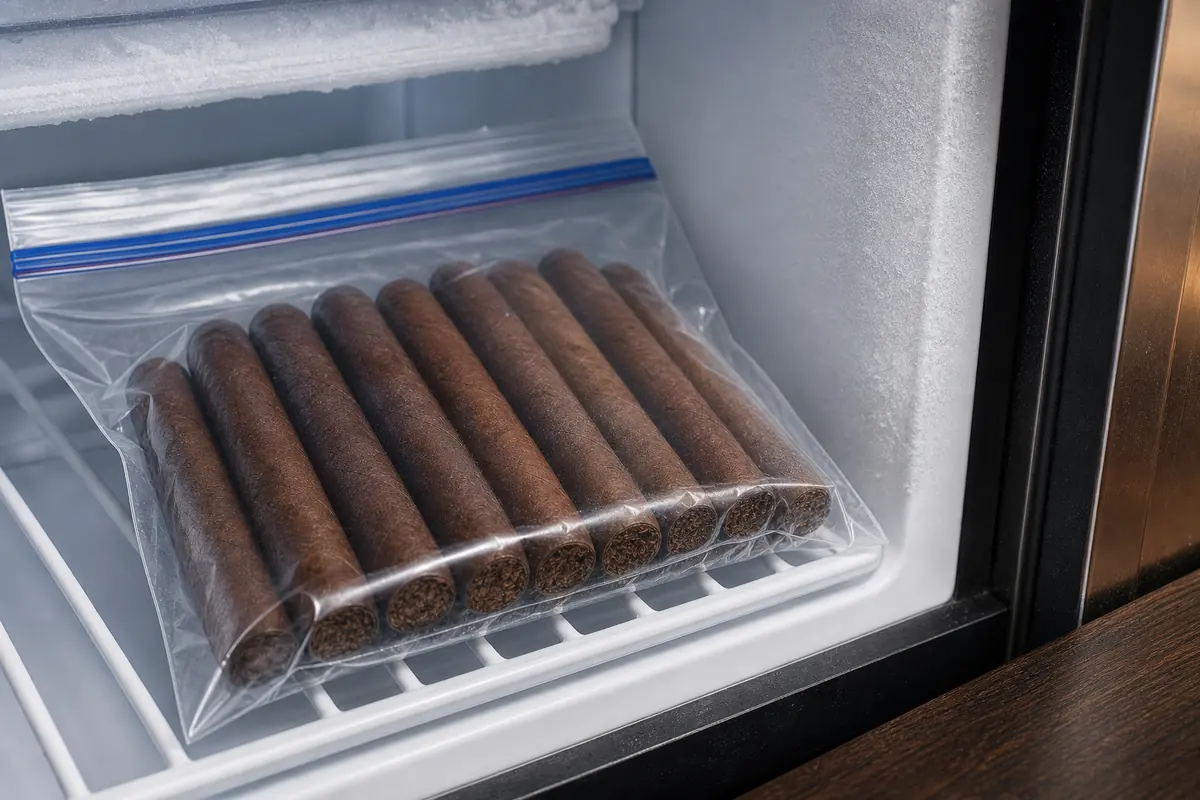
Can You Freeze Cigars? (Beetle Prevention)
Yes, you can freeze cigars, and it is the most reliable way to kill tobacco beetle eggs before they hatch and ruin your collection. The key is doing it gradually. You cool the cigars down slowly, hold them frozen long enough to destroy any eggs, then thaw them slowly so the wrapper does not crack from a sudden temperature shock. Freezing is a preventive or emergency measure, not something you do to every box as routine.
Why Freeze Cigars at All?
The tobacco beetle (Lasioderma serricorne) is the enemy of every cigar collection. Its eggs can lie dormant inside tobacco and hatch when conditions get warm and humid, usually above about 72 degrees Fahrenheit. The hatched larvae bore small round holes through the leaf, leaving behind tunnels, dust, and destroyed cigars. Keeping your storage cool and at the right moisture level is the first line of defense, which is why maintaining the ideal humidity for cigars matters so much.
Freezing steps in when prevention is not enough, such as when you spot a beetle hole, buy cigars from an unknown source, or want to safeguard a large purchase before it joins the rest of your stock.
When You Actually Need to Freeze
- You found a beetle exit hole or fine tobacco dust in a box.
- You received cigars stored in unknown or warm conditions.
- You want to quarantine new arrivals before adding them to your humidor.
If your cigars simply feel dry rather than infested, freezing is not the fix. See our guide on how to fix dry cigars instead, and remember that cigars themselves do not spoil like food, as explained in do cigars go bad.
The Safe Freezing Process
The danger with freezing is not the cold itself but rapid temperature swings, which make the wrapper brittle and prone to cracking. Slow transitions solve this. The full cycle takes several days, so do not rush it.
Risks to Watch For
Done carelessly, freezing can crack wrappers, cause condensation inside the bag, or introduce excess moisture. Always wrap cigars airtight to keep condensation off the leaf, and never move cigars straight from a warm room into a freezer or straight from the freezer back into a warm humidor. Every stage should be gradual. After thawing, let the cigars rest and re-acclimate in your humidor before smoking them.
After Freezing
Once the cigars have thawed completely and returned to room temperature, place them back into a properly calibrated humidor to rehydrate to smoking condition. Give them a week or more to settle. For general storage habits that reduce the need to freeze in the first place, review how to store cigars.
Step by step
- Wrap airtightSeal cigars in a zip-top freezer bag, pressing out air, to prevent condensation from reaching the wrapper.
- Cool in the fridge firstPlace the bag in the refrigerator for about a day so the cigars cool gradually before deeper freezing.
- Move to the freezerTransfer to the freezer and hold for several days to kill any beetle eggs and larvae.
- Thaw in the fridgeMove the bag back to the refrigerator for a day to warm slowly and avoid thermal shock.
- Return to room temperatureLet the sealed bag reach room temperature before opening, preventing condensation on the cold wrappers.
- Rest in the humidorUnwrap and place the cigars in a calibrated humidor for a week or more to rehydrate before smoking.
Frequently asked questions
Does freezing cigars ruin them?
Not if done gradually. Sudden temperature changes crack wrappers, but slow cooling and slow thawing with airtight wrapping keep the cigars safe.
How long should cigars stay frozen?
Most collectors keep them frozen for several days to ensure any beetle eggs and larvae are destroyed, after a slow cool-down stage first.
Should I freeze every box I buy?
No. Freezing is a preventive or emergency step for suspected infestations or unknown sources, not routine storage. Good humidity and cool temperatures prevent most problems.
Can I smoke cigars right after thawing?
No. Let them return to room temperature and rest in a properly humidified humidor for a week or more so they rehydrate to smoking condition.
Community tasting notes
No community notes yet. Be the first to share how this smoked for you.
Log in to share your tasting notes and photos.