
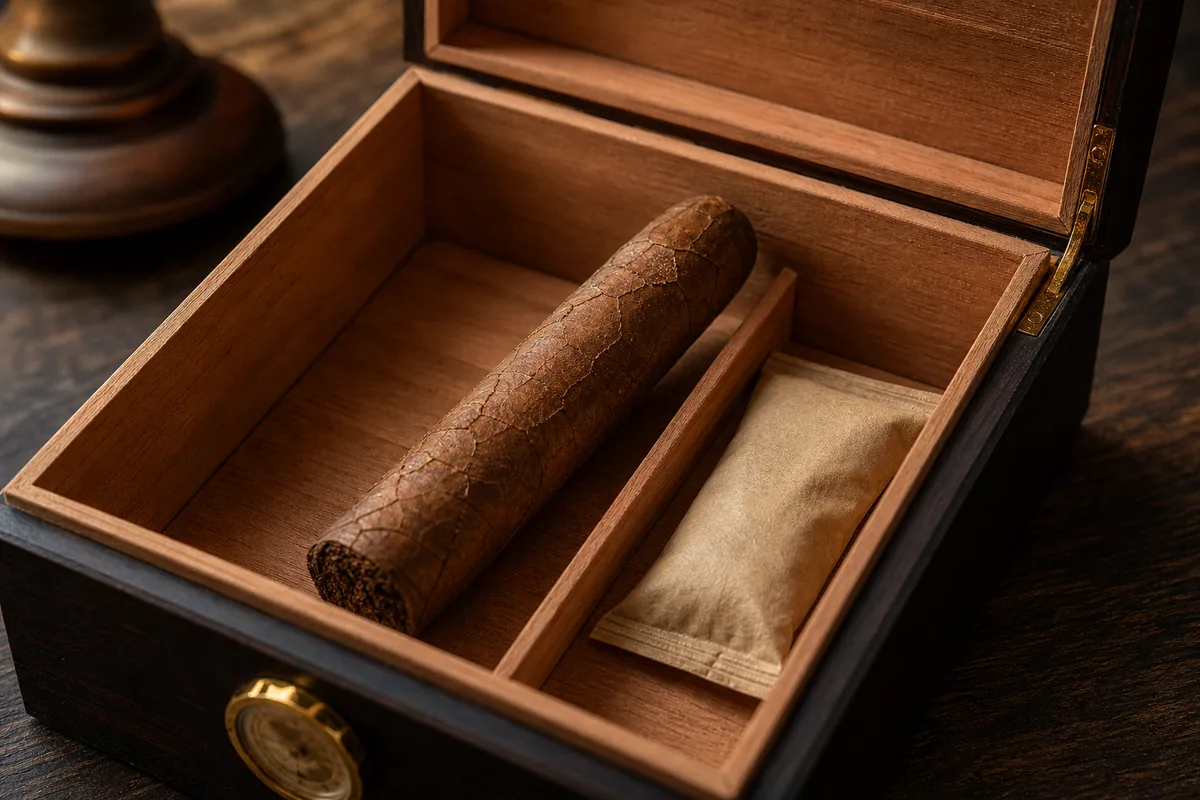
How to Fix Dry Cigars
To fix dry cigars, rehydrate them slowly over two to several weeks in a humidor or sealed container with a humidity pack, gradually raising the humidity. The key word is slow: rushing moisture back into a dry cigar makes the wrapper expand faster than the core and crack. Patience is the difference between reviving a cigar and ruining it.
Why cigars dry out
Cigars dry out when left in open air or in an unseasoned or empty humidor. The tobacco loses moisture to the room, the wrapper becomes brittle, the oils fade, and the cigar burns hot and tastes harsh. If the wrapper is cracked or crumbling, it is very dry.
Why you must rehydrate slowly
A dry wrapper is fragile. If you expose the cigar to high humidity suddenly, the outer leaf absorbs moisture and swells before the inner filler catches up, splitting the wrapper. Slow rehydration lets moisture move evenly from outside to core, keeping the cigar intact.
The safe humidor method (step by step)
- Place the dry cigars in a humidor or sealed container, but not touching the humidity source directly.
- Start at a moderate humidity (around 65 percent). Do not blast them with high humidity.
- Close it and wait. Rotate the cigars every few days for even exposure.
- Over two to four weeks (longer for very dry cigars), the humidity migrates into the tobacco.
- The cigar is ready when it feels supple again and gives slightly when gently pressed, without cracking.
What to avoid
- Direct water: never wet a cigar or wrap it in a damp towel; this causes uneven swelling and mold.
- High humidity shortcuts: jumping straight to 75 percent cracks the wrapper.
- Microwaving or heating: this destroys the cigar.
- Impatience: checking constantly and hurrying is the main cause of failure.
What to expect from a revived cigar
A properly rehydrated cigar can smoke well again, but be realistic: some of the volatile oils and a little character may be lost, especially if it was very dry for a long time. It will usually be better than it was, but may not fully match a cigar that was never dried out. Cigars that dried and were then rehydrated repeatedly suffer most.
When a cigar can't be saved
If the wrapper is badly cracked and falling apart, or if there is mold or beetle damage, the cigar is beyond rescue. Rehydration only fixes dryness, not physical damage or spoilage.
Where to go next
Prevent it happening again with ideal humidity for cigars, set up storage in what is a humidor, and handle the opposite problem in how to fix over-humidified cigars.
Step by step
- Place in a humidorPut dry cigars in a humidor or sealed container, not touching the humidity source.
- Start moderateBegin around 65 percent humidity; do not use high humidity right away.
- Wait and rotateClose it and rotate the cigars every few days over two to four weeks.
- Check supplenessIt is ready when it gives slightly under gentle pressure without cracking.
Frequently asked questions
How do you fix a dry cigar?
Rehydrate it slowly in a humidor or sealed container starting around 65 percent humidity, rotating it every few days over two to several weeks until it feels supple again.
Why can't you rehydrate cigars quickly?
Sudden high humidity makes the dry wrapper absorb moisture and swell faster than the inner filler, which splits the wrapper. Slow rehydration keeps the cigar intact.
Can you use water to rehydrate a cigar?
No. Never wet a cigar or use a damp towel. It causes uneven swelling, cracking, and mold. Use a humidor or sealed container with a humidity pack instead.
Will a rehydrated cigar taste the same?
Often close, but some oils and character can be lost, especially if it was very dry for a long time. It usually improves, though it may not fully match a never-dried cigar.
Community tasting notes
No community notes yet. Be the first to share how this smoked for you.
Log in to share your tasting notes and photos.