
BYOB (Bring Your Own Blend) Cigar Events
What Makes BYOB Cigar Events Worth Your Time
A BYOB cigar event—where every guest brings their own blend to share and discuss—creates a tasting experience no single humidor can replicate. The format works because it combines the diversity of a cigar festival with the intimacy of a private gathering, giving every participant exposure to cigars they would never discover on their own. After organizing these events monthly for over three years, I can confirm they build deeper cigar knowledge faster than any other social format and forge genuine friendships rooted in shared discovery.
The concept is straightforward: each guest brings enough of one specific cigar for every attendee. With eight people, each person brings eight of the same cigar. Everyone smokes through the selections together, discussing flavor, construction, and preference in real time. The result is a structured tasting that remains completely social and unpretentious.
Planning Your First BYOB Event
Setting the Guest Count
Keep your first event between six and ten guests. Fewer than six limits variety and conversation dynamics. More than ten creates logistical challenges—each person needs to source ten-plus of their chosen cigar, the tasting extends beyond a comfortable evening, and group discussion loses coherence as side conversations dominate.
Eight guests represents the sweet spot for most groups. It provides solid variety, keeps the financial commitment reasonable for each participant, and maintains a single-conversation dynamic where everyone can hear opinions and reactions without shouting across a large circle.
Invite people with varying experience levels deliberately. A mix of seasoned smokers and relative newcomers creates natural teaching moments and prevents the event from becoming an echo chamber of identical preferences. Newer smokers bring fresh perspectives—they notice flavors experienced palates overlook because expectation has not colored their perception.
Choosing a Theme or Going Open
Themed events add structure and make cigar selection easier for guests who might otherwise agonize over what to bring. Effective themes include: single country of origin, specific wrapper types, a price bracket challenge, new releases only, or a blind tasting where bands are removed before sharing.
A price bracket theme—say fifteen to twenty dollars per stick—levels the playing field and prevents awkward dynamics where one guest brings a rare vintage and another brings a budget bundle. Everyone operates within the same constraints, and the discoveries become about quality within parameters rather than who spent the most.
Open format events work well with experienced groups who want maximum variety and have the knowledge to make interesting selections without guidance. If your group skews newer, a theme provides helpful guardrails that reduce decision paralysis and ensure the lineup has some coherence.
Logistics and Communication
Send invitations at least three weeks before the event. Guests need time to source their chosen cigars in sufficient quantity—not every shop stocks boxes or bundles of every blend, and online orders require shipping time. Include the guest count so everyone knows how many cigars to bring.
Create a shared document—a simple spreadsheet or group chat pinned message—where guests register their selection. This prevents duplicates and lets you monitor the lineup's diversity. If three people all plan to bring medium-bodied Nicaraguan puros, gently suggest one of them pivot to create better variety across the evening.
Specify whether guests should bring cigars banded or unbanded. Blind tastings generate the most honest reactions and create entertaining reveal moments, but they require trust that everyone brings something worth smoking. Banded events work better for newer groups where transparency builds confidence.
The Host's Responsibilities
Venue and Setup
The host provides the space, seating, lighting, and all shared accessories. This means enough ashtrays for every guest, multiple cutters and lighters, comfortable chairs arranged for conversation, and proper ventilation or outdoor access. Your guests bring the cigars; you bring everything else.
Arrange seating in a circle or around a central table so everyone faces each other. BYOB events thrive on eye contact and real-time reaction—a linear seating arrangement where people sit in a row kills the interactive energy that makes these events special. Round tables, fire pit circles, or U-shaped furniture groupings all work well.
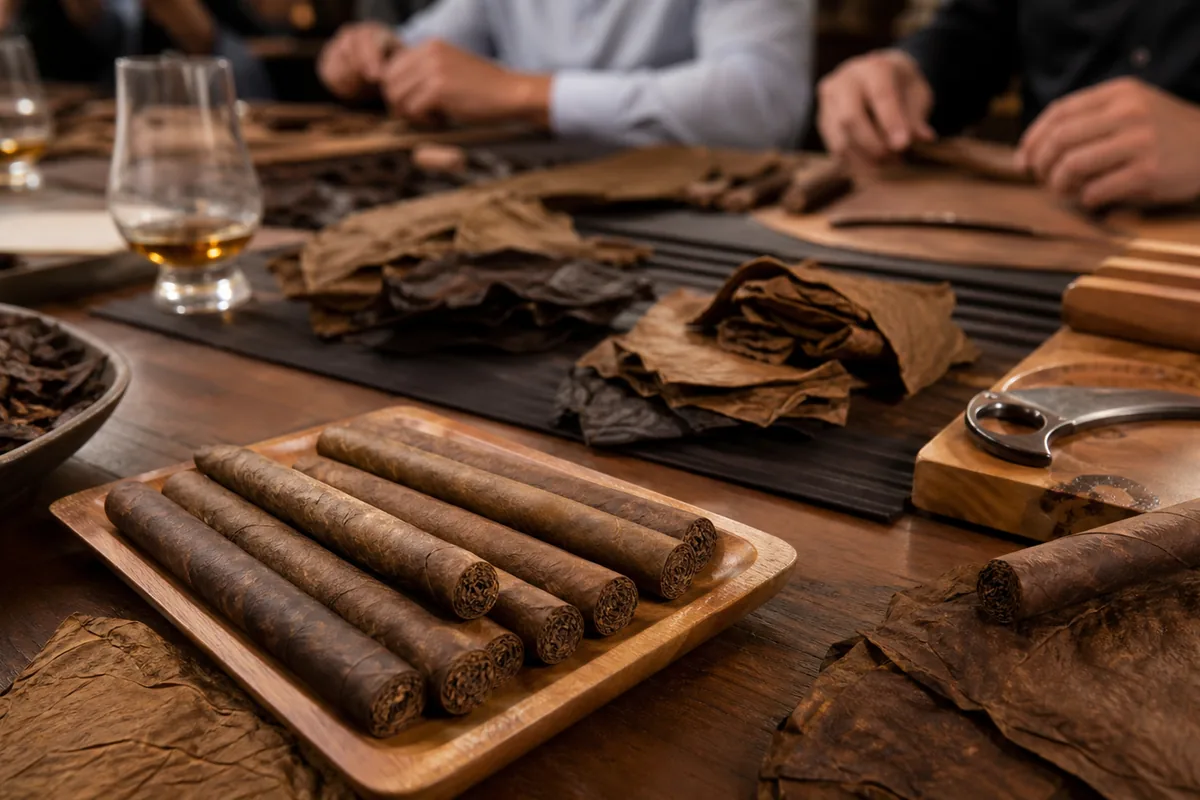
Set up a central presentation area where all cigars are displayed before smoking begins. A wooden tray or lined table where each selection sits with an identifying card creates visual interest and builds anticipation. Guests naturally gravitate to this display, handling cigars, reading bands, and speculating about flavor before the first cut is made.
Beverages and Food
Provide water, coffee, and a selection of spirits that pair broadly with cigars. Bourbon, aged rum, and single malt Scotch cover the essential pairing bases. You do not need to match specific drinks to specific cigars—that overcomplicates the format. Let guests experiment and discover pairings on their own.
Keep food simple and available throughout the evening rather than structured as a meal. Charcuterie boards, nuts, dark chocolate, aged cheeses, and bread provide substance without competing with cigar flavors. Avoid strong garlic, heavy spice, or acidic foods that coat the palate and interfere with tobacco appreciation.
Provide palate cleansers between cigars if your group plans to smoke multiple selections in sequence. Plain crackers, sparkling water, and mild cheese help reset taste buds. A fifteen-minute break between cigars with food and conversation gives palates time to recover and prevents fatigue from chain-smoking through the lineup.
Scoring and Discussion Framework
Structure improves discussion without making the event feel academic. Provide simple scorecards where guests rate each cigar on draw, burn, flavor complexity, strength, and overall enjoyment on a one-to-ten scale. These become conversation starters—"you gave this an eight on flavor? What are you picking up?"—rather than rigid evaluations.
Designate a moment after each cigar for group discussion. The person who brought the cigar reveals their reasoning—why they chose it, what they expected, whether they would buy it again—before opening the floor to reactions. This structure ensures every selection gets fair attention and the person who brought it feels their contribution is valued.
Save scorecards and compile results afterward. Sharing a summary document with group rankings, standout selections, and memorable quotes creates a record that builds anticipation for the next event. Over time, your group develops a shared flavor vocabulary and reference points that deepen every subsequent discussion.
Guest Etiquette and Expectations
Choosing What to Bring
Bring something you genuinely enjoy and want others to experience, not something you want validated. The point is sharing a cigar you believe in, whether it costs eight dollars or thirty. Confidence in your selection matters more than price point—enthusiasm is contagious, and a guest who passionately explains why they love an overlooked blend creates a better moment than someone sheepishly presenting an expensive cigar they bought specifically to impress.
Consider the evening's arc when selecting. If you know the group trends toward full-bodied preferences, bringing something lighter offers contrast and palate relief. If everyone gravitates to Nicaraguan tobacco, a Dominican or Honduran selection provides geographic diversity. Think about what your cigar adds to the collective experience, not just whether you like it in isolation.
Always bring the exact quantity needed—one per guest plus one extra for the host or as a backup for any construction issues. Running short because you miscounted or forgot someone was attending puts the host in an awkward position and means someone misses your selection.
Respecting the Format
Smoke at the group's pace rather than rushing ahead or falling behind. BYOB events work best when everyone experiences each cigar roughly simultaneously, enabling real-time comparison of reactions. If you finish faster, wait for the group discussion before lighting the next selection.
Offer honest but constructive feedback. Saying "this tastes terrible" to the person who brought it violates the spirit of the gathering. Instead, describe what you experience specifically—"I'm getting a lot of bitterness in the final third that's challenging for me"—which provides useful feedback without dismissing someone's taste. The person who brought the cigar took a risk by sharing their preference; honor that vulnerability.
Do not dominate the conversation or position yourself as the group's authority. Even if you have decades more experience than other guests, a BYOB event is collaborative by design. Ask questions as often as you offer opinions. "What are you getting on the retrohale?" opens discussion better than declaring what the cigar is doing.
When Someone Brings a Bad Cigar
It happens. Someone brings a cigar with construction problems—a tight draw, uneven burn, cracking wrapper—or one that the group collectively finds unpleasant. Handle this with grace. The person who brought it likely enjoys it in different conditions or got an unrepresentative batch.
If a cigar has a physical defect, acknowledge it matter-of-factly: "I think mine has a draw issue—anyone else?" This opens space for the contributor to recognize the problem without feeling attacked. If the flavor simply is not to your taste, find something specific to appreciate—the construction might be excellent even if the blend is not your preference.
Never refuse to smoke someone's selection unless you have a genuine sensitivity. Smoking halfway through a cigar you dislike is a small sacrifice for maintaining group cohesion and showing respect to the person who selected and paid for it. You can set it down quietly after giving it a fair chance.
Advanced Format Variations
Blind Championship Rounds
Once your group is established, introduce blind championship events where all bands are removed and cigars are numbered. Guests smoke and score without knowing who brought what or what they are smoking. After scoring, reveal the cigars and their contributors. The contrast between blind scores and branded expectations generates fascinating discussion about bias and perception.
Blind events occasionally produce humbling results—a ten-dollar cigar outscoring a fifty-dollar one is common when branding is removed from the equation. These moments recalibrate palates and remind everyone that price and reputation are unreliable indicators of personal enjoyment.
Vertical Tastings
Assign each guest a different vintage year of the same cigar line if available. Smoking a Padrón 1964 Anniversary from three different box dates or comparing aged versus fresh versions of the same blend reveals how time transforms tobacco. This format requires more planning and access to aged stock but produces some of the most educational BYOB sessions possible.
Challenge Rounds
Set unusual constraints that push guests outside comfort zones: bring the best cigar under five dollars, find a cigar from a country not typically associated with premium tobacco, select something with a band nobody in the group will recognize, or bring a cigar you actively disliked on first try but want to revisit.
Challenge rounds generate the most adventurous selections and often lead to the night's biggest surprises. Constraints force creativity and surface obscure blends that nobody encounters during routine shopping. The discoveries from challenge events frequently become group favorites that enter regular rotation.
Building a Regular BYOB Community
Frequency and Commitment
Monthly events sustain momentum without demanding too much from participants. More frequent gatherings lead to fatigue and attendance drops; less frequent ones lose cohesion and excitement. A standing monthly date—first Saturday, third Thursday—becomes a ritual that people protect on their calendars.
Establish a core group of committed members supplemented by occasional guests. Four to five regulars who attend every session provide continuity, while two to three rotating spots let you introduce new people and fresh perspectives. This structure balances reliability with variety.
Rotate hosting duties if possible. Sharing the hosting burden prevents burnout and exposes the group to different spaces and atmospheres. Each host brings their personality to the setup, and the variety keeps events feeling fresh even when the format remains consistent.
Record Keeping and Tradition
Maintain a running record of every cigar smoked, scores given, and standout moments. Over months and years, this archive becomes invaluable—it prevents repeat selections, documents the group's evolving preferences, and creates nostalgia when reviewed at anniversary events.
Develop traditions unique to your group. Maybe the highest-scored cigar each month gets added to a "hall of fame" list. Perhaps the person whose selection scores lowest hosts the next event. Small stakes and running jokes create identity and belonging that transcend the cigars themselves.
Photograph each event's lineup and share in the group channel. Visual records help members remember specific cigars, trigger conversations between events, and create content for recruiting new members who want to see what the experience looks like.
Common Mistakes to Avoid
Overcomplicating the format kills enjoyment. If your scorecards require a twenty-minute explanation or your rules document exceeds one page, you have turned a social gathering into homework. Keep structure minimal and let conversation drive the experience.
Allowing one personality to dominate discussion discourages quieter members from sharing opinions. Actively solicit input from everyone: "Sarah, you've been quiet on this one—what's your take?" Inclusive facilitation builds confidence in newer members and extracts insights that might otherwise go unspoken.
Neglecting time management leads to rushing through the final cigars. If your group has eight selections, you cannot smoke all eight in one evening unless each is a short smoke. Plan for three to four cigars per session and carry remaining selections to subsequent events. Quality attention beats quantity every time.
Ignoring the social dimension in favor of pure evaluation misses the point. BYOB events are about connection first and cigar education second. If your evening feels like a wine certification course rather than a gathering of friends, recalibrate toward more relaxed discussion and less structured scoring.
Making It Inclusive
Welcome guests regardless of experience level or budget. A newcomer bringing a five-dollar cigar they discovered at a gas station deserves the same attentive discussion as a veteran presenting a limited edition. The BYOB format democratizes cigar culture by valuing enthusiasm and curiosity over expertise and spending power.
Accommodate different smoking speeds and preferences without judgment. Some guests may not finish every cigar, and that should be perfectly acceptable. Others may want to take notes or photograph ash patterns. The only requirement is respectful engagement with the group—everything else is personal choice.
Consider accessibility when choosing venues. Guests with mobility limitations need ground-level access, comfortable seating with armrests, and proximity to restrooms. A great cigar event serves all its members equally, and thoughtful hosting means anticipating needs before being asked.
For more on hosting protocols and sharing customs, explore our guides on how to host a cigar night and cigar sharing etiquette. If you are pairing beverages with your event, our cigar and bourbon pairing guide offers useful starting points.
Frequently asked questions
How many cigars should each person bring to a BYOB event?
Bring one cigar per attendee plus one extra as backup. If eight people are confirmed, bring nine of your chosen blend. This covers everyone and provides a spare if one cigar has construction issues or a last-minute guest arrives.
What if I'm a beginner and don't know what cigar to bring?
Bring something you personally enjoy, regardless of price or prestige. Ask your local tobacconist for a recommendation in the event's theme or price range. Your fresh perspective as a newer smoker is valuable to the group, and genuine enthusiasm for your selection matters more than expertise.
How long does a typical BYOB cigar event last?
Plan for three to four hours if smoking three to four cigars with discussion breaks between each. A single cigar takes 45-90 minutes, and you want 15-minute breaks for palate cleansing and food. Most groups find four hours comfortable without feeling rushed or exhausted.
Should we smoke all selections in one evening or spread across multiple sessions?
With more than four or five selections, spread across multiple sessions. Palate fatigue after the third or fourth cigar diminishes appreciation for remaining selections. Better to give each cigar full attention across two evenings than rush through everything in one marathon session.
Community tasting notes
No community notes yet. Be the first to share how this smoked for you.
Log in to share your tasting notes and photos.