
The History of Cuban Cigars
The history of Cuban cigars is the story of how a single island turned a native plant into the most romanticized luxury in the world. Over several centuries, Cuban tobacco moved from indigenous ritual, through Spanish colonial trade, into the great Havana houses, and finally into the strange afterlife created by revolution and embargo. Understanding that arc explains why the phrase "Cuban cigar" still carries so much weight today.
Indigenous roots
Tobacco was not introduced to Cuba. It was already there. The indigenous peoples of the Caribbean cultivated and used tobacco long before Europeans arrived, smoking it in rolled leaf form during ceremonies and daily life. When Spanish explorers reached the island at the end of the fifteenth century, they encountered this practice and carried the plant, and the habit, back across the Atlantic. Cuba's climate and its now-famous soils, especially in the western growing regions, proved unusually good for tobacco, and this natural advantage shaped everything that followed. If you want the broader agricultural picture, see our cigar tobacco origins guide.
The Spanish colonial era
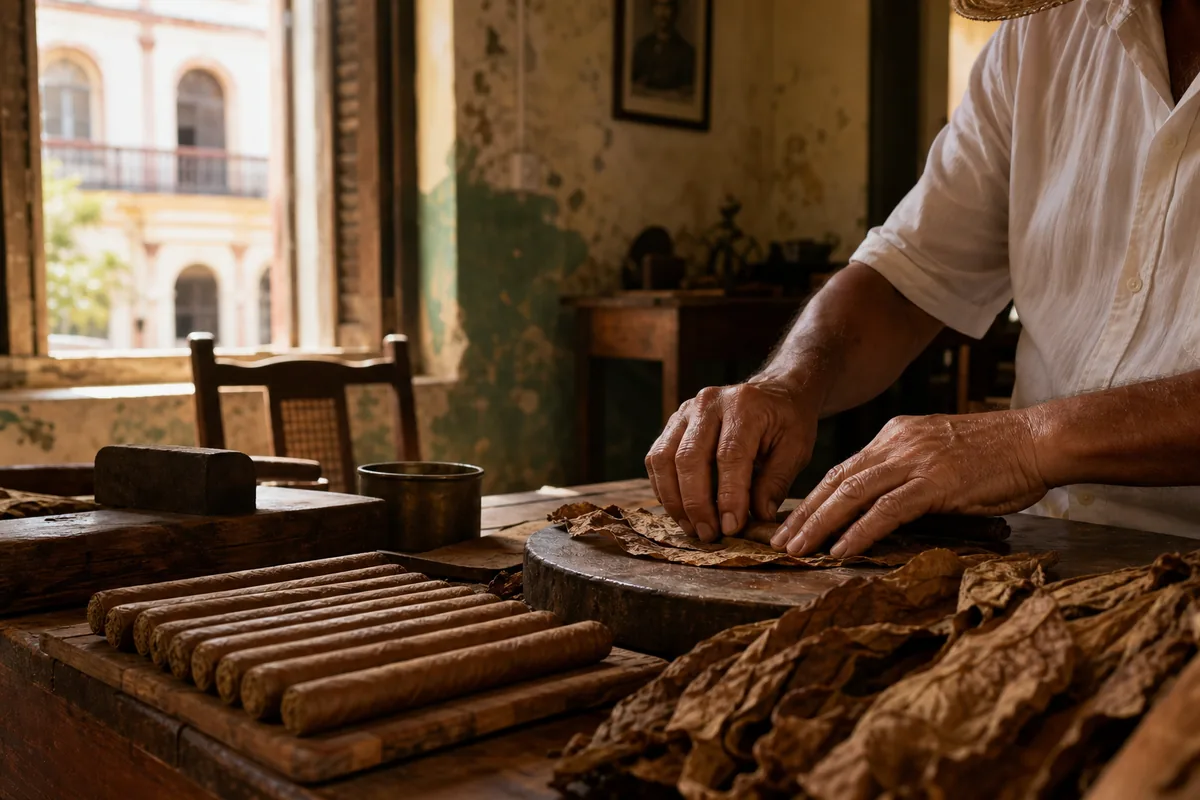
Under Spanish colonial rule, Cuban tobacco became a valuable commodity. For long stretches the crown tightly controlled its trade, treating tobacco as a royal interest and channeling it toward Spain. Over time the industry grew from raw leaf export into finished cigar production on the island itself. By the nineteenth century, cigar making in Cuba had matured into a genuine craft industry, and Havana emerged as its beating heart.
Havana's golden age
Through the nineteenth and early twentieth centuries, Havana became the world capital of premium cigars. Many of the marques still spoken about with reverence trace their origins to this period. The city's factories, its rolling traditions, and the reputation of its wrappers combined to make "Havana" a byword for quality. A cigar from Havana was understood, rightly or not, as the standard against which all others were measured. To understand what actually defines these cigars, see what are Cuban cigars.
Revolution and nationalization
The Cuban Revolution of 1959 changed the industry permanently. In the aftermath, the cigar business was nationalized and brought under state control. The many private brands and family firms were consolidated under state management, later organized through entities associated with names such as Cubatabaco and, in the modern era, Habanos. This meant that the brands themselves no longer belonged to the families who had built them, a detail that matters enormously for what came next.
The embargo and the birth of a legend
The United States imposed a trade embargo on Cuba in the early 1960s. For American consumers, legal access to Cuban cigars effectively ended. Scarcity and prohibition did what they usually do: they turned an already respected product into a forbidden icon. The Cuban cigar became mythologized precisely because so many people could not easily obtain one.
The embargo also scattered talent and knowledge. Many people connected to the old cigar families left Cuba, and some rebuilt their trade elsewhere, especially in the Dominican Republic and Nicaragua. This is why several famous brand names now exist in two versions: a Cuban line and a non-Cuban line made abroad for markets like the United States. It is also why other tobacco-growing countries rose to prominence in the second half of the twentieth century. For a direct comparison of styles, see Cuban vs Nicaraguan cigars.
Why the story still matters
Today the world of premium cigars is genuinely global, and many smokers argue that the best non-Cuban cigars rival or surpass Cuban ones. Yet the mystique endures. That mystique is not really about tobacco chemistry. It is about history: native cultivation, colonial trade, Havana's golden age, revolution, and an embargo that froze a legend in place.
Frequently asked questions
Why are Cuban cigars illegal in the United States?
Because of a US trade embargo on Cuba imposed in the early 1960s. Regulations have shifted over the years, but the embargo is the reason Cuban cigars became legally restricted for American consumers and gained their forbidden reputation.
Are Cuban cigars still the best in the world?
That is a matter of taste and debate. Cuban cigars have enormous historical prestige, but many smokers consider top Dominican, Nicaraguan, and Honduran cigars their equals or betters. Much of the Cuban mystique comes from history and scarcity rather than measurable superiority.
Why do some cigar brands exist as both Cuban and non-Cuban?
After the revolution nationalized the industry, many cigar families left Cuba and rebuilt their brands abroad. This created situations where a brand name is owned by the Cuban state for one market and by a company outside Cuba for others, such as the US.
Community tasting notes
No community notes yet. Be the first to share how this smoked for you.
Log in to share your tasting notes and photos.