
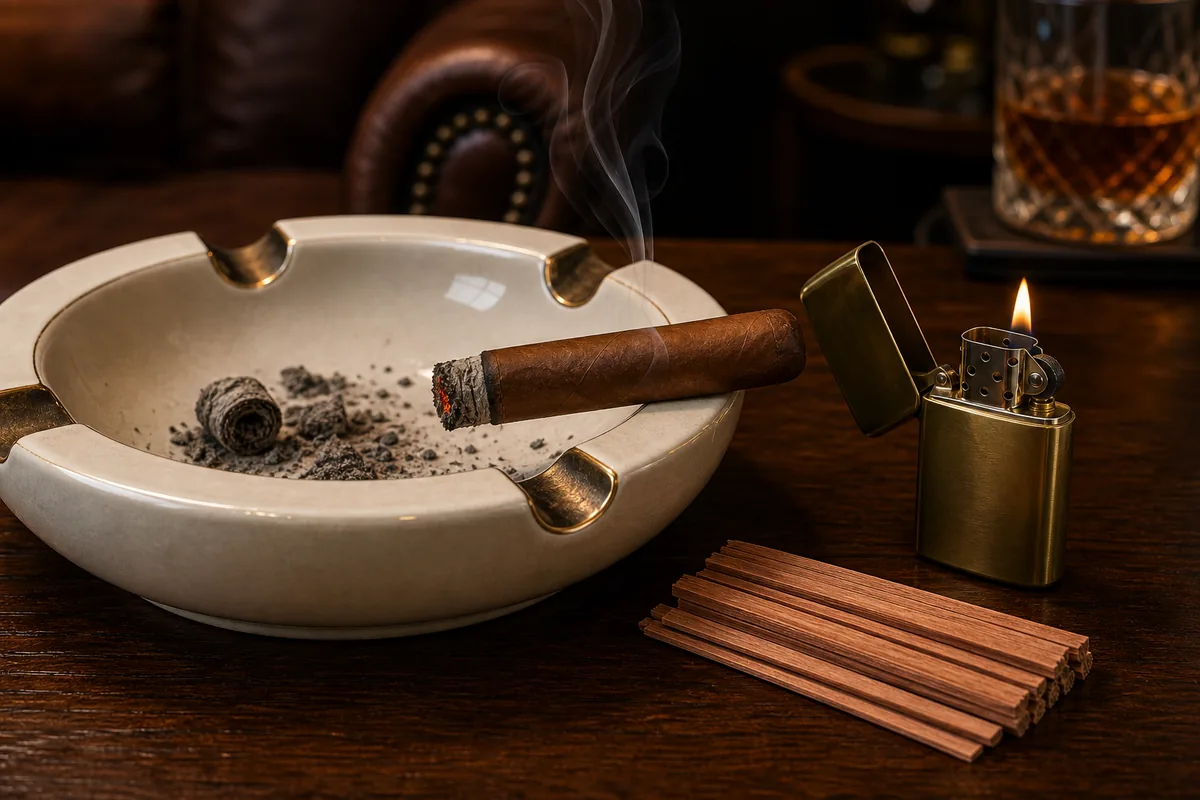
How to Relight a Cigar Properly
You can relight a cigar that's gone out and still enjoy it — if you purge stale gases first, toast the foot instead of torching it, and draw slowly. Skip any of those steps and you'll get a mouthful of char and bitterness that makes you wish you'd just let it go.
Why Cigars Go Out
A cigar stays lit through consistent airflow. When draws stop for more than a few minutes, the cherry loses heat and the combustion cycle breaks. This isn't a quality defect unless it happens repeatedly within the first inch — that points to construction issues like overpacking or poor bunch work.
Common reasons cigars go out mid-session: long conversations, distractions, smoking too slowly at a cadence below one draw every ninety seconds, or the cigar was slightly over-humidified and the moisture content is fighting combustion. All of these are recoverable.
The Window: When Relighting Still Works
Within thirty minutes, a relight will taste close to the original smoking experience if done right. Between thirty minutes and two hours, expect a slight flavor shift — more earthy, sometimes with a pepper note that wasn't there before. Beyond two hours, the oils in the filler oxidize and residue hardens. You can still relight it, but quality drops noticeably.
The next day? Most smokers cut their losses. But if the cigar was less than halfway done and stored properly after going out, some people do revisit it the following day. Expect a rougher first inch before it settles.
How to Relight: The Full Method
Step 1: Remove Dead Ash
Gently tap or roll off any ash at the foot. You want to expose the actual tobacco beneath — relighting through a cap of dead ash just produces acrid smoke and uneven combustion. If the ash is stubborn, use the edge of your ashtray to gently break it away.
Step 2: Purge the Barrel
Blow gently through the cigar for two to three seconds. This pushes stale, condensed smoke out through the foot. You won't see a glow since there's no cherry, but you're clearing the internal passage of everything that went bitter while cooling. This step alone accounts for most of the difference between a clean relight and a foul one.
Step 3: Toast the Foot
Hold your lighter about half an inch from the foot — close enough to heat the tobacco but not so close you're scorching it directly. Rotate the cigar slowly, toasting the entire surface evenly for three to five seconds. You're re-establishing the combustion zone across the full diameter. Don't rush this. An uneven toast leads to an uneven burn that'll dog you for the next inch.
Step 4: Draw and Assess
Once the foot is evenly glowing, take a slow, gentle draw. The first puff after a relight often carries a slight char note — that's normal and clears within two or three draws. If bitterness lingers past the third puff, purge once more and let the cigar rest for a few seconds before drawing again.
Step 5: Re-establish Your Cadence
Resume smoking at one draw per forty-five to sixty seconds. The relit section needs steady, consistent heat to stabilize. Smoking too fast will overheat the already-stressed tobacco; too slow and it'll go out again.
Lighter Choice for Relighting
Butane torch lighters work best for relights. The focused flame lets you toast precisely without charring the wrapper edges. Soft-flame lighters work but take longer and make even toasting harder. Cedar spills are elegant but impractical for relighting since you need sustained heat across the foot.
Avoid candles, scented matches, or Zippo-style fluid lighters. Petroleum-based fuels deposit flavor compounds on the tobacco that you'll taste for the next quarter-inch.
Common Mistakes
- Skipping the purge — The number one reason relit cigars taste terrible. Stale condensed gases are sitting in the barrel. If you draw without clearing them first, you pull all that bitterness straight into your palate.
- Holding the flame directly on the tobacco — This chars the filler rather than reigniting it. Toast from a slight distance, letting radiant heat do the work.
- Not removing dead ash — Ash doesn't reignite cleanly. It just smolders and creates an insulating layer that prevents proper combustion underneath.
- Drawing too hard on the first puff — A forceful draw after relight overheats the fresh cherry and produces harsh smoke. Gentle draws only until the cigar stabilizes.
- Relighting too many times — Two or three relights in a session is the practical ceiling. Beyond that, cumulative residue makes each subsequent relight taste progressively worse.
How Many Times Can You Relight?
There's no hard rule, but flavor degrades with each relight cycle. The first relight is almost undetectable if done well. The second is noticeable but acceptable. By the third, most cigars taste noticeably different from their original profile — heavier, more bitter, with a persistent tar note. If you find yourself relighting repeatedly, check your humidity levels or consider whether the ring gauge matches your smoking pace.
Relighting the Next Day
If you set aside a half-smoked cigar and want to return to it hours or a day later: cut about a quarter-inch behind the old char line to expose fresh tobacco, then follow the full relight method above. The first half-inch will taste rough regardless, but if there's still good cigar left, it often settles into something enjoyable by the second inch.
Store the unfinished cigar in an open-air space, not sealed in a tube or bag. Sealing it traps stale smoke smell into the wrapper and filler. An ashtray or cigar rest in a ventilated area is fine for a few hours.
Move Forward
The relight technique pairs directly with proper lighting fundamentals — if your initial light is uneven, you're more likely to face burn issues that force a relight. And if you're relighting because of persistent burn problems, an uneven burn correction might address the root cause.
How Long Can a Cigar Sit Before Relighting
A cigar that went out 5-15 minutes ago relights cleanly with minimal flavor impact. The tobacco is still warm, ash structure is intact, and stale smoke hasn't had time to permeate deeply into the unburned tobacco. A cigar left for 30-60 minutes can still be relit acceptably but will taste slightly different in the first few puffs after relighting as accumulated cold smoke flavors clear. Beyond 2 hours, stale compounds have penetrated deep enough into the cigar's body that the first full inch after relighting tastes unpleasant regardless of purging technique.
Overnight relights are controversial among enthusiasts. Some smokers successfully relight a half-smoked cigar the next day by first removing all ash, cutting back to fresh tobacco if the exposed end looks tar-stained, and purging aggressively after relighting. Others find that any cigar left overnight develops an irreversible staleness making it not worth finishing regardless of remaining length. Personal tolerance for relight flavor varies significantly. Experiment with less expensive cigars to determine your own threshold before deciding whether to save premium half-smoked sticks for next-day finishing.
Preparation Before Relighting
Before applying flame to a cigar that went out, prepare the foot surface for clean ignition. Gently tap or blow away loose ash to expose fresh tobacco at the burn line. If the ash end shows black tar residue or smells strongly stale when you hold it near your nose, use your cutter to remove a small section from the foot to reach cleaner tobacco beneath the degraded surface. This trimming technique removes the most tar-saturated tobacco that would otherwise produce bitter off-flavors for the first several puffs after relighting regardless of how well you purge during the relighting process itself.
After clearing the foot surface, blow gently outward through the cigar before applying your lighter. This pre-purge expels stale air trapped inside the unburned tobacco column without requiring you to taste it. Then toast the exposed foot just as you would when lighting a fresh cigar: flame below the foot, rotating for even coverage, establishing a glow across the full diameter before drawing. The first draw after relighting should go outward as another purge, expelling any remaining stale compounds, before you settle back into normal smoking rhythm.
Step by step
- Remove dead ashGently tap off loose ash to expose the tobacco surface beneath. Use the ashtray edge for stubborn ash.
- Purge the barrelBlow gently through the cigar for two to three seconds to expel stale condensed smoke from inside.
- Toast the foot evenlyHold a butane lighter half an inch from the foot and rotate the cigar for three to five seconds until the surface glows evenly.
- Draw gentlyTake a slow, light puff. Accept that the first draw may carry a slight char note that clears in two to three puffs.
- Re-establish smoking cadenceResume draws every forty-five to sixty seconds to keep the cherry stable without overheating the tobacco.
Frequently asked questions
Can you relight a cigar the next day?
Yes, but cut a quarter-inch behind the old char line first and expect a rough first half-inch. Store the unfinished cigar in open air, never sealed, to avoid trapping stale smoke into the tobacco.
Why does my relit cigar taste bitter?
Stale gases condensed inside the barrel while the cigar was out. Purging — blowing gently through the cigar before relighting — clears these compounds and is the single most effective fix.
How long can a cigar sit before relighting?
Within thirty minutes gives the best results. Up to two hours is workable with some flavor shift. Beyond that, oils oxidize and residue hardens, making a clean relight much harder.
Should I use matches or a torch to relight?
A butane torch lighter gives you the most control for toasting the foot evenly. Soft-flame works but takes longer. Avoid fluid-based lighters like Zippos — they deposit petroleum flavors on the tobacco.
Community tasting notes
No community notes yet. Be the first to share how this smoked for you.
Log in to share your tasting notes and photos.