
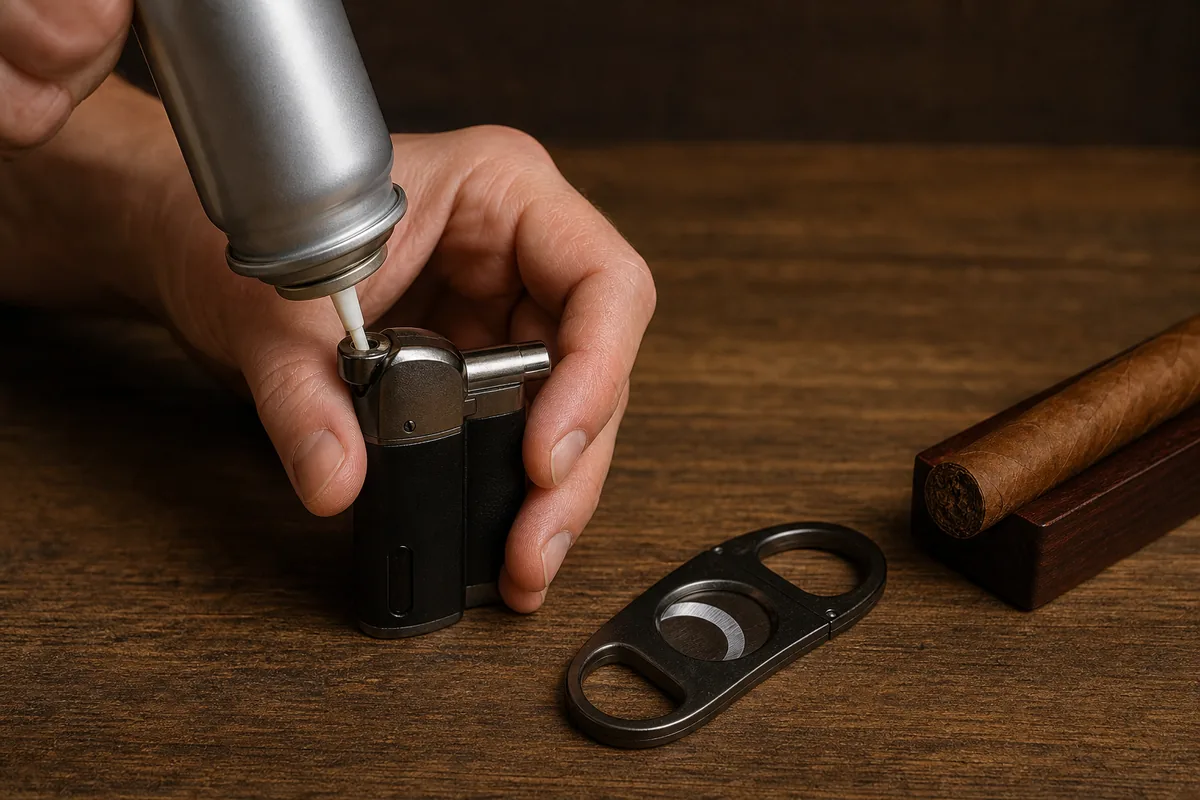
How to Refill a Butane Cigar Lighter
Flip the lighter upside down, insert the butane canister nozzle into the refill valve, and press firmly for 5–8 seconds. That's the core of it — but doing it wrong leads to sputtering, weak flames, and a lighter that acts like it's empty even after filling. The details matter.
Here's the complete process, including the step most people skip that causes 90% of refill problems.
Before You Refill: Bleed the Tank
This is the step everyone skips. Before adding fresh butane, you need to purge any remaining gas and trapped air from the lighter's fuel tank. Air contamination is the number one cause of ignition problems after refilling.
Use a small screwdriver, pen tip, or the included bleed tool to press the refill valve. Hold the lighter upright (refill valve facing up) and depress the valve until all hissing stops. You'll hear gas escape for 5–15 seconds, then silence. That silence means the tank is empty — including the air pockets that cause sputtering.
Skip this step and the fresh butane mixes with trapped air. The result: inconsistent flame, sputtering on ignition, and a lighter that won't reach full pressure. Our full guide on bleeding a lighter covers the why and how in depth.
Step-by-Step Refill Process
Step 1: Set the Flame Adjuster to Minimum
Turn the flame adjustment wheel to its lowest setting. This closes the fuel jet valve and prevents butane from flowing through the burner assembly during filling. It also reduces backpressure that can make refilling less efficient.
Step 2: Flip the Lighter Upside Down
The refill valve is on the bottom of every butane lighter. Flip the lighter so the valve faces up. This position ensures liquid butane flows downward into the tank by gravity rather than escaping as gas.
Step 3: Shake the Butane Canister
Give your butane can a few firm shakes. This mixes the propellant and ensures consistent flow. Cold cans flow slower — if your butane was stored in a cold garage, warm it to room temperature in your hands for a minute first.
Step 4: Insert and Press
Hold the butane canister nozzle directly over the lighter's refill valve. Press down firmly — the nozzle should seat flush against the valve. Hold for 5–8 seconds. You may feel cold on the lighter body as liquid butane enters the tank. If you hear hissing around the connection point, the nozzle isn't seated properly — reposition and try again.
Some lighters have valve sizes that don't match standard canister nozzles. Quality butane brands (Xikar, Colibri, Vector) include multiple adapter tips that fit different valve diameters. Find the one that makes a tight seal.
Step 5: Repeat if Needed
One 5–8 second press may not fill the tank completely, especially on larger lighters (table-top models, triple-torch). Check the fuel window if your lighter has one. If not, give it two or three fills with 10-second pauses between each. When butane sprays back out around the valve, the tank is full. Stop there — overfilling causes liquid fuel to reach the burner, which causes flare-ups.
Step 6: Wait Before Igniting
Let the lighter sit for 3–5 minutes after refilling. The butane needs to reach room temperature and pressure inside the tank needs to stabilize. A lighter that sputters immediately after filling often works perfectly after a few minutes of rest.
Step 7: Adjust Flame and Test
Turn the flame adjuster back up to your preferred height. Test the ignition. You should get a clean, blue flame on the first or second strike. If the lighter sputters or won't ignite, the tank may still have air — bleed again and refill.
Choosing the Right Butane
Not all butane is equal. Impurities in cheap fuel clog the jets and corrode internal valves. For cigar lighters, use refined butane — look for "triple refined," "quadruple refined," or "near-zero impurities" on the label.
Recommended brands:
- Xikar High Performance: Near-zero impurities. The standard recommendation for premium lighters.
- Colibri Premium: Triple refined. Clean burn, consistent pressure.
- Vector Quintuple Refined: Five times filtered. Overkill for most lighters but excellent for precision multi-jet torches.
- Neon (Universal brand): Budget option that's still triple refined. Available at most tobacco shops for $3–5.
Avoid gas station butane, off-brand cans without purity ratings, and anything that comes in a generic yellow/red canister. The $2 you save costs $50 when it clogs a Xikar burner assembly.
Common Mistakes
- Refilling without bleeding first: Trapped air mixes with fresh butane and causes sputtering, weak flames, and inconsistent ignition. Always bleed to empty before refilling.
- Filling right-side up: If the lighter is upright during filling, butane enters as gas instead of liquid. The tank stays mostly empty. Always invert — valve up.
- Using a dirty canister nozzle: Gunk on the canister tip prevents a clean seal. Wipe the nozzle before each refill.
- Igniting immediately after filling: Liquid butane in the burner path can cause a flare-up. Wait 3–5 minutes for fuel to stabilize and warm to ambient temperature.
- Overfilling: When butane sprays back out, you're full. Adding more forces liquid fuel toward the burner assembly. Stop when you see spray-back.
- Using the wrong adapter tip: A poor seal between canister and valve means most of your butane escapes as spray rather than entering the tank. Try different adapters until you find one that seats flush with no hissing.
How Often to Refill
Frequency depends on the lighter type and your usage:
- Single-jet torch: 50–80 lights per fill for a pocket-sized lighter.
- Double-jet: 30–50 lights per fill.
- Triple/quad-jet: 15–30 lights per fill. Multi-jet lighters burn through fuel fast.
- Soft flame: 100+ lights. Lower fuel consumption but less wind resistance.
Most daily smokers refill weekly. Once-a-week smokers might go a month between refills. The lighter will tell you — weakening flame height is the signal, not a sputtering ignition (that's air contamination, not empty tank).
Troubleshooting After Refill
- No flame at all: Tank may still have air. Bleed completely, refill, wait 5 minutes, try again.
- Sputtering on ignition: Air contamination or liquid fuel in the burner path. Bleed, refill, wait longer (5–10 minutes).
- Flame too low even at max setting: Jets may be clogged from impure butane. Blast compressed air through the burner nozzles. Switch to higher-purity fuel.
- Flame flickers and dies: Low fuel pressure — you may not have filled completely. Try another 5-second fill burst.
What's Next
If bleeding and refilling didn't fix your sputtering lighter, the issue might be deeper — see our guide on how to properly bleed a cigar lighter. And for a comparison of lighter types to decide if your current tool is right for you, check cigar lighter types explained.
Step by step
- Bleed the lighter tankHold lighter upright, press the refill valve with a small tool until all hissing stops. This purges remaining gas and trapped air that causes sputtering.
- Set flame adjuster to minimumTurn the flame wheel to its lowest setting. This closes the fuel jet and reduces backpressure during filling.
- Invert the lighterFlip the lighter so the refill valve faces up. This allows liquid butane to flow downward into the tank by gravity.
- Shake butane canister and insert nozzleShake the can firmly, then press the canister nozzle flush against the lighter's refill valve. Hold firmly for 5-8 seconds.
- Repeat fills if neededPause 10 seconds between fills. Repeat until butane sprays back around the valve (tank full) or the fuel window shows full.
- Wait and testLet the lighter rest 3-5 minutes at room temperature. Turn flame adjuster to desired height and test ignition. Should produce clean blue flame on first strike.
Frequently asked questions
Why does my lighter sputter even after a fresh refill?
Almost always air contamination. You refilled without bleeding the tank first, so air pockets mix with the butane and disrupt pressure flow. Bleed the lighter completely (press the valve until all hissing stops), refill, wait 5 minutes, then try again.
Can I use any butane brand in a premium lighter?
Technically yes, but cheap butane with high impurity levels will clog the precision jets over time. Xikar, Colibri, and Vector lighters specifically recommend triple-refined or higher fuel. Using lower-quality butane can void warranties and shorten lighter life.
How do I know when the lighter tank is full?
Butane will spray back out around the connection point between the canister nozzle and the lighter valve. That spray-back means the tank can't accept more fuel. Some lighters have a visible fuel window — fill until the liquid reaches the full mark.
Is it safe to refill a lighter indoors?
Yes, with basic precautions. Work away from open flames, sparks, and heat sources. Ensure ventilation — a small amount of butane gas escapes during the process. Don't smoke while refilling. The quantities involved are small enough that normal indoor ventilation is sufficient.
Community tasting notes
No community notes yet. Be the first to share how this smoked for you.
Log in to share your tasting notes and photos.