
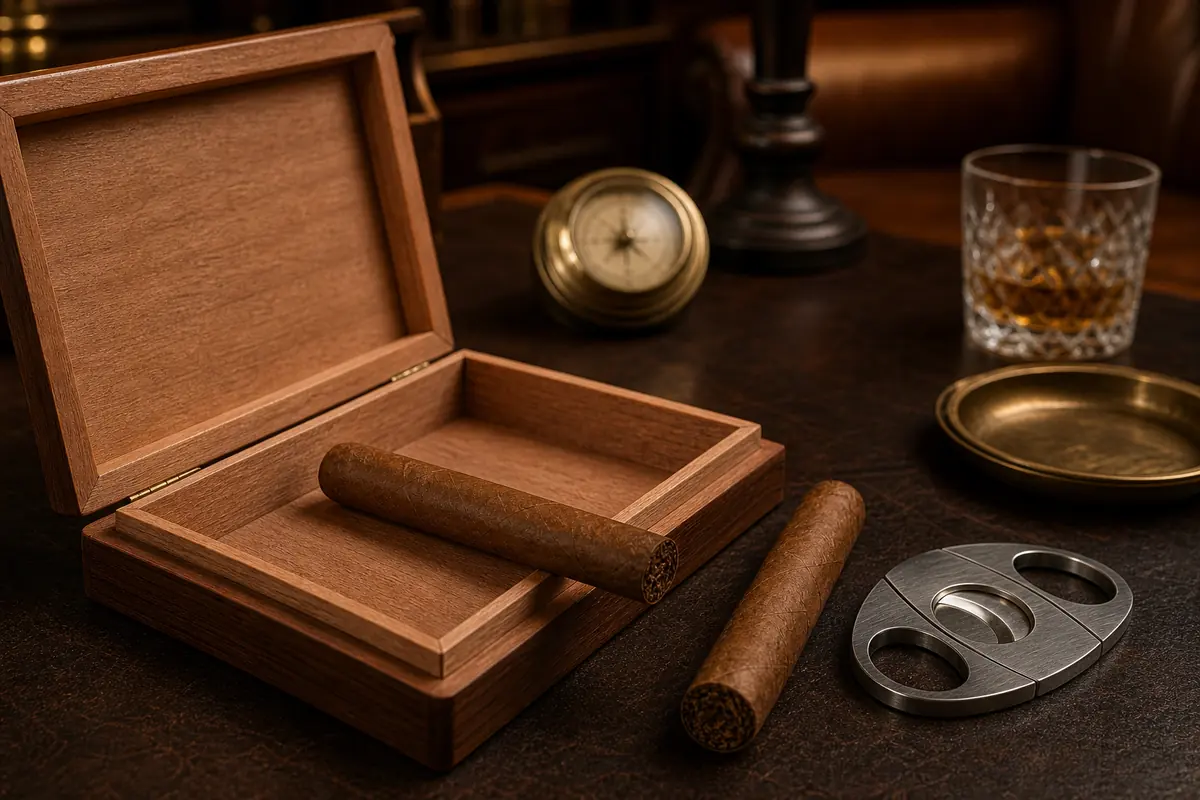
How to Dry Box a Cigar Before Smoking
Dry boxing means placing a cigar in a cedar box or container without any humidification for twelve to twenty-four hours before smoking — and it's the fastest fix for cigars that are slightly over-humidified. If your cigars have tight draws, burn problems, muted flavors, or a spongy feel, dry boxing brings them into the optimal smoking range without risking damage.
Why Dry Boxing Works
Most humidors run between 65% and 72% relative humidity. That's fine for storage and aging, but many cigars smoke better at slightly lower moisture content — around 62% to 65% at the tobacco level. The difference sounds small. It's not.
Excess moisture in the filler and binder creates steam during combustion that mutes flavor, causes uneven burns, and makes the draw feel tighter because swollen tobacco compresses the air channels. Dry boxing lets a small amount of that surface moisture evaporate, bringing the cigar to a point where combustion is cleaner and flavors pop.
You're not drying the cigar out. You're fine-tuning it from "storage humidity" to "smoking humidity." The distinction matters: over-dried cigars burn hot, taste harsh, and crack. A properly dry-boxed cigar just performs better.
When to Dry Box
These situations benefit from dry boxing:
- Cigars stored above 68% RH — If your humidor runs at 70-72%, most cigars benefit from twelve to twenty-four hours outside humidification before smoking.
- New purchases from a retailer — Shops often keep humidity at 72% or higher to prevent drying. Fresh purchases are frequently over-humidified for immediate smoking.
- Cigars with a spongy feel — When the squeeze test shows too much give and the wrapper feels damp or overly pliable.
- Consistent burn problems — Canoes, tunneling, frequent relights across multiple cigars from the same humidor usually point to humidity levels, not cigar defects.
- Cuban cigars — Habanos are shipped at relatively high humidity and almost universally benefit from dry boxing, sometimes up to forty-eight hours.
How to Dry Box: Method
What You Need
An empty cedar cigar box — the kind your cigars came in or any spare box from a previous purchase. The cedar absorbs some moisture and provides a stable micro-environment. No humidification device, no Boveda pack, no damp sponge. Just the cigar in a dry cedar box.
No cedar box? A clean cardboard box or wooden container works. Even an empty desk drawer in an air-conditioned room. The goal is ambient room humidity (typically 40-55% in most indoor environments) without direct airflow that would dry the cigar too fast.
The Process
Place the cigar in the box. Close the lid. Walk away for twelve to twenty-four hours. That's it.
For a standard robusto or toro stored at 68-70%, twelve hours is usually sufficient. For larger ring gauges — 54 and above — or cigars stored above 70%, go the full twenty-four hours. The larger the cigar, the longer it takes for internal moisture to equalize with the now-drier surface.
Temperature Matters
Room temperature of 68-75°F is ideal. Avoid dry boxing in excessively warm or cold environments. Heat accelerates moisture loss beyond what you want. Cold slows it down too much and can create condensation issues if the cigar later returns to a warmer environment.
How Long Is Too Long?
Beyond forty-eight hours at typical room humidity, you risk drying the cigar past the sweet spot. The wrapper will start to feel less oily and more papery. Veins become more visible and raised as the leaf shrinks slightly. If you notice these signs, the cigar has gone past optimal and should go back into regulated humidity for a day to recover.
The sweet spot for most cigars is twelve to twenty-four hours. Treat forty-eight hours as the absolute maximum for special cases like fresh Cubans or cigars you know were stored well above 70%.
Dry Boxing vs. Resting
Resting is different. Resting means letting newly shipped cigars acclimatize inside your humidor — recovering from transit shock, temperature changes, and humidity swings. That takes one to two weeks inside the humidor. Dry boxing is a short-term, intentional reduction of surface moisture immediately before smoking. They serve different purposes at different points in the cigar's lifecycle.
Signs It Worked
After dry boxing, a properly conditioned cigar feels slightly firmer in hand — not hard, just less spongy. The cold draw opens up noticeably. When you light it, the burn line is sharper and more even, smoke output is fuller, and flavors that were hiding behind moisture become pronounced. The first third especially benefits: that's where excess moisture concentrates from the head end and most affects the initial draw.
Common Mistakes
- Using a container with residual humidity — An empty humidor with a recently removed Boveda still holds ambient moisture in the cedar walls. Let the box sit open for a few hours first, or use a non-humidor box.
- Direct sunlight or airflow — Don't dry box on a windowsill or near a vent. Uneven drying causes wrapper cracks and uneven combustion.
- Forgetting about it — Set a reminder. Three or four days in dry conditions can push a cigar past recoverable dryness, especially thinner ring gauges like lanceros or coronas.
- Dry boxing cigars that are already at optimal humidity — If your humidor runs at 62-65% and cigars already feel firm with good draw, dry boxing will over-correct and make them too dry.
Practical Integration
The simplest approach: keep an empty cedar box on your desk. The night before you plan to smoke, pull your cigar from the humidor and drop it in the dry box. By the next evening, it's ready. This becomes second nature once you feel the difference in burn quality and flavor clarity.
If you're smoking multiple cigars for an event, dry box the whole set together the night before. They'll all benefit equally, and you avoid the situation where some smoke great and others fight you because of moisture variance.
Next Steps
If your cigars consistently need dry boxing, that's a signal to recalibrate your humidor's target humidity downward — 65% is increasingly considered the sweet spot for both storage and readiness to smoke. And if you're building a new humidor setup, factoring in your smoking cadence helps determine optimal storage conditions from the start.
Signs You Need to Dry Box
Several symptoms indicate your cigars contain excess moisture requiring dry boxing before smoking. A spongy feel when gently squeezed between thumb and forefinger suggests over-humidification. Difficulty maintaining a steady burn with the cigar repeatedly going out or burning unevenly despite proper puffing rhythm points to excess moisture preventing combustion. A tight, resistant draw that doesn't improve after a proper cut indicates moisture-swollen filler expanding against the binder. Bitter or acrid taste in the first third, particularly a sour note absent from the same cigar smoked at proper humidity, confirms moisture is affecting combustion chemistry.
These symptoms appear most often in winter when humidor humidity climbs due to lower ambient temperatures creating condensation, after adding new cigars that were over-humidified at the retailer, or when your humidity control system malfunctions and maintains higher levels than your target setting. Rather than immediately adjusting your humidor settings, dry boxing individual cigars for tonight's smoke provides an immediate solution while you investigate and correct the underlying humidity issue for long-term prevention.
Advanced Dry Boxing Techniques
For heavily over-humidified cigars reading 72-plus percent, extended dry boxing of 48-72 hours may be necessary. Place cigars on Spanish cedar strips (which absorb moisture faster than cardboard alone) inside an unsealed wooden cigar box stored in a room with 40-50% ambient humidity. Check firmness daily by gently pressing the cigar. When it feels firm but still has slight give without crunching, it's ready to smoke. The cedar strips accelerate moisture extraction compared to simple open-air exposure while preventing the cigar from contacting surfaces that might stain or damage the wrapper during the extended drying period.
Step by step
- Select your cigar the night beforeChoose which cigar you'll smoke tomorrow. This gives you the twelve-to-twenty-four-hour window needed.
- Prepare a dry containerUse an empty cedar box, clean cardboard box, or wooden container with no humidification device inside.
- Place the cigar insideSet the cigar in the box and close the lid. Keep it at room temperature (68-75°F) away from sunlight and direct airflow.
- Wait twelve to twenty-four hoursStandard for most cigars. Larger ring gauges or high-humidity cigars go the full twenty-four hours.
- Confirm readinessThe cigar should feel slightly firmer than before. Cold draw should be noticeably easier. If it feels papery or dry, it went too long — return to humidor.
Frequently asked questions
How long should I dry box a cigar?
Twelve to twenty-four hours for most cigars stored at 68-72% humidity. Standard robustos need about twelve hours; larger ring gauges or very humid cigars benefit from the full twenty-four. Never exceed forty-eight hours.
Can I dry box cigars in any container?
Cedar boxes are ideal because the wood absorbs some moisture. A clean cardboard box or wooden container at room temperature works too. Avoid sealed plastic containers since moisture has nowhere to go.
Will dry boxing damage my cigars?
Not within the twelve-to-twenty-four-hour window. Beyond forty-eight hours at room humidity, you risk over-drying, which causes wrapper cracks and harsh flavor. If over-corrected, return the cigar to humidified storage for a day.
Do all cigars need dry boxing?
No. If your humidor runs at 62-65% and your cigars feel firm with a good cold draw, they're already at smoking humidity. Dry boxing is for correcting cigars stored at higher humidity levels.
Community tasting notes
No community notes yet. Be the first to share how this smoked for you.
Log in to share your tasting notes and photos.