
Cuban Cigar Authenticity: How to Spot Fakes
The best way to avoid fake Cuban cigars is to buy only from official, authorized retailers, because counterfeits are extremely common, especially anything sold on the street, on the beach, or at a "too good to be true" price. Genuine Cuban cigars carry specific bands, box markings, seals, and codes, and the surest protection is the source, not just inspecting the cigar. This guide covers the practical warning signs.
Why fakes are everywhere
Cuban cigars are prestigious, restricted in some markets, and expensive, which makes them a massive target for counterfeiters. In tourist areas a large share of "Cuban cigars" offered informally are fake, often cheap tobacco dressed up in copied bands and boxes. Recognizing this reality is the first defense.
The biggest red flag: where and how you buy
- Street sellers and beach hustlers: almost always fake. Avoid entirely.
- "Factory worker" deals: the classic scam story. Fake.
- Prices far below retail: genuine boxes are expensive; a bargain box is a warning sign.
- Unofficial websites: risky; stick to authorized dealers (La Casa del Habano and official retailers where legal).
No genuine bargain exists for real Cuban cigars sold on the street.
Check the band
Authentic Cuban bands are finely printed with crisp detail, precise embossing, and clean color. Fakes often have blurry printing, wrong fonts, dull or off colors, or misaligned embossing. Compare against known genuine images for the brand.
Check the box and seals
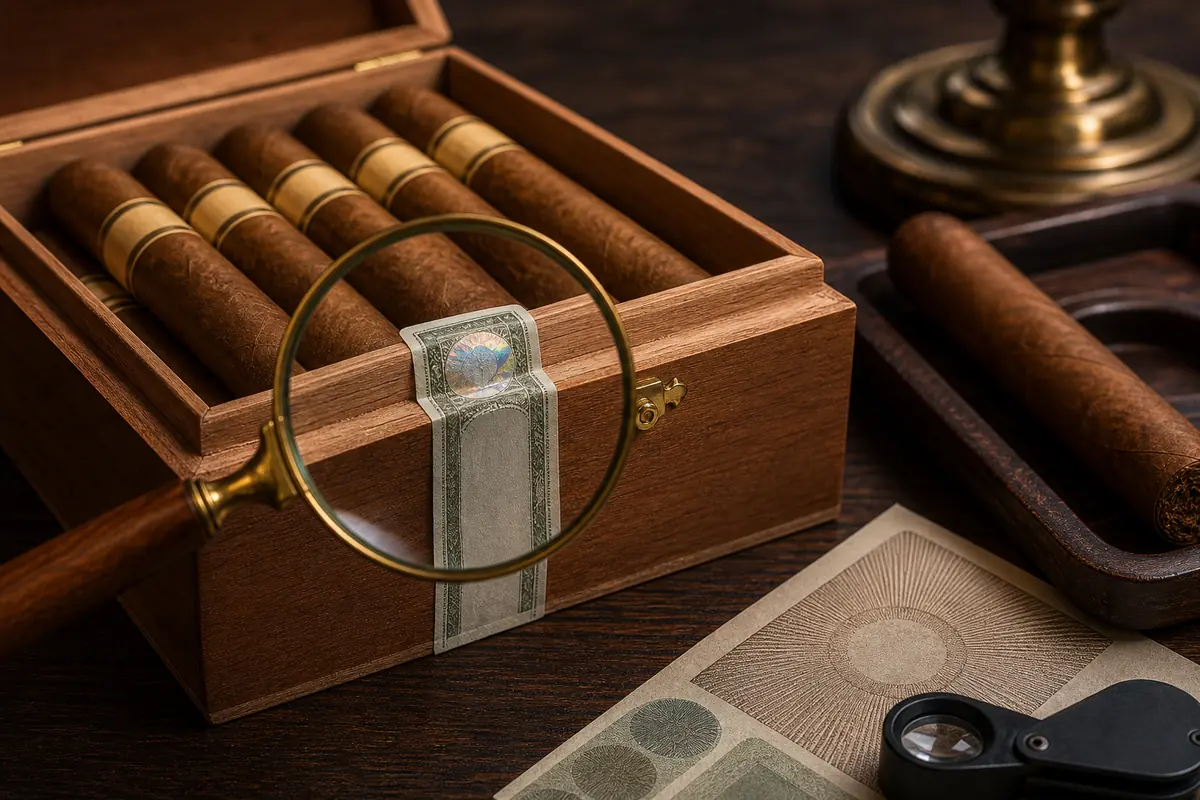
- Warranty seal: genuine Cuban boxes carry the official Cuban government warranty seal; check for correct design and a serial number.
- Habanos seal: a holographic authenticity seal introduced to fight fakes.
- Box stamps: the underside should show "Hecho en Cuba" and factory/date codes.
- Construction: a genuine box is well made; sloppy printing or flimsy wood is suspicious.
Check the cigars themselves
- Consistent color, size, and construction across the box.
- Well-rolled, firm but not hard, with a proper cap.
- A fresh tobacco aroma, not musty or chemical.
- Uniform bands, all correctly aligned.
Wild inconsistency between cigars in one box points to fakes.
Verify codes where possible
Genuine boxes carry factory and date codes, and Habanos provides authenticity verification for its holographic seals. While codes can be copied, obvious mismatches or unverifiable seals are a warning sign.
The bottom line
Inspecting bands and boxes helps, but skilled fakes can fool the eye. The reliable protection is buying from authorized retailers where Cuban cigars are legally sold. If a deal feels too cheap or too casual, assume it is fake. And remember: in the US, Cuban cigars cannot be legally purchased at all.
Where to go next
Understand the background in what are Cuban cigars, compare origins in Cuban vs Nicaraguan cigars, and read the bands in how to read a cigar band.
Step by step
- Buy from authorized retailersPurchase only from official dealers where Cuban cigars are legally sold; avoid street and informal sellers.
- Inspect the bandCheck for crisp printing, correct fonts, and precise embossing; blurry or off-color bands signal fakes.
- Check box sealsLook for the Cuban warranty seal, Habanos holographic seal, and 'Hecho en Cuba' stamps and codes.
- Examine the cigarsGenuine cigars are consistent in color, size, and construction with a fresh tobacco aroma.
Frequently asked questions
How do you spot a fake Cuban cigar?
Look for blurry band printing, wrong fonts, missing or fake box seals, inconsistent cigars, and above all a suspiciously low price or an informal seller. Buying from authorized retailers is the surest protection.
Why are so many Cuban cigars fake?
Their prestige, restricted availability, and high price make them a huge counterfeiting target. In tourist areas, a large share sold informally are fake.
What seals should a genuine Cuban cigar box have?
The official Cuban government warranty seal with a serial number, the Habanos holographic authenticity seal, and 'Hecho en Cuba' with factory and date codes on the box.
Can you buy real Cuban cigars cheaply on the street?
No. Genuine Cuban cigars are expensive, and street or beach deals are almost always fakes made from cheap tobacco in copied bands. Avoid them entirely.
Community tasting notes
No community notes yet. Be the first to share how this smoked for you.
Log in to share your tasting notes and photos.