Cedar Spills: What They Are and How to Use Them
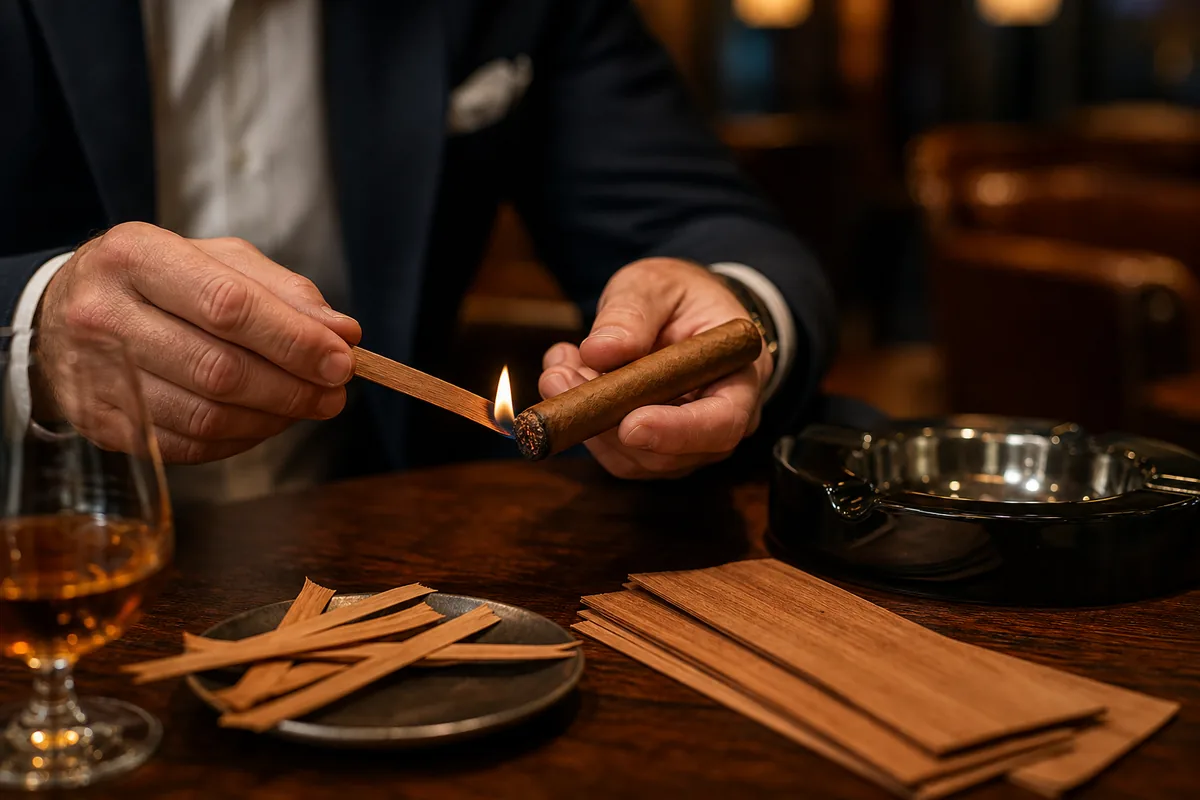
A cedar spill is a thin strip of Spanish cedar that you light first, then use to toast and light your cigar. It burns sulfur-free, adds a faint sweetness to the first few puffs, and gives you the slow, even flame that butane lighters try to replicate. It's the oldest lighting method in cigar culture — and still the cleanest.
Why Cedar Over a Lighter
Every lighting method introduces something to the tobacco. Matches bring sulfur (you have to wait for the head to burn off). Cheap lighters bring lighter fluid flavor. Butane is tasteless when it combusts fully — but a jet lighter at close range can scorch the foot unevenly.
Cedar spills burn at a lower temperature than a torch flame. The combustion is complete — no chemical residue. And the flame is wide enough to toast the entire foot of a robusto without repositioning. You get the cleanest possible transition from unlit to lit.
The flavor bonus is subtle but real. Spanish cedar gives off a slightly sweet, woody note as it burns. The first two or three puffs carry a hint of that cedar character before pure tobacco takes over. It's the same wood that lines your humidor — so the flavor complements rather than competes.
What Counts as a Cedar Spill
A proper cedar spill is a strip of untreated Spanish cedar, roughly 6–8 inches long, about half an inch wide, and thin enough to catch flame easily from a match or lighter. The key word is untreated — no varnish, no stain, no glue.
Where to get them:
- Cigar boxes: The thin cedar sheets that separate cigar layers are perfect. Snap them into strips along the grain.
- Humidor trays/dividers: When you replace or modify humidor internals, save the offcuts.
- Pre-cut spills: Brands like Prometheus and Xikar sell packs of pre-cut cedar strips. Convenient but unnecessary if you have cigar boxes.
- Cedar sheets from B&M shops: Many lounges give away the separator sheets from opened boxes. Ask.
What doesn't count: construction-grade cedar (usually Western Red Cedar, which is a different species and may be chemically treated), decorative cedar planks with sealant, or any wood with visible finish.
How to Light a Cigar with a Cedar Spill
Step 1: Prepare the Spill
Break or cut a strip roughly 6 inches long and half an inch wide. Thinner strips light easier but burn faster. If the cedar feels thick, score it along the grain with a thumbnail and snap thinner — you want it flexible enough to angle easily.
Step 2: Ignite the Spill
Use a match, lighter, or candle to catch one end of the strip. Let the flame establish for 3–4 seconds until it's self-sustaining. You'll see a steady orange flame with minimal smoke. If the spill is too thin, it burns fast — hold it at a slight downward angle to control the burn rate.
Step 3: Toast the Foot
Hold your cigar at 45 degrees. Bring the cedar flame to the foot without touching it — about half an inch away. Rotate the cigar slowly while the flame heats the tobacco. You're toasting, not charring. The foot should glow orange evenly across the surface before you take your first puff.
Step 4: Light and Draw
Once the foot is evenly toasted, bring the flame slightly closer and draw gently. Rotate as you draw. Two or three light puffs are enough. Remove the spill, let the cigar rest for 10 seconds, then check the burn. It should be even across the foot.
Step 5: Extinguish the Spill
Blow out the cedar strip or set it in an ashtray to extinguish. Don't crush it — you can relight the same spill for a touch-up later if your burn goes uneven.
Tips for Better Results
- Don't rush the toast: The advantage of a spill is its slow, even heat. If you're hurrying, you might as well use a torch. Take 20–30 seconds to toast properly.
- Angle controls burn speed: Spill angled down burns faster (flame crawls up). Horizontal or slightly up gives you more time.
- One spill per cigar: A 6-inch strip gives you about 45–60 seconds of flame. That's enough to toast and light one cigar. For a second cigar, use a fresh spill.
- Store spills dry: Keep your cedar strips outside the humidor. They absorb moisture from humidified air and become hard to light. A drawer or dry box works.
Making Your Own Spills
Every cigar box you open is a supply run. Here's how to maximize it:
Remove the thin cedar divider sheet. Lay it on a cutting board. Score lines along the grain at half-inch intervals using a utility knife — don't cut all the way through, just score. Snap along the score lines. You'll get clean, even strips.
Bundle 10–15 spills with a rubber band and toss them in your accessory drawer. One cigar box yields 15–25 spills depending on the sheet size. Over time, you'll accumulate more than you can use.
Common Mistakes
- Lighting the spill with a sulfur match without waiting: Strike the match, let the sulfur head burn off completely (3–4 seconds), then light the spill. Otherwise you're contaminating the spill with the same sulfur you're trying to avoid.
- Using cedar that's been in a humidor: Damp cedar smolders instead of burning cleanly. The smoke is thick and acrid. Always use dry cedar.
- Touching the flame to the cigar: The spill provides radiant heat and a clean flame. Keep distance — you're toasting with heat, not applying fire directly like a torch.
- Treating it as impractical: Yes, it takes 30 seconds longer than a jet lighter. But you're already spending an hour smoking. The ritual is part of the experience.
When a Spill Makes the Most Difference
For everyday quick smokes, a quality butane lighter is perfectly fine. Cedar spills shine when:
- You're smoking something special and want the cleanest possible first impression
- You're in a lounge setting where the ritual adds to the atmosphere
- The cigar has a delicate Connecticut wrapper where scorching is visible and affects flavor
- Wind isn't a factor — spills are useless outdoors in any breeze
Where This Fits in Your Routine
A cedar spill is one piece of the lighting puzzle. If you're still deciding on your primary lighter, our guide to cigar lighter types covers torch vs soft flame vs spills in detail. And for the full lighting technique regardless of heat source, see how to properly light a cigar.
Step by step
- Prepare a cedar stripBreak or cut a 6-inch strip of dry, untreated Spanish cedar about half an inch wide from a cigar box separator sheet.
- Ignite the spillLight one end with a match or lighter. Let the flame establish for 3-4 seconds until self-sustaining with a steady orange flame.
- Toast the cigar footHold cigar at 45 degrees. Position the cedar flame half an inch from the foot. Rotate slowly for 20-30 seconds until the foot glows evenly.
- Light and drawBring flame slightly closer, draw gently while rotating. Two or three light puffs until the entire foot is lit evenly.
- Extinguish and saveBlow out or set in an ashtray. Save the remainder for touch-ups if your burn goes uneven during the smoke.
Frequently asked questions
Do cedar spills actually change cigar flavor?
Subtly, yes. The first 2-3 puffs carry a faint sweet woodiness from the burning Spanish cedar. It fades quickly as pure tobacco flavor takes over. It's complementary, not dominant — the same wood family that stores your cigars.
Can I use any type of cedar for spills?
Only untreated Spanish cedar (Cedrela odorata). Western Red Cedar, aromatic cedar closet planks, and any treated or sealed wood will impart chemical flavors. If it didn't come from a cigar box or humidor, don't burn it near your cigar.
How do I keep cedar spills from burning too fast?
Hold the spill horizontal or at a slight upward angle. Flame naturally travels upward, so a downward angle accelerates burn. Thicker strips also last longer — aim for about 2mm thickness for a 45-60 second burn.
Are cedar spills better than butane lighters?
Not objectively better — different. They offer the cleanest flame and a touch of ritual, but they're impractical outdoors and slower. A quality butane torch gives you a tasteless, wind-resistant flame. Most enthusiasts use both depending on context.
Community tasting notes
No community notes yet. Be the first to share how this smoked for you.
Log in to share your tasting notes and photos.