
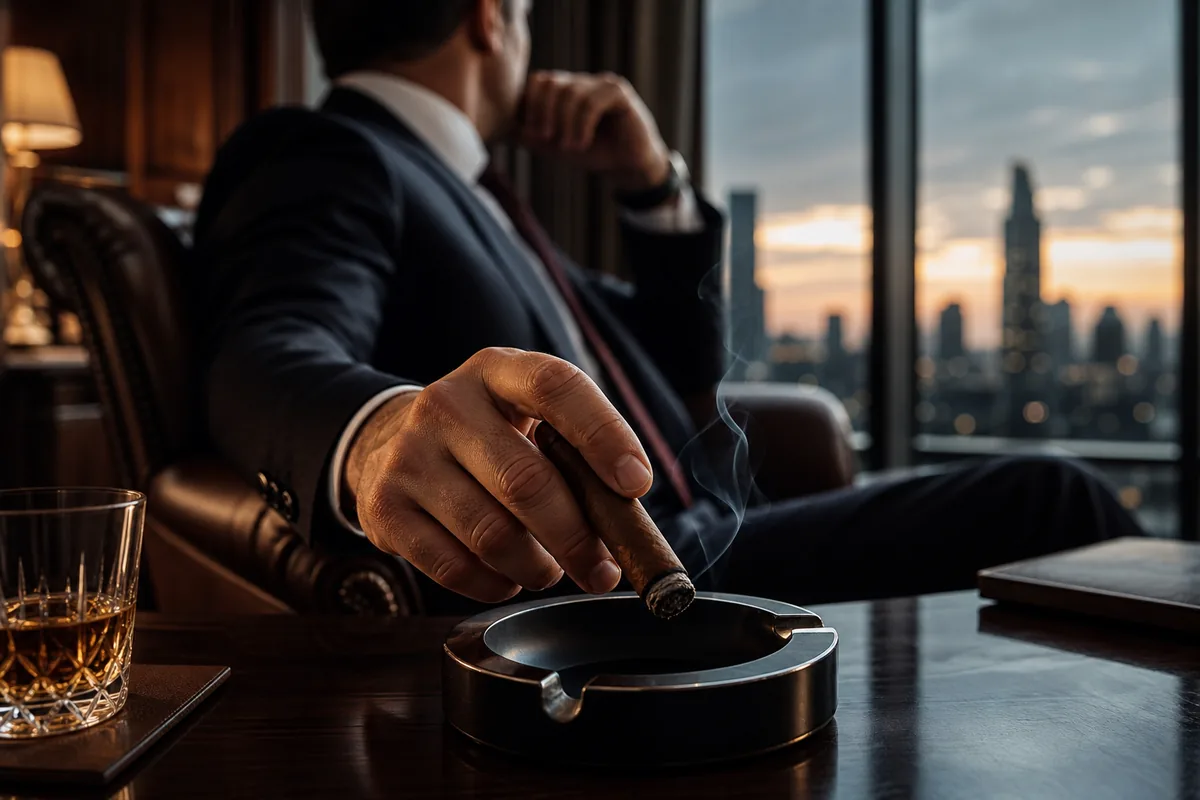
Why Cigars Are Associated With Success
Picture a CEO celebrating a big win and there is a good chance a cigar is in the frame. The link between cigars and success is one of the strongest images in business culture, but it did not appear by accident. This guide looks at the cultural reasons the cigar became shorthand for having made it, from its long history as a luxury to the simple fact that smoking one takes real time.
A Long History of Luxury
Cigars have carried a premium image for centuries. Fine tobacco was costly, imported, and handmade, which placed a good cigar out of reach for most people. That association with expense and craft stuck. Even today a premium cigar reads as a considered indulgence rather than an everyday habit, and that scarcity is a large part of why it signals status.
The Luxury of Time
Here is the reason people often overlook: a cigar takes a while to enjoy. A full-sized smoke can run one to two hours, and it cannot really be rushed. In a culture where busy is the default, sitting with a cigar quietly announces that you have time to spare, and time is one of the ultimate luxuries. Choosing to spend an hour or more on a single pleasure suggests a person whose schedule bends to their wishes rather than the other way around. We break down the timing in how long does a cigar take to smoke.
The Celebration Ritual
Cigars have long marked milestones. Closing a deal, landing a promotion, winning a case, welcoming a new child, cigars appear when something has gone right. The act of handing one to a colleague or partner turns a private success into a shared moment. This deal-closing ritual is a big reason the cigar sits so comfortably in business culture. We cover the broader tradition in when to smoke a cigar: occasions.
Networking and the Lounge
The cigar lounge added another layer. These are spaces where people slow down, sit together and talk, and a lot of relationship building happens over a shared smoke. The unhurried setting suits long conversations, which is exactly what dealmaking and networking often need. If you want to understand the customs of these rooms before you visit one, see our cigar lounge etiquette guide.
The Churchill Effect
Individual figures shaped the image too, and none more than Winston Churchill. His cigar became a symbol of leadership and resolve, and that image bled into the wider idea of the cigar as the mark of a serious, powerful person. A whole cigar size even carries his name. You can read the full story in Churchill and cigars. Hollywood reinforced the same idea by handing cigars to its bosses, tycoons and power brokers, and the picture set in the public mind.
Symbol, Not Requirement
It is worth being clear about what this is: a cultural association, not a rule. Plenty of successful people never smoke, and plenty of cigar lovers are not executives. There is no reliable figure on how many leaders smoke, and any specific statistic should be treated with caution. What endures is the symbolism, luxury, patience, celebration and shared conversation, all bundled into one slow-burning ritual. That mix is why, in the popular imagination, the cigar still says success.
Frequently asked questions
Why are cigars associated with CEOs and success?
It comes from a mix of the cigar's luxury history, the time it takes to smoke, its use in celebration and deal-closing rituals, lounge networking culture, and iconic figures like Churchill.
How does the time a cigar takes relate to status?
A full cigar can take one to two hours and cannot be rushed. Spending that time signals you have leisure to spare, and time is one of the ultimate luxuries.
Do most successful people actually smoke cigars?
No. The link is a cultural symbol rather than a fact about who succeeds. There is no reliable statistic, and any specific figure should be treated with caution.
Community tasting notes
No community notes yet. Be the first to share how this smoked for you.
Log in to share your tasting notes and photos.