
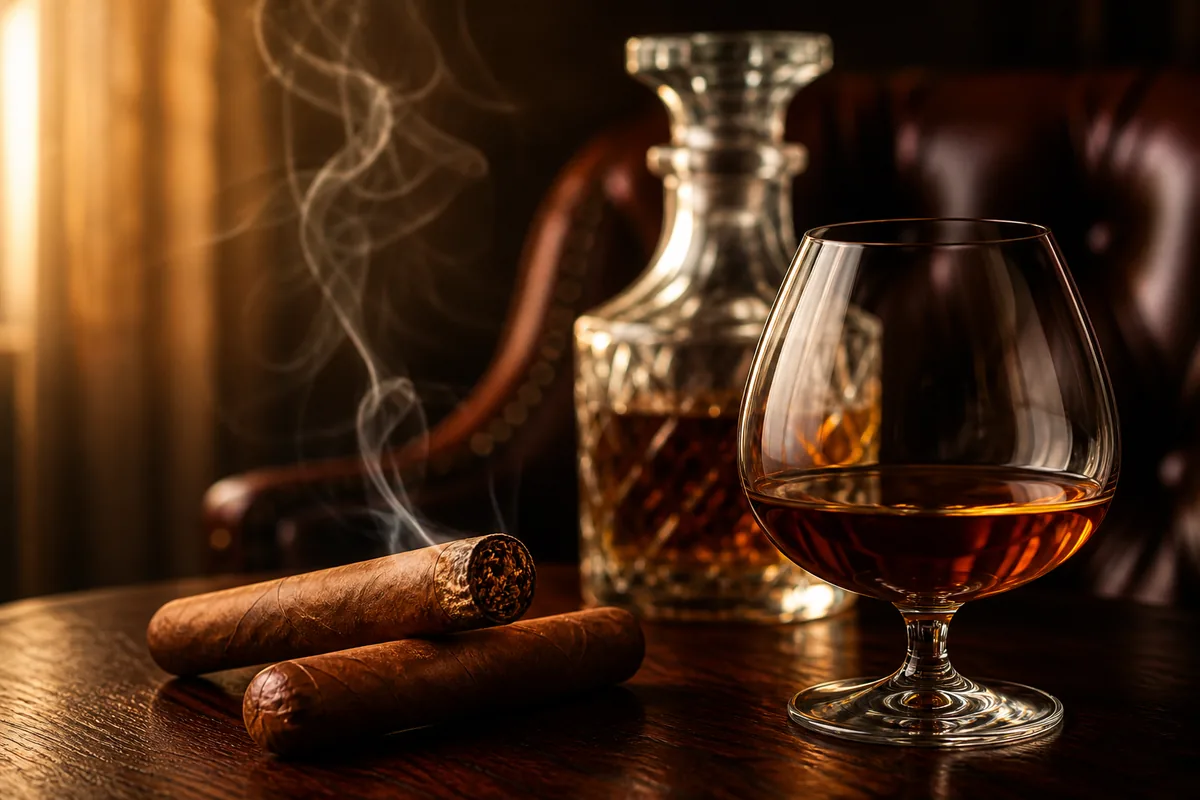
Cigar and Cognac Pairing Guide
Cognac and cigars have been paired together for centuries, and not by accident. Grape-based spirits produce fruity esters during distillation that share molecular structure with flavor compounds generated during tobacco fermentation. When you sip VS, VSOP, or XO between puffs, you combine two products whose chemistry was practically designed to overlap.
I reach for cognac more than any other spirit during cigar time. It lacks bourbon's aggressive heat and scotch's smoke competition, offering instead a round, fruit-forward palate cleanser that elevates every cigar it touches without fighting for dominance.
Why Cognac Is the Natural Cigar Partner
Three factors make cognac uniquely suited to cigars:
Pot still distillation preserves fruit esters. Unlike column-still spirits that strip flavor for efficiency, cognac's double distillation in copper pot stills retains the grape's fruity and floral compounds. These esters register as apple, pear, banana, and dried apricot on your palate. They act as a counterpoint to tobacco's earthy, leathery notes, creating contrast that keeps both flavors interesting.
Limousin oak aging without aggression. Cognac ages in French oak (Limousin or Troncais) that is air-dried, not kiln-dried, and lightly toasted rather than heavily charred. This extracts vanillin and spice gradually over decades without the aggressive tannins of new American oak. The result is wood influence that complements tobacco's own wood-adjacent notes (cedar, dried leaves) without creating astringent tannin-on-tannin clashes.
Viscosity and mouth-feel. Well-aged cognac has an oily, coating texture from long oak contact and the concentration of esters over time. This viscosity physically cleanses your palate between puffs, washing away accumulated smoke residue and preparing fresh taste receptors for the next draw. It is a functional benefit, not just a flavor one.
Cognac Age Categories and Cigar Matching
VS (Very Special): Minimum 2 Years
VS cognac is young, fruit-forward, sometimes sharp. Its vibrancy pairs with mild to medium cigars where you do not need the spirit to match complexity. You need it to provide contrast. Connecticut shade wrappers and lighter Cameroon blends find a lively partner in VS expressions.
The fruit-dominant profile of VS (green apple, citrus, fresh grape) lifts lighter cigars rather than weighing them down. Imagine sparkling water versus still. The effervescence of young cognac adds energy to mild smoke.
Try: Remy Martin VSOP (technically VSOP, but approachable) with an Arturo Fuente Chateau Fuente. The cigar's cream and cedar meet the cognac's stone fruit cleanly.
VSOP (Very Superior Old Pale): Minimum 4 Years
VSOP hits the sweet spot for most cigar pairings. Oak influence arrives without overwhelming the grape character. You get vanilla, dried apricot, light spice, and honey. These flavors bridge naturally to medium and medium-full cigars with complexity worth matching.
This is where cognac starts developing the layered finish that evolves alongside a cigar's progression through its thirds. The spirit's mid-palate richness carries enough weight to stand next to Habano and Sumatra wrappers without disappearing.
Try: Hennessy VSOP with a Rocky Patel Vintage 1990. Both deliver approachable complexity. The cognac's dried fruit meets the cigar's cedar and subtle sweetness.
XO (Extra Old): Minimum 10 Years
XO cognac is where the magic happens for full-bodied cigars. Decades in oak produce dried fig, dark chocolate, leather, tobacco leaf (yes, aged cognac naturally develops tobacco-like notes), candied orange, and deep spice. These flavors mirror what happens in the final two-thirds of a complex, well-aged cigar.
The finish on XO cognac can last 60+ seconds, long enough to bridge between puffs completely. You taste the cognac evolving while the cigar smoke settles, creating a continuous flavor experience rather than alternating separate moments.
Try: Hine Antique XO with a Padron 1964 Anniversary Maduro. Both share dark chocolate, fig, and baking spice. The cognac's orange peel note adds a citrus brightness the maduro does not have, keeping things dynamic.
The Grape Variety Factor
Cognac is made primarily from Ugni Blanc grapes (also called Trebbiano). High acid, neutral flavor, perfect for distillation. Some houses use Colombard or Folle Blanche for portions of their blend, adding floral and aromatic complexity. Houses that emphasize Grande Champagne or Petite Champagne terroir produce cognacs with more finesse and floral character, while Fins Bois and Bons Bois regions yield rounder, fruitier expressions.
For cigar pairing: Grande Champagne cognacs (Delamain, Frapin, Remy Martin XO) have longer finishes and more elegance. They pair with cigars that show similar refinement. Fins Bois-dominant blends tend fruitier and softer. They pair better with straightforward medium-bodied cigars where you want easy harmony rather than layered complexity.
Serving Temperature and Glassware
Skip the brandy balloon your grandfather used. A tulip glass concentrates aromatics without trapping alcohol vapors. Hold it at the bowl. Body heat brings the cognac to about 68 to 72 degrees Fahrenheit, which opens esters without cooking off alcohol. Warmer than that and ethanol fumes dominate the nose, making it harder to appreciate the pairing.
Never add ice to XO cognac meant for pairing. Cold suppresses the ester compounds that create your flavor bridges. If you want a cooled drink, use a slightly chilled glass. Even VSOP performs better at room temperature alongside a cigar.
Timing and Rhythm
Cognac's long finish means you need less frequent sipping than with bourbon or scotch. One sip every 5 to 6 puffs works well. The spirit's lingering dried fruit and vanilla sustain between sips, overlapping with the cigar's ongoing flavor development.
Start with a sip before your first puff to establish the cognac's baseline on your palate. Then light the cigar and let the first few puffs interact with the residual spirit flavor. This pre-coating technique gives you an immediate bridge moment rather than waiting for both to develop separately.
As the cigar enters its final third where oils concentrate and strength builds, the cognac's sweetness and fruit become a welcome counterbalance. I find cognac handles the final third better than most spirits because its roundness never turns aggressive, even against concentrated ligero.
Common Mistakes
Swirling aggressively. Over-swirling oxidizes cognac's delicate esters. A gentle tilt is enough. You are not trying to aerate like wine. Those fruit compounds are volatile and disappear with too much air exposure.
Pairing cheap VS with premium cigars. Young cognac's sharpness and simplicity cannot match a $20+ cigar's complexity. If you are smoking something special, reach for VSOP minimum, XO preferred. The investment in spirit quality pays off when both elements operate at the same level.
Rushing the experience. Cognac rewards patience more than any other pairing spirit. Take 90 minutes minimum for an XO-and-cigar session. Both products were aged for years. They deserve unhurried attention.
Finding Your Own Pairings
The framework is straightforward: match cognac age to cigar intensity, then identify your bridge (fruit-to-sweetness, chocolate-to-chocolate, or spice-to-spice). From there, retrohale your cigar to catch the full flavor spectrum and notice which notes overlap with what lingers from your last sip.
Cognac's versatility means almost no cigar is a bad match. You are just optimizing from good to great. Start with VSOP and medium cigars, then explore XO with fuller blends. Once you have found a few combinations that click, you will understand intuitively how grape-based spirits converse with fermented tobacco.
For more pairing foundations, see our complete cigar and drinks guide. If grain-based spirits appeal to you, explore bourbon pairings or scotch pairings for a different conversation with your cigar.
Frequently asked questions
What is the best cognac for cigar pairing?
VSOP is the most versatile starting point with enough oak complexity to bridge with most cigars without the cost of XO. For full-bodied cigars, XO expressions from Grande Champagne houses (Delamain, Frapin, Remy Martin XO) provide the depth and finish length to match concentrated tobacco flavors.
Is Hennessy good for cigar pairing?
Hennessy VSOP and XO both pair well with cigars. The VSOP offers approachable dried fruit that matches medium cigars. The XO delivers chocolate, spice, and candied orange that stands up to maduros and full-bodied blends. Skip Hennessy VS for serious pairing since it is too young and sharp.
Should you warm cognac in your hands before pairing?
Light warming by cupping the glass is fine. Body heat brings cognac to 68 to 72 degrees and opens aromatic esters. Avoid heating over flame or hot water, which cooks off volatile compounds and fills your nose with alcohol vapor rather than the fruit and spice notes you want bridging with your cigar.
What is the difference between cognac and brandy for cigar pairing?
Cognac is brandy from a specific French region with strict production rules (Ugni Blanc grapes, pot still distillation, French oak aging). These rules ensure consistent quality and flavor profiles ideal for pairing. Generic brandy varies wildly. Armagnac, another French brandy, also pairs well with more rustic, earthy character that matches fuller cigars.
Community tasting notes
No community notes yet. Be the first to share how this smoked for you.
Log in to share your tasting notes and photos.