
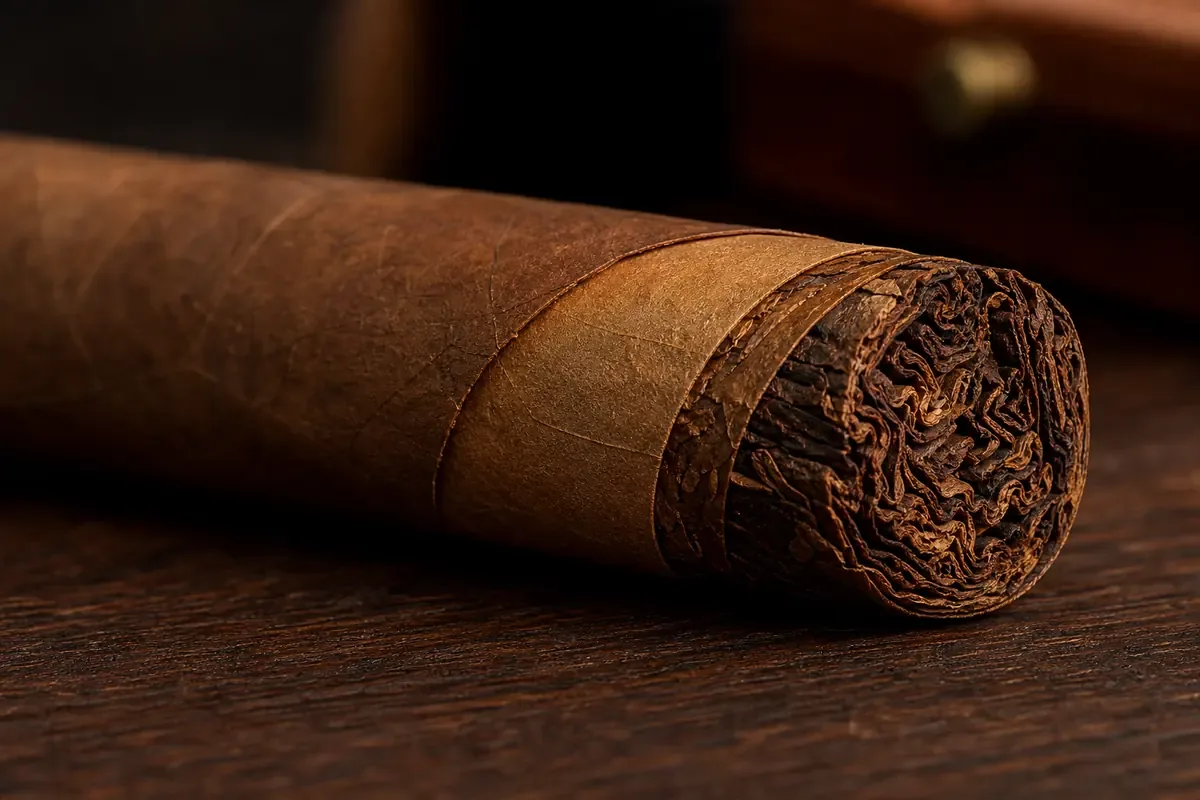
Cigar Anatomy Explained: Every Part of a Cigar
Every cigar is built from three types of tobacco leaf wrapped into one shape: the filler at the core, the binder that bundles it, and the wrapper on the outside. Beyond those layers, a cigar has named parts, the head, cap, foot, and shoulder, that you need to know to cut and light it correctly. This guide maps out the whole cigar so the rest of the hobby makes sense.
The three tobacco components
Filler
The filler is the bundle of leaves running the length of the cigar. It provides most of the smoke and a large share of the flavor and strength. Long filler uses whole leaves folded end to end and is the mark of a premium handmade cigar. Short filler uses chopped scraps and is typical of cheaper, machine-made cigars.
Binder
The binder is a sturdy leaf wrapped around the filler to hold the bunch together and help it burn evenly. It is chosen for strength and combustion rather than looks.
Wrapper
The wrapper is the outermost leaf. Because it is the largest single leaf touching the smoke, it contributes a big part of the flavor, sometimes 40 percent or more, along with all of the cigar's appearance. Wrapper leaves are grown and sorted carefully for color, texture, and smoothness.
The named parts of a cigar
- Head: the closed, rounded end you cut and draw from.
- Cap: a small piece of wrapper leaf applied to seal the head. You cut just above where it ends.
- Shoulder: the curved area where the cap meets the body; your cut line sits just above it.
- Foot: the open end you light.
- Body / barrel: the long main section of the cigar.
- Band: the paper ring identifying the brand.
Ring gauge and length
Cigars are measured two ways: length in inches and ring gauge, the diameter in 64ths of an inch. A 50 ring gauge cigar is 50/64 of an inch thick. Larger ring gauges hold more filler and tend to smoke cooler and longer, while thinner cigars often deliver more concentrated wrapper flavor.
How the parts shape your experience
The wrapper drives aroma and much of the taste; the filler blend sets the strength and body; the binder and construction determine how evenly it burns and how the draw feels. When a cigar burns crooked or draws too tightly, the cause is usually construction, how the filler was bunched, not the tobacco itself.
Where to go next
Now that you know the layout, explore the details: the different cigar wrapper types, how to read a ring gauge and size guide, and the difference between binder and filler. Understanding anatomy makes every other guide click into place.
Frequently asked questions
What are the three parts of a cigar?
The filler (the core leaves), the binder (the leaf holding the filler together), and the wrapper (the outer leaf that shapes much of the flavor and appearance).
What is the difference between the cap and the head?
The head is the closed end you draw from; the cap is the small piece of wrapper leaf applied to seal that head. You cut just above where the cap ends.
What does ring gauge mean?
Ring gauge is a cigar's diameter measured in 64ths of an inch. A 50 ring gauge cigar is 50/64 of an inch thick.
Which part gives a cigar most of its flavor?
The wrapper leaf contributes a large portion of the flavor, often cited around 40 percent or more, along with the filler blend that sets body and strength.
Community tasting notes
No community notes yet. Be the first to share how this smoked for you.
Log in to share your tasting notes and photos.